
What we test
| Level | Standard | Within CNAS scope |
|---|---|---|
| Cell | UL 9540A, UL 9540B | Yes |
| Module | UL 9540A | Yes |
| Unit (rack, cabinet) | UL 9540A | Yes |
| Installation | UL 9540A | Run on our sites; not in accreditation scope |
| Vent gas flammability limit | ASTM E918 | Yes |
| Vent gas burning velocity | ISO 817 Annex C | Yes |
| Explosion pressure and rate of pressure rise | EN 15967 | Yes |
| Residential fire propagation | UL 9540B | Yes |
How a programme runs
- Plan. We review the cell, module and system design, agree the trigger method and decide which levels are likely to be needed.
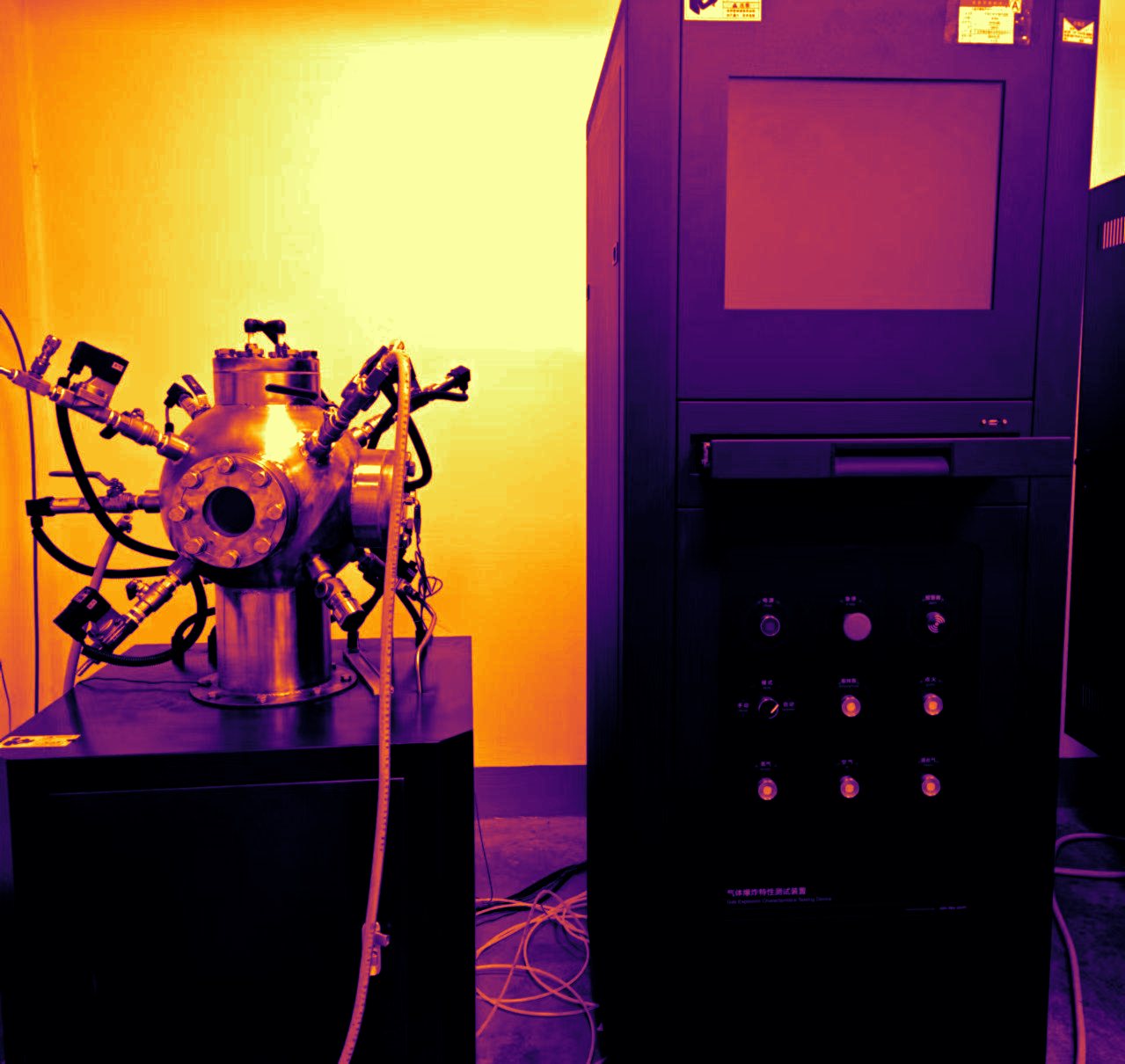
- Cell test. Cells are driven into thermal runaway in a sealed vessel; vent gas is analysed and its LFL, burning velocity and Pmax measured.
- Module and unit tests. Run under a calorimetry hood with oxygen consumption calorimetry, online O₂, CO, CO₂, H₂ and FTIR analysis, up to 180 thermocouple channels and water-cooled heat flux gauges. Larger units go to our Hebei or Jiading sites.
- Review. Our engineers explain the results, what they mean for spacing and protection, and whether the next level is needed.
Beyond the report
When a module propagates or a unit shows external flaming, we help you find out why — trigger location, venting path, barrier materials — and use simulation to test fixes before the next physical test.
Deliverables
- Test report to UL 9540A or UL 9540B, under CNAS accreditation for the levels in scope
- Raw data: temperatures, heat release, gas composition, heat flux, video
- Witnessed test for TÜV Rheinland, Intertek or CSA on request
- Engineering review of results and next-level test plan
Frequently asked questions
How many cells and modules do you need?
It depends on the level and the triggering method. We send a sample list after reviewing the cell datasheet and module drawings; plan for spares, because a failed trigger means repeating the test.
Which thermal runaway trigger do you use?
External heating with film, silicone, mica or ceramic heaters under PLC control (ramp or constant power). Other methods can be agreed when the standard and the certifier allow.