Why simulation is part of testing
A laboratory that only runs certification tests can tell you whether a system passed. Simulation lets us tell you why, and what will happen in conditions the test did not cover. Because we run the physical tests too, our models are checked against measured data from the same products.
What we simulate
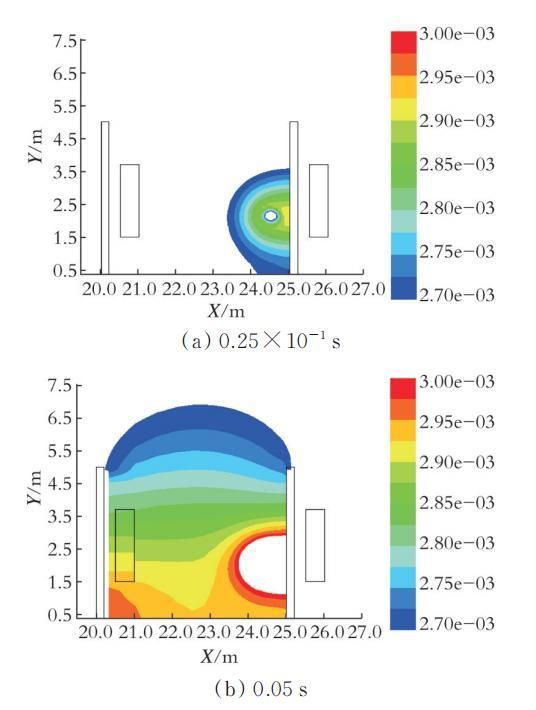
Deflagration in battery enclosures. 1:1 models of the container or cabinet. Thermal runaway — for example by overcharge — releases gas; the model tracks dispersion, ignition, burning rate, overpressure and temperature, and shows pressure wave distribution outside the enclosure. Used for NFPA 68 vent design, NFPA 69 ventilation analysis under single-failure conditions, and to check whether added protection around the enclosure works.
Fire spread and large-scale fire prediction. Heat release, flame and radiant heat to adjacent units and walls, used to set spacing and choose the scenario for a large-scale fire test before committing a full system.
Thermal behaviour of enclosures. Heat transfer through wall builds and barriers, to screen designs before fire resistance tests.
Checked against tests
Every simulation project can be paired with a test at our sites — cell gas data from our battery lab, deflagration data from our Nantong site, and fire data from Hebei and Jiading.
Deliverables
- Simulation report with model description, assumptions, scenarios and results
- Comparison with test data where available
- Design recommendations: vent area and location, ventilation rate, spacing, barriers
Frequently asked questions
Can simulation replace a test?
Not for certification. Simulation is most valuable before a test — to choose the scenario and avoid a failed burn — and after it, to explain the result and test design changes without burning another system. Regulators increasingly accept simulation alongside test data in hazard mitigation analysis.
What inputs do you need?
Enclosure geometry and layout, ventilation and vent panel details, and battery gas data — ideally from a UL 9540A cell test, which we can run.