

What has been the most talked-about test in energy storage over the past two years? The answer is hardly in dispute: the large-scale fire test (LSFT).
Whether at industry conferences, technical forums or product launches, we have found that a burn-test certificate is the most persuasive calling card for an energy storage system's safety. Whoever holds out longest in the toughest fire test and keeps the fire from spreading wins market recognition most easily, and the result can even tip the balance in tenders and market access.
But look away from the "burn" and you will see a deeper change quietly under way: before the fire test proper, should an energy storage system first go through a deliberate ignition of its gases?
What really sets the safety limits of an energy storage system is often another, more dangerous trial: the deflagration test.
In real incidents, fire is not where every risk begins. Very often, the most destructive blow is a deflagration that comes before the fire.
And as standards such as UL 9540A:2026 and NFPA 855 keep evolving, deflagration testing is moving from an optional extra to a key part of energy storage safety design.
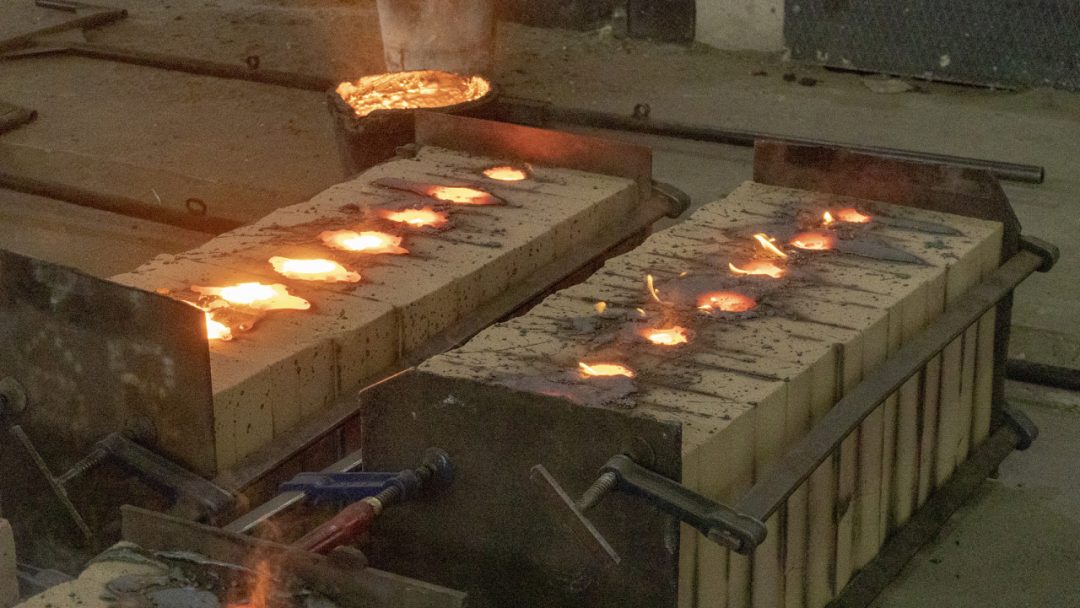
Why is the "burn-test race" heating up?
The rush to run large-scale fire tests is not pointless bandwagon-jumping in a crowded industry. It is the inevitable result of three forces at once: a changing market, upgraded standards and new products. In our view, there are two main reasons behind it.
First, overseas market access requirements have been raised across the board
On 13 March 2026, UL Solutions published the sixth edition, UL 9540A:2026. For the first time, it brings the large-scale fire test (LSFT) into the standardised framework, and it upgrades the Annex C deflagration test to a normative, mandatory requirement, making it an essential part of energy storage safety verification.
At the same time, NFPA 855 (2026 edition) explicitly lists the large-scale fire test (LSFT) as an important access requirement for energy storage systems.
Second, the era of large-format cells has arrived
Energy storage cell capacities are climbing fast.
From 280 Ah to 314 Ah, and now to the 500+ Ah and even larger cells that major manufacturers are racing to launch, the energy density of storage batteries is rising rapidly. Bigger cells bring an obvious cost advantage, but the safety challenges multiply too.
Bigger cells also mean:
more heat released;
more flammable gas;
more complex thermal runaway behaviour;
tougher safety challenges at system level.
The industry has always faced one core question: as cells get bigger, can the system remain safe enough?
The most direct and convincing way to answer it is the toughest possible empirical test: burn it and show them. So interest in LSFT has stayed high.
But in fact many people overlook one thing: before it ever catches fire, an energy storage system may already have "exploded" once.
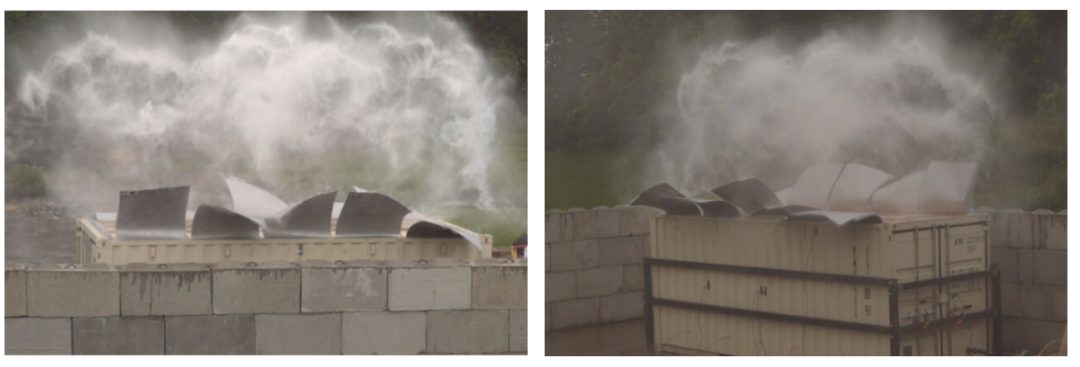
It is not just the fire that kills, it is the blast
With the whole industry rushing to burn containers, many people have fallen into a misconception: that the main hazard of a thermal runaway incident in energy storage is the spread of fire.
But reviewing energy storage station incidents around the world shows that the first deadly factor causing enclosures to collapse, equipment to be destroyed, sites to get out of control and people to be hurt has never been fire. It is deflagration.
A thermal runaway incident in an energy storage system develops like this: thermal runaway → release of flammable gas → gas accumulation → deflagration → fire spread.
In other words, deflagration often comes before fire.
When a cell goes into thermal runaway, it releases large amounts of flammable gas, such as hydrogen, carbon monoxide and methane. If these gases cannot be removed in time, they may keep accumulating inside the enclosure. When the concentration reaches the flammable limit and meets an ignition source, a deflagration occurs.
Compared with sustained burning, the defining feature of a deflagration is how fast the pressure rises.
A pressure wave formed in a very short time can:
blow the enclosure doors open;
deform the enclosure structure;
dislodge components;
throw out fragments;
cause pressure relief structures to fail;
spread the fire further.
In many real incidents, what causes severe equipment damage and secondary disasters is not the flames themselves but the instantaneous impact of a deflagration.
This leads to a question that goes to the heart of the matter: can the energy storage enclosure actually withstand the blast? That is what deflagration testing is for.
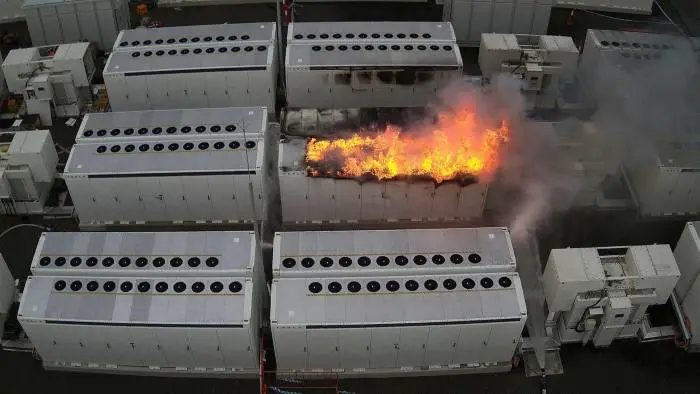
What does a deflagration test actually test?
Compared with the familiar and highly visual fire test, deflagration testing is less visible, more demanding and closer to real extreme incidents.
Many companies understand deflagration testing only superficially, as an "enclosure explosion test", and overlook the extreme conditions it simulates and the core value of what it verifies.
In reality, it is far more complex than people imagine.
Under Annex C of UL 9540A:2026, the core aim of the deflagration test is to assess the structural stability, pressure relief capability and level of risk control of an energy storage system when a deflagration occurs under real conditions.
Put simply, it answers three questions:
First, will the enclosure be blown apart?
Second, does the pressure relief design work?
Third, will the deflagration create new hazards?
The most demanding aspect of the deflagration test is that the emergency ventilation system is off throughout.
In normal operation, ventilation and smoke exhaust systems run continuously, removing the flammable gas produced by cell thermal runaway before it can accumulate and explode.
But real incidents are often more extreme. If there is:
a fan failure;
a power cut;
a control system failure;
a complete system breakdown;
then the flammable gas the cells keep releasing cannot escape and can only build up inside the closed enclosure, like a sealed balloon being steadily inflated. The pressure keeps rising and the explosion risk keeps growing until a critical point is reached and a violent deflagration is triggered. The deflagration test reproduces exactly this worst, deadliest and most realistic total-failure scenario.
Because real safety is not safety when everything is working normally; it is the ability to keep the risk under control in the worst case.
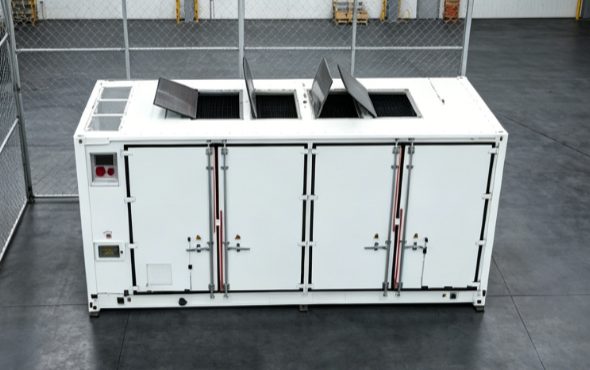
Why has deflagration testing become so important?
One reason is the upgraded requirements in the standards. The deeper reason is that the industry has begun to recognise that deflagration is a risk energy storage design cannot avoid.
In the past, the industry focused mainly on fire spread. Now, more and more companies are paying attention to this: as single-cell capacity moves from 280 Ah to 500+ Ah, the volume and rate of gas generated in thermal runaway rise sharply, more flammable gas accumulates in the same enclosure volume, and the peak overpressure can be higher. Simple rules of thumb are no longer enough; real gas generation parameters and experimental verification are needed to confirm that the pressure relief design works.
In fact, under the latest UL 9540A requirements, the pressure relief path must be determined before the large-scale fire test:
If a deflagration test has been carried out, the relevant relief surfaces should be opened according to its results.
If no deflagration test has been carried out, at least one door next to the row where the fire starts must be opened.
In other words, a prototype without a deflagration test has to have its doors opened for the LSFT, whereas a design that has already passed a deflagration test can lay out its pressure relief according to actual needs and keep more control in the subsequent LSFT.
Although the deflagration test is not formally a mandatory prerequisite, in our view it has in practice become the best way to determine the pressure relief strategy and improve the chances of passing the LSFT, and this is now the consensus in the industry.
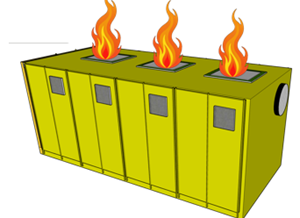
Closing the loop on deflagration safety
To deal with the deflagration risk in energy storage systems, the industry currently relies on three standards working together: NFPA 69, NFPA 68 and UL 9540A.
NFPA 69: explosion prevention. It provides methods of preventing explosions, such as inerting and ventilation to stop an explosive atmosphere forming. Most energy storage systems today use active exhaust ventilation as the first line of defence.
NFPA 68: deflagration venting. It provides methods of calculating vent area. When an explosion cannot be avoided, a properly designed vent area and pressure relief structure keep the pressure within what the equipment can withstand. But the NFPA 68 formulas need accurate cell parameters as input.
UL 9540A: the test standard. First, cell, module and system tests produce real thermal runaway gas generation parameters as input to the NFPA 68 calculation. Second, Annex C provides full-scale deflagration verification to check that the design really works.
Together the three close the loop on deflagration safety design: obtain the parameters with UL 9540A, feed them into NFPA 68 to calculate the vent area needed, design and build the pressure relief structure, and finally take it to the lab for a real deflagration test to UL 9540A Annex C as final acceptance.
How is a deflagration test actually done?
Many people assume a deflagration test simply means triggering thermal runaway electrically and waiting for the enclosure to explode, but it is not that simple. In assessing the deflagration risk of an energy storage system, a full-scale explosion test is only one of the final means of verification.
We have seen some manufacturers obtain certification on the basis of a simulation report. But we have also noticed that, to be on the safe side, more and more companies use a combination of "simulation analysis + full-scale verification" during product development: numerical simulation first to identify risks and optimise the design, then a full-scale test to verify that the final design works.
Step 1: Simulation analysis.
Before the test, simulation can be used to model how flammable gas disperses inside the enclosure, where the pressure wave develops fastest and where flame turbulence is most intense, so as to pinpoint the most dangerous ignition location. Where is the pressure highest? Where is flame turbulence strongest? Where is the pressure relief structure most severely challenged?
These results feed directly into the design of the actual test, help companies understand the risks in advance, and reduce the cost of rework after a failed test.
Step 2: Test plan design.
Following the requirements of UL 9540A:2026 Annex C, determine:
the scenario layout; the ignition location; the test conditions; the parameters to be measured.
Step 3: Building the real scenario.
Based on the simulation findings and the standard's requirements, pressure sensors, temperature sensors, flame detectors and high-speed cameras are installed in the enclosure under test, and a surrogate gas mixture is injected according to the real gas generation parameters, recreating the gas environment and concentration distribution after cell thermal runaway. The emergency ventilation system is off throughout, simulating the worst case of fan failure and control system breakdown, and the flammable gas is allowed to accumulate in the enclosure until the preset test conditions are reached.
Step 4: Deliberate ignition. The mixture is ignited remotely at the most unfavourable location, triggering a full deflagration, and data on pressure, temperature, flame propagation and structural response are recorded.
Step 5: Assessment of results. Each of the Annex C acceptance criteria is checked in turn: did the enclosure rupture? Did doors, relief panels or other major components come off? Were fragments thrown out? Did the pressure relief structure work? Did the system keep its structural integrity? The test is passed only if all three conditions are met: no rupture, no detachment and no projectiles.
The value of deflagration testing
A successful deflagration test delivers far more than a pass report. Through testing, companies can verify their structural design, verify their pressure relief solution, find weak points in the design, optimise their system safety strategy, reduce the cost of later rework, become more competitive overseas, and give customers and project owners more confidence.
With large energy storage systems being deployed at scale, the only way to truly win the market's trust is to push products to the most extreme conditions and prove they remain under control. Deflagration testing is one of the most representative tests of this shift.
The energy storage industry is entering a new phase. From the industry-wide burn-test race to the increasingly essential full-scale deflagration test, the evolution of energy storage safety testing is, at heart, the industry's inevitable progression from surface-level fire protection to in-depth explosion protection, and from theoretical compliance to demonstrated safety.
As a fire testing laboratory serving the energy storage sector, Huahui Fire offers deflagration test plan design, simulation analysis, scenario construction, on-site testing and witnessing for energy storage systems, carrying out tests strictly to UL 9540A:2026 Annex C, to help companies identify risks early, verify their designs, and provide reliable support for going overseas and upgrading safety.

First published on our WeChat channel: read the original