
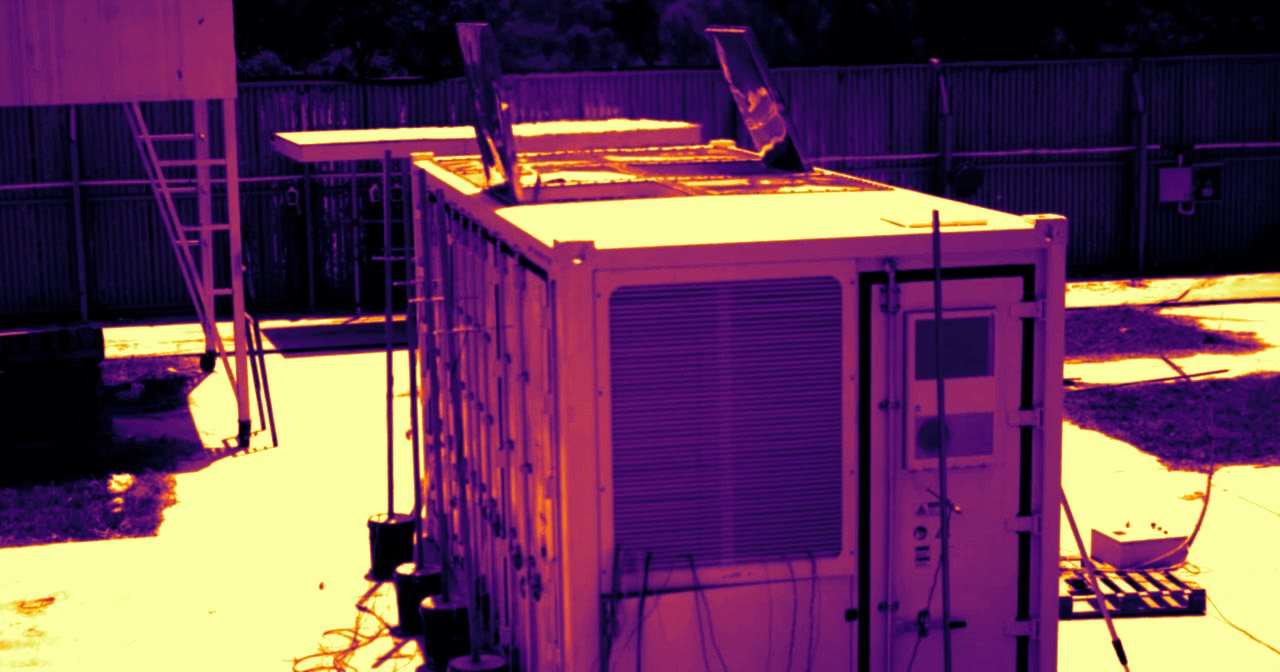
Why deflagration testing
When cells go into thermal runaway inside a closed container they release flammable gas. If it accumulates and ignites, the deflagration can rupture the enclosure, throw debris and project flame onto neighbouring equipment and people. NFPA 855 requires explosion control, and the AHJ will want evidence that the design works.
What the test checks
- the enclosure relieves pressure only through the designated vent areas — no unexpected rupture of doors, walls or roof;
- overpressure and impulse at set distances;
- debris throw and flame jets from the vents, and their effect on adjacent equipment and access routes.
Scenarios cover the gas-handling system working normally and in failure. The results are used to validate the NFPA 68 vent calculation and the CFD model, to set equipment spacing and explosion protection, and to give the AHJ measured evidence.
Where
Deflagration tests run at our own Nantong explosion test site, which handles energy storage products from commercial and industrial cabinets to utility-scale containers.
Deliverables
- Test report: overpressure, impulse, vent opening, debris and flame jet records
- High-speed video
- Comparison with your NFPA 68 vent calculation and CFD model
- Recommended initial ventilation condition for a follow-on large-scale fire test
Frequently asked questions
Why test before the large-scale fire test?
The deflagration test shows how the enclosure vents and sets the ventilation condition — which vents are forced open — for the large-scale fire test. Doing it first avoids burning a system under the wrong assumptions.
Can you test with the ventilation system failed?
Yes. Scenarios include the ventilation and gas-handling system working normally and failed, so the vent design is checked under the single-failure case NFPA 855 expects.