
The new edition of NFPA 855, Standard for the Installation of Stationary Energy Storage Systems (2026 edition), has recently been published on the NFPA website. Updated every three years, it sets minimum installation requirements for residential, commercial, industrial and utility-scale energy storage. Its recommendations have been adopted by several US states, regulators, and financial and insurance institutions, and it serves as a best-practice reference internationally.
Details
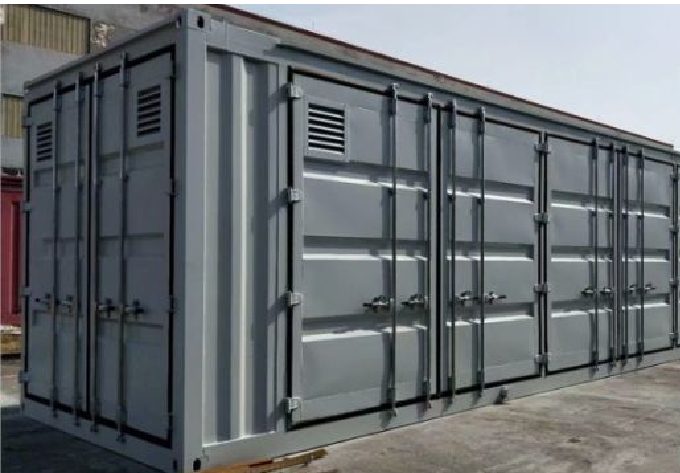
NFPA 855 sets out risk control measures in depth, ensuring that all installation work is carried out properly with full regard to the key life safety factors. It establishes comprehensive requirements for the fire protection of energy storage system (ESS) installations, covering the type of technology, the installation environment, ESS size and spacing, and existing fire control and suppression systems.
In response to ESS fires around the world, requirements for fire detection and suppression, explosion control, exhaust ventilation, gas detection and thermal runaway have been added or revised, and the requirements for fire and explosion testing (formal large-scale fire testing) have been clarified.
Key points
The 2026 edition is a major revision, with the following updates:
General requirements applying to all energy storage systems have been brought together in Chapter 4, while technology-specific requirements are in their own chapters.
Several new battery types have been added.
The exemptions for all lead-acid batteries, aqueous nickel-based batteries and aqueous metal-air batteries have been set out in more detail for each battery type.
New requirements have been added for emergency response plans and for EV charging systems with energy storage, along with a new Chapter 16 on flow batteries and a new Chapter 17 on energy storage systems on barges.
Section G.8 of Annex G, on NFPA 69 evaluation of lithium-ion energy storage systems, has been revised to give engineering design and risk mitigation considerations that help assess the consequences of an explosion.
The new edition adds large-scale fire testing (LSFT), in which a complete system is deliberately ignited with its suppression equipment switched off, to simulate the most extreme scenario.
Table of contents of the 2026 edition
NFPA 855 Standard for the Installation of Stationary Energy Storage Systems 2026 Edition®
Chapter 1 Administration
1.1 Scope.
1.2 Purpose.
1.3 Application.
1.4 Retroactivity.
1.5 Equivalency.
1.6 Units and Formulas.
Chapter 2 Referenced Publications
2.1 General.
2.2 NFPA Publications.
2.3 Other Publications.
2.4 References for Extracts in Mandatory Sections.
Chapter 3 Definitions
3.1 General.
3.2 NFPA Official Definitions.
3.3 General Definitions.
Chapter 4 General
4.1 General.
4.2 Construction Documents.
4.3 Emergency Planning and Training.
4.4 Hazard Mitigation Analysis (HMA).
4.5 Combustible Storage.
4.6 Equipment.
4.7 Installation.
4.8 Smoke and Fire Detection.
4.9 Fire Control and Suppression.
4.10 Emergency Power Supply Systems (EPSS).
4.11 Critical Safety System Control and Power.
4.12 Vehicle to Grid (V2G) Usage.
4.13 Electric Vehicle Charging Systems.
4.14 Mobile ESS Equipment and Operations.
Chapter 5 System Interconnections
5.1 General.
5.2 Disconnecting Means.
5.3 Nonelectrical Systems.
5.4 Support Systems.
Chapter 6 Commissioning
6.1 System Commissioning.
6.2 Issues and Resolutions Documentation. (Reserved)
6.3 Operations and Maintenance Documentation.
6.4 Recommissioning of Existing Systems.
Chapter 7 Operation and Maintenance
7.1 System Operation.
7.2 System Maintenance.
7.3 System Testing.
Chapter 8 Decommissioning
8.1 Decommissioning Plan.
8.2 Decommissioning Process.
8.3 Decommissioning Report.
Chapter 9 Electrochemical Energy Storage Systems
9.1 General.
9.2 Fire and Explosion Testing.
9.3 Equipment.
9.4 Location Classification.
9.5 Installation.
9.6 Location and Applications.
9.7 Protection and Remediation.
Chapter 10 (Reserved)
Chapter 11 Fuel Cell Energy Storage Systems
11.1 Installation and Maintenance.
11.2 Fuel-Cell-Powered Vehicle Use.
Chapter 12 Superconducting Magnet Energy Storage (Reserved)
Chapter 13 Flywheel Energy Storage Systems (FESSs)
13.1 Application.
13.2 Protection Features.
13.3 Commissioning.
13.4 Operation and Maintenance.
13.5 Decommissioning.
Chapter 14 Storage of Lithium Metal or Lithium-ion Batteries
14.1 Batteries.
14.2 Collection Locations.
14.3 Indoor Storage Locations.
14.4 Prevention and Mitigation.
14.5 Explosion Protection.
14.6 Outdoor Storage Location.
Chapter 15 One- and Two-Family Dwellings and Townhouse Units
15.1 General.
15.2 Equipment Listings.
15.3 Installation.
15.4 Locations.
15.5 Energy Ratings.
15.6 Electrical Installation.
15.7 Fire Detection.
15.8 Protection from Vehicle Damage.
15.9 Exhaust Ventilation.
15.10 ESS Toxic and Highly Toxic Gas Release During Normal Use.
15.11 Electric Vehicle Use.
15.12 Test Reports.
15.13 Fire and Explosion Testing.
Chapter 16 Flow Batteries
16.1 General.
16.2 Hazard Mitigation Analysis.
16.3 Operation and Maintenance.
16.4 Decommissioning.
16.5 Fire Control and Suppression.
16.6 Spill Control.
16.7 Hazard Support Personnel.
16.8 Installation.
Chapter 17 Energy Storage Systems on Barges and Vessels
17.1 Application.
17.2 Commissioning, Recommissioning, and Decommissioning.
17.3 Operations and Maintenance.
17.4 Emergency Planning and Training.
17.5 Locations, Anchoring, and Securement.
17.6 Electrical Connections.
17.7 Marine Environment.
17.8 Smoke and Fire Detection.
17.9 Fire Control and Suppression.
17.10 Fire Protection and Construction for Marinas and Boatyards.
17.11 Multi-Leveled and Stacked Barges.
Annex A Explanatory Material
Annex B Battery Energy Storage System Hazards
Annex C Firefighting Considerations (Operations)
Annex D Overview of Energy Storage Systems Technologies
Annex E Permits, Inspections, Approvals, and Connections
Annex F Fire and Building Codes A Short History on Stationary Storage Battery Systems
Annex G Guide for Suppression and Safety of Lithium-Ion Battery (LIB) Energy Storage Systems (ESSs)
Annex H Informational References

First published on our WeChat channel: read the original