

Driven by the global energy revolution and China's "dual carbon" goals (carbon peaking and carbon neutrality), the energy storage battery market is growing at an unprecedented rate. From the long range demanded of electric vehicles, to large-scale use in energy storage power stations, to the miniaturisation and high energy density required by portable devices, the market expects ever more of battery performance.
To seize the technical high ground, battery makers are increasing R&D investment, concentrating on innovation in new materials, processes and structures and accelerating product iteration. Whether it is the sudden rise of sodium-ion batteries or technical breakthroughs in lithium batteries, every product innovation needs rigorous, scientific testing and verification.
In this process, comprehensive, professional R&D testing is the key basis on which companies set their technical direction and optimise product performance. As an authoritative laboratory in the energy storage battery field, Huahui Fire not only provides certification testing to Chinese and international standards such as GB, UL and IEC, but also focuses on the leading-edge needs of battery R&D. Drawing on deep technical experience and the innovative strength of our collaboration with universities, we provide high-precision battery R&D testing across the whole process, helping companies break through technical bottlenecks and get ahead in the market.
Battery thermal runaway testing
Thermal runaway testing is a crucial part of assessing battery safety. The Chinese national standard GB/T 36276 requires energy storage batteries not to catch fire or explode under thermal runaway conditions. GB 38031 likewise requires that thermal runaway caused by an internal short circuit must result in "no fire, no explosion". US standards such as UL 1642 (lithium cells), UL 2054 (batteries and battery packs) and UL 2580 (batteries for electric vehicles) all set explicit requirements for battery thermal runaway testing.
Thermal runaway testing simulates how a battery behaves under extreme conditions (such as overcharge, over-discharge, short circuit and high temperature) to assess the likelihood of thermal runaway, its propagation behaviour and the effectiveness of the related safety measures.
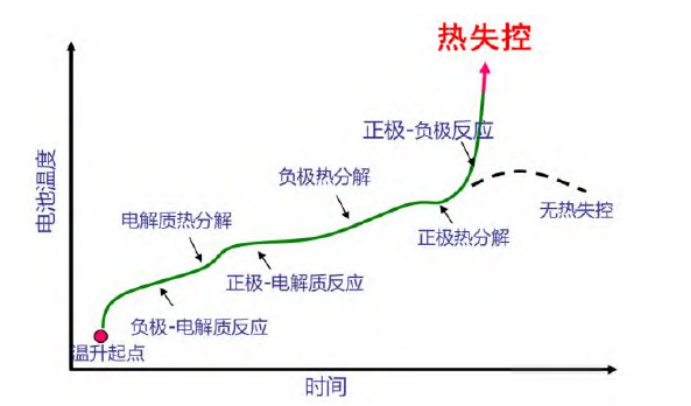
The test involves inducing thermal runaway by different triggering methods, such as external heating, overcharge current injection or short circuit. High-precision temperature sensors, pressure sensors, cameras and other equipment then monitor the battery's temperature, pressure and appearance in real time during thermal runaway. The time of onset and duration of thermal runaway are recorded, as is whether hazards such as open flame or smoke occur. For modules and packs, propagation of thermal runaway between cells is also tested to assess the overall safety of the battery system.
As energy storage batteries are used ever more widely in electric vehicles, portable electronics and energy storage power stations, accidents caused by battery thermal runaway occur from time to time, seriously threatening lives, property and the environment. Rigorous thermal runaway testing can screen out safer battery products and reduce the incidence of accidents at source. In addition, the relevant standards in each country and region set explicit requirements for thermal runaway performance, and only battery products that pass the corresponding tests can enter the market. Testing is therefore a key step in ensuring that products meet market access requirements.
Adiabatic temperature rise testing
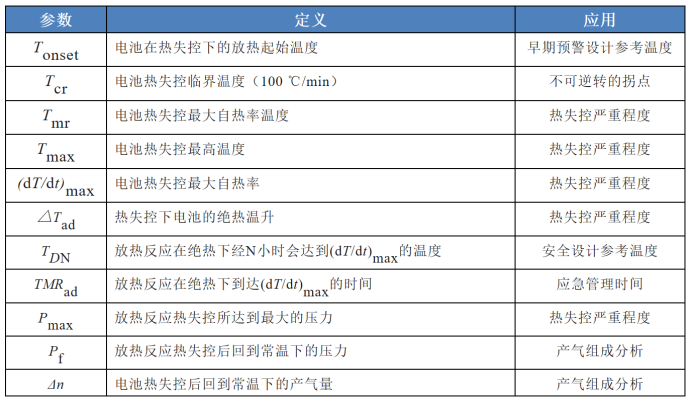
Adiabatic temperature rise testing is an important test of how a battery's temperature changes during charge and discharge, intended to ensure its safety and electrical performance. It assesses the battery's thermal management capability by measuring its temperature change under adiabatic conditions. During the test, the battery is placed in an adiabatic simulation apparatus, and temperature changes are controlled to simulate the thermal effects of the battery in actual use.
GB/T 36276-2023 explicitly requires adiabatic temperature rise data during charge and discharge; UL 1642 (lithium battery safety standard) uses ARC (accelerating rate calorimetry) testing as a key method for assessing the self-heating characteristics of cells; and IEC 62619 (secondary lithium batteries for industrial applications) requires an adiabatic environment to simulate the thermal runaway threshold of batteries. The importance of this test in assessing battery thermal safety is clearly widely recognised.
In adiabatic temperature rise testing, the battery sample is heated or an internal reaction is initiated in an adiabatic environment, and the battery temperature is monitored over time to characterise its thermal behaviour during potential exothermic reactions. The test accurately measures key parameters under near-adiabatic conditions, such as the rate of temperature rise, the maximum temperature rise and the onset temperature of reactions. It quantifies the battery's thermal stability, supports in-depth study of thermal runaway mechanisms, and provides an important basis for thermal stability analysis and safety design.
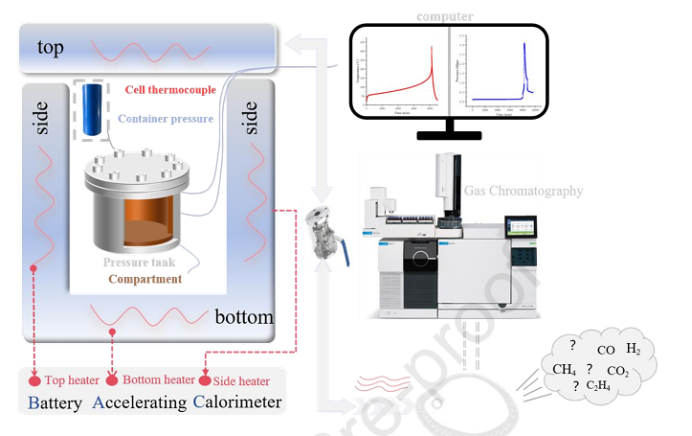
For battery manufacturers, ARC adiabatic temperature rise testing helps them understand how a battery reacts thermally under adiabatic conditions and identify thermal safety hazards in the battery design and choice of materials early, so that they can optimise the structural design and formulation and improve thermal stability. It also provides strong technical support for battery safety certification, helping products meet the relevant standards and become more competitive in the market.
Gas composition analysis
In battery thermal runaway incidents, the composition and concentration of the gases produced directly reflect how violent the internal reactions are and how hazardous they may be.
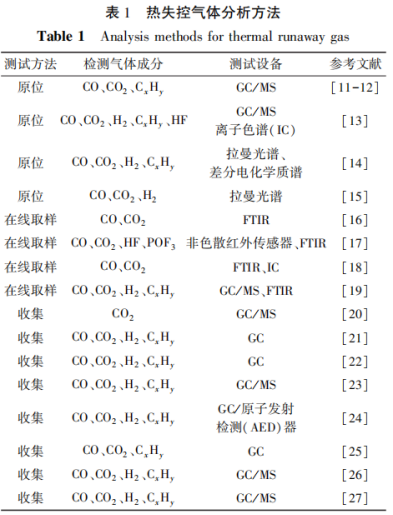
When a battery goes into thermal runaway, side reactions such as electrolyte decomposition, phase changes in the electrode materials and separator failure produce a complex gas mixture, including flammable gases (such as hydrogen and methane), corrosive gases (such as hydrogen fluoride, HF) and toxic volatile organic compounds (VOCs). Different battery material systems and process parameters produce markedly different gas compositions in thermal runaway. In-depth analysis of the gas composition makes it possible to trace back the failure path inside the battery and pinpoint defects in material formulation and process design.
In the global market, regulatory compliance is also the "passport" for battery products to enter international markets. UL 9540A explicitly requires qualitative and quantitative analysis of the gas composition after thermal runaway of an energy storage system to demonstrate its safety, and the EU Batteries Regulation also sets strict limits on the release of hazardous substances after battery thermal runaway.
Huahui Fire uses gas chromatography to identify the organic components of the gas precisely, uses Fourier transform infrared spectroscopy (FTIR) to monitor the concentrations of gases such as HF and CO in real time, and calculates the gas yield and release rate per unit mass of battery.
Toxicity analysis
Toxic gases from thermal runaway not only threaten safety in use but also pose environmental risks in the disposal of spent batteries and in emergency response to incidents. The toxic gases from thermal runaway do not occur singly but form a complex toxic matrix. Hydrogen fluoride (HF), for example, is highly corrosive and can burn the mucous membranes of the respiratory tract; it also binds with calcium in human bones, causing irreversible skeletal fluorosis. The hydrogen content of the released gas can create a risk of vapour cloud explosion, potentially causing major damage.
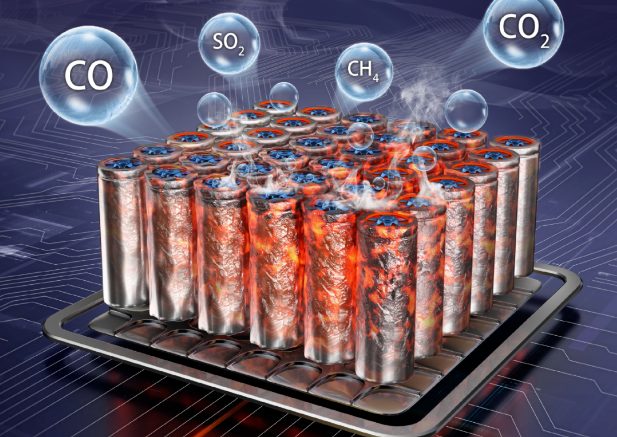
As attention to environmental protection and human health grows worldwide, countries have introduced strict regulations and standards restricting the use and release of toxic and hazardous substances in batteries. Toxicity analysis to ensure that battery products meet the relevant standards is a prerequisite for entering international markets. From the point of view of corporate social responsibility, toxicity analysis can also reduce environmental pollution from battery production and disposal, protect the health of employees and consumers, and improve a company's public image.
R&D testing
Driven by the "dual carbon" goals and the energy revolution, battery companies must not only meet stringent safety standards but also build a competitive edge through R&D testing. With a model driven by both testing and R&D, Huahui Fire provides customers with services along the whole chain, from compliance certification to technical upgrading.
When developing new products, battery makers often need extensive testing and experiments to verify the feasibility of their designs and optimise product performance. Through our collaboration with universities, Huahui Fire can provide R&D testing for manufacturers, making full use of the laboratory's advanced equipment and specialist technical staff together with the universities' research results and fresh thinking. We help customers improve product performance and safety, reduce R&D and production risk, and gain an edge in a fiercely competitive market.
We look forward to building long-term, stable partnerships with more battery makers and working together for the healthy development of the energy storage battery industry. If you would like to discuss anything further, contact us: +86 21 6991 3579, [email protected], or send a test request on this website.

First published on our WeChat channel: read the original