

Thermal runaway
On 29 March 2025, a Xiaomi SU7 caught fire after a high-speed collision, killing three people, and battery safety was once again in the spotlight. As batteries are used ever more widely in electric vehicles, portable electronics, energy storage stations and elsewhere, accidents caused by battery thermal runaway keep occurring, posing a serious threat to life, property and the environment.
Battery thermal runaway can be triggered by many kinds of abuse: mechanical (crushing, nail penetration), electrical (short circuit, overcharge, over-discharge) and thermal (overheating). Causes within the battery itself (manufacturing defects, ageing) can also lead to thermal runaway. The process passes through several stages, from SEI film decomposition and separator melting to cathode material decomposition and electrolyte combustion, ending in a large-scale short circuit and chain-reaction thermal runaway.
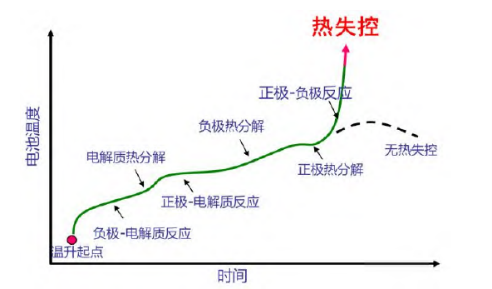
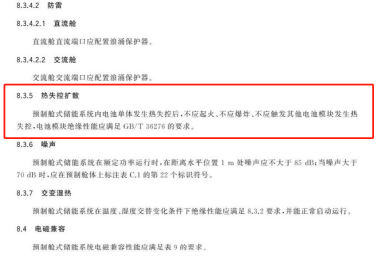
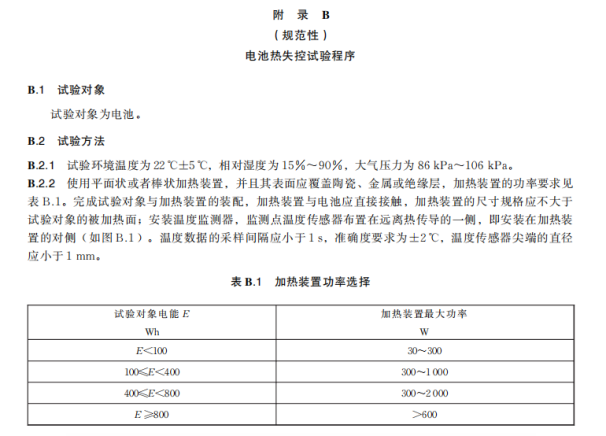
Tests use different trigger methods, such as external heating, overcharge current or short circuit, to induce thermal runaway in the battery. High-precision temperature sensors, pressure sensors, cameras and other instruments then monitor the battery's temperature, pressure and appearance in real time during thermal runaway, and the time of onset, its duration and whether open flame, smoke or other hazards occur are recorded. For battery modules and packs, the test also looks at how thermal runaway propagates between cells, to assess the safety of the battery system as a whole.
Standards in each country and region set explicit requirements for battery thermal runaway performance, and only battery products that pass the relevant tests can enter the market. This is a key step for companies in making sure their products meet market access requirements.
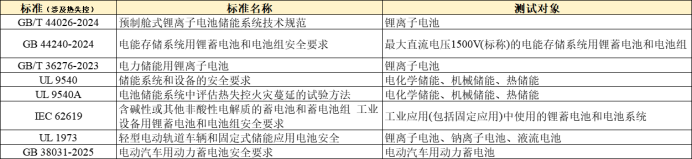
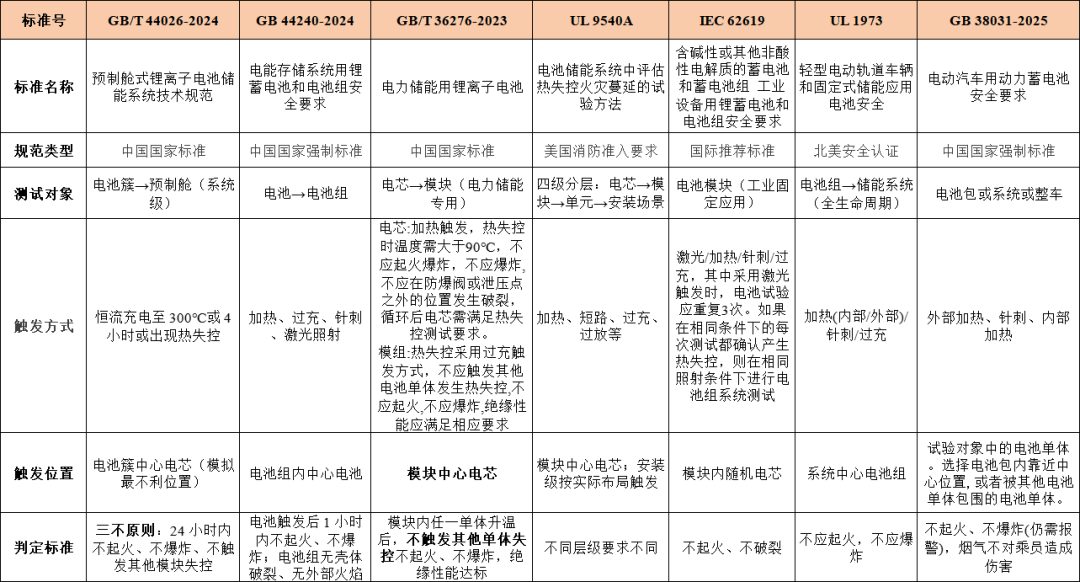
GB/T 44026-2024
As China's first national technical specification for prefabricated-cabin lithium-ion battery energy storage systems, GB/T 44026-2024 establishes a systematic technical framework for protection against thermal runaway propagation. It requires that after thermal runaway of a cell in a prefabricated-cabin energy storage system, the "three noes" are met: no fire, no explosion, and no thermal runaway triggered in other battery modules.
GB 44240-2024
GB 44240-2024 (safety requirements for secondary lithium cells and batteries used in electrical energy storage systems), China's first mandatory national safety standard for energy storage batteries, was drafted under the leadership of the Ministry of Industry and Information Technology over three years and comes into force on 1 August 2025. GB 44240 is currently regarded across the industry as the most stringent national standard for energy storage safety. It focuses on industrial and large-scale energy storage and aims to ensure reliable operation of energy storage systems throughout their life cycle.
Its requirements for thermal runaway and propagation testing are:
Thermal runaway test: after thermal runaway is triggered, the runaway state of the cell must be confirmed by temperature monitoring (for example, cell surface temperature ≥ 300 ℃), followed by 1 hour of observation; the battery system must not catch fire or explode.
Thermal propagation test: this assesses the ability of the battery system to withstand a thermal runaway event in a single cell, to ensure that the event does not set the battery system on fire. A cell in the centre of the battery pack, or one surrounded by other cells, is chosen as the trigger point, and thermal runaway of the target cell may be triggered by laser, heating or other means to simulate the worst-case heat propagation path. The battery system is then observed for 24 h: there must be no thermal propagation between cells, no external flame from the battery system, and no rupture of its enclosure.
GB/T 36276-2023
The new edition, GB/T 36276-2023 (lithium-ion batteries for electrical energy storage), was published by the Standardization Administration of China on 28 December 2023 and came into force on 1 July 2024. It sets out detailed requirements for cells, battery modules and battery clusters.
For thermal runaway, GB/T 36276 sets requirements for both cells and modules. Thermal runaway is triggered by overcharge; it must not trigger thermal runaway in other cells, there must be no fire and no explosion, and insulation performance must meet the relevant requirements.
UL 9540A: 2025
The world's first safety standard for thermal runaway propagation in energy storage systems, UL 9540A uses a series of rigorous test methods to assess the safety of a battery energy storage system after thermal runaway propagation, giving a scientific basis for the safety design, installation and operating strategy of energy storage systems. UL 9540A focuses on the fire behaviour of energy storage cells in thermal runaway, in order to assess the system's fire and explosion protection measures. Thermal runaway is usually triggered by heating: the cell is heated until it goes into thermal runaway and the spread of heat is observed.
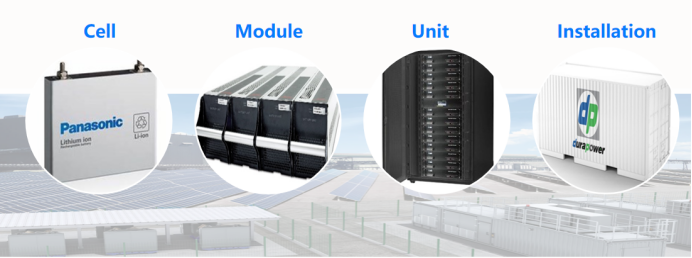
UL 9540A is recognised as the "gold standard" for energy storage fire safety. Its core value lies in its four test levels (cell, module, unit, installation), which quantify heat release rate, gas composition, explosion pressure and other parameters, giving fire services a scientific basis for emergency response. The standard has been incorporated into the US fire code NFPA 855 and is a prerequisite for obtaining an installation permit for an energy storage station.
IEC 62619
For lithium-ion batteries in industrial applications, this standard tests whether thermal runaway triggered in one cell leads to fire, explosion or propagation of thermal runaway in adjacent or other cells. Trigger methods include heating, nail penetration and overcharge.
Note: the "thermal propagation" test of the battery system in IEC 62619 is one of two alternatives. If the cell is subjected to the "internal short circuit" test instead and passes, the system does not need the "thermal propagation" test.
UL 1973
UL 1973 has a broad scope, covering energy storage battery systems and equipment used in residential, commercial, industrial and utility applications, with many cell types, including lithium-ion and lithium metal.
It focuses on the effect of thermal runaway in one cell of a battery system on the surrounding cells and on the battery system, generating data so that cell design can reduce the effect of a single cell failure on the whole battery system.
Besides external heating, it provides many other methods of triggering thermal runaway: internal defects such as conductive contaminants, separator damage and internal heaters, and external stresses such as crushing, nail penetration, short circuit and overcharge.
GB 38031-2025
GB 38031-2025 (safety requirements for power batteries for electric vehicles) is China's mandatory national standard for the safety of EV traction batteries, coming into force on 1 July 2026. While no conclusion has yet been reached on the fire in the 29 March Xiaomi SU7 accident, the countdown to the new national standard for traction batteries is already on.
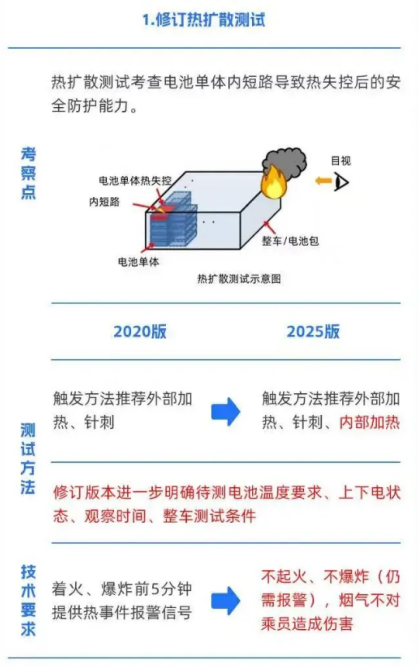
The main change in the new edition is the revised thermal propagation test. The technical requirement changes from "provide a thermal event alarm signal 5 minutes before fire or explosion" in the previous standard to "no fire and no explosion (an alarm is still required), and smoke must not harm the occupants".
The industry regards the new edition as the strictest safety requirement yet for traction batteries.
Note: for thermal runaway testing of traction batteries internationally, IEC 62660-2, IEC 62660-3 and many other standards include provisions, but they differ in test environment, initial SOC, trigger method and the criteria for deciding that thermal runaway has occurred.
Comparison

First published on our WeChat channel: read the original