
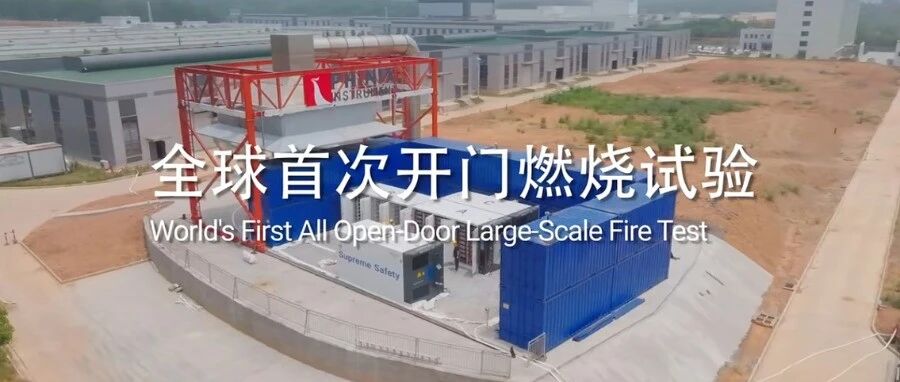
Big news! In early June, HiTHIUM, witnessed by an internationally recognised authority, completed a large-scale "open-door extreme burn test" that made a stir across the industry.
In the test, a 5 MWh energy storage system at full charge endured 15 hours of extreme burning in an "unconstrained burn", with the cabinet doors open throughout and an ample supply of oxygen. The spacing between neighbouring units was reduced to the industry's minimum of 15 cm, and with the active fire protection system fully switched off, the system successfully stopped thermal propagation. It resisted the prolonged fire using only its own passive fire protection design, demonstrating its ability to protect itself from fire without external firefighting intervention, and its high reliability.
The test was far more severe than a conventional closed-door test. It used the 20 ft container system found in real projects, not an assembly of cube units, faithfully reproducing the physical structure of an energy storage station.
At the end of the test the prefabricated cabin structure was still intact, and the three neighbouring containers were unharmed. In our view, this is not only a technical victory but also the ultimate proof of the performance of passive fire protection materials.
Four extreme challenges
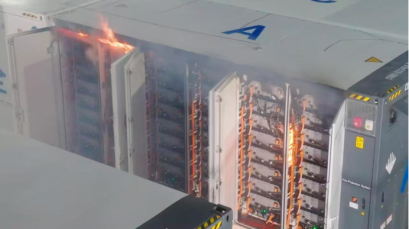
First, the test details disclosed. According to the information published by HiTHIUM, this large-scale burn test set four extreme challenges:
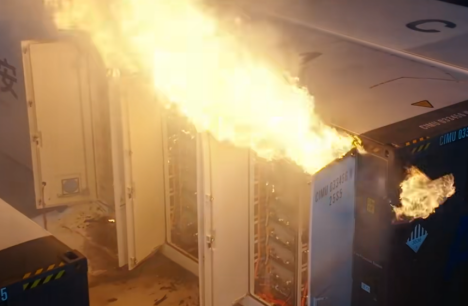
Open-door burn: the cabinet doors were open throughout, so the test was run under "extremely severe" conditions with ample oxygen. The burning intensity far exceeds that of a closed-door test, simulating the worst case of a fire out of control.
15 cm spacing: the spacing between units placed "back to back and side by side" was reduced to the industry's minimum of 15 cm. Facing flame temperatures above 1300 ℃, the neighbouring systems showed no thermal propagation at all, demonstrating the system's ability to isolate thermal runaway at close range.
No external firefighting: external firefighting intervention was completely shut off, and the system relied purely on its passive fire protection design to resist 15 hours of fire.
100 % state of charge: a fully charged system releases the maximum thermal runaway energy, testing the system's stability at peak risk.
In a real 20 ft container setting, after 15 hours of extreme, fully developed burning, the system overcame the triple ordeal of "open doors + minimum spacing + long-duration burning" and passed the large-scale burn test. This shows that HiTHIUM's 20 ft ∞Block 5 MWh system can buy emergency responders golden time in a real fire, protecting people and property as far as possible.
The keys to success
In our view, HiTHIUM succeeded in such a severe test for the following reasons:
Sound structural design. Its products use a three-dimensional "cell–module–system" protection structure, with comprehensive safety design from the cell at the lowest level up to the whole system. To isolate thermal runaway under such harsh conditions, we believe every level of protection was pushed to the limit, whether cell packaging, heat dissipation design, module layout, spacing design or the structural design of the prefabricated cabin. Only protection layered in this way can fundamentally improve the safety of the system's structure.
Material performance of the prefabricated cabin. With the active fire protection system forced off, the key to the HiTHIUM system still stopping thermal propagation is the exceptionally high fire resistance of the prefabricated cabin materials. As the external protective structure of the energy storage system, the cabin takes the direct impact of flames and high temperatures. Materials that seem to play "supporting roles", such as the cabin's supporting structure, thermal insulation and fire-stopping materials, are precisely the key gates that stop domino-like thermal propagation in a fire. Above all, only cabin materials with excellent fire resistance can stay stable through prolonged high temperatures, without melting, burning or deforming, while blocking the heat.
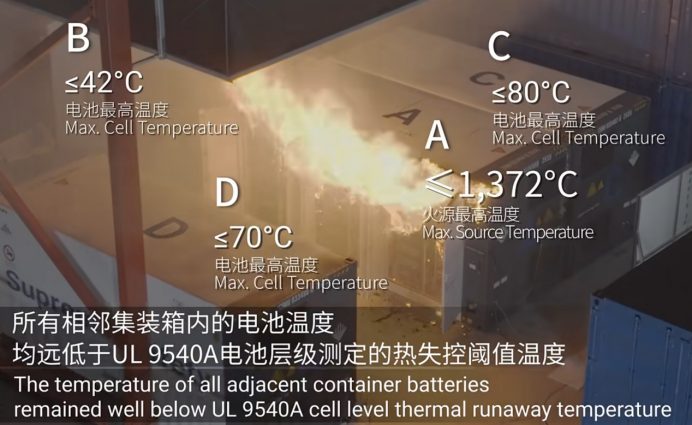
This is borne out in HiTHIUM's test video. Over 15 hours of high temperatures, the battery temperature in the triggered cabin reached a maximum of 1372 ℃, yet there was no structural deformation or collapse. The neighbouring containers suffered only superficial damage to their outer skin, and the maximum temperatures of the batteries inside containers B, C and D were 42 ℃, 80 ℃ and 70 ℃, all far below the thermal runaway temperature determined in UL 9540A cell-level testing. This achieved the remarkable result of "zero thermal propagation to the three neighbouring containers".
This is where the value of passive protection becomes clear: without any external intervention, the properties of the materials alone can resist the fire in its early stages. That is precisely what a large-scale burn test sets out to verify.
The challenges of large-scale burn testing
Achieving an extreme burn test at HiTHIUM's level is far from as simple as lighting a fire. Behind it lie multiple challenges in systems engineering, materials science and safety management.
For most manufacturers, a large-scale burn test is a highly challenging undertaking, involving a complex process from test planning through execution to reporting. Every detail can affect the accuracy of the result: for example, how the batteries are arranged, and the materials and installation of the connecting components. In setting up test equipment and fixtures, the precision and stability of the equipment also bear directly on the reliability of the test.
Beyond that, the management, quality control and safety control of the test process are closely tied to the result. Every step needs to be carried out and reviewed by a professional team and experienced technical staff to ensure the result is scientific and impartial.
So far only a handful of leading companies worldwide have passed this test, which shows how difficult it is.
The way forward: an integrated solution
As the energy storage industry develops, the safety requirements on energy storage systems keep rising, and the trend will inevitably be towards even more severe large-scale burn tests. With NFPA 855 G.11 and the UL 9540A annex about to take effect, large-scale burn testing is changing from an "optional extra" to a "mandatory threshold" for the energy storage industry, and more and more manufacturers will inevitably have to enter the race. What many manufacturers care most about, then, is how to pass a demanding large-scale fire test.
As a laboratory that has worked in fire testing for decades, we know that breaking through this challenge requires a combination of technical capability, testing experience and collaboration across the industry:
Fire-resistant construction: Huahui Fire has long been exploring the use of new materials in energy storage. We have close partnerships with a number of new-material manufacturers and work with them on new materials for energy storage batteries. By testing and evaluating the performance of new fire-resistant and thermally insulating materials, we can provide manufacturers with material selection advice and solutions.
People: a highly qualified technical team, including combustion experts, energy storage system engineers and test technicians, able to provide manufacturers with a complete service from test plan design to analysis of the results.
Test site: the laboratory has a large-scale fire test site in Baoding, Hebei (20 mu, with a core test area of 1000 m²) where full-scale burn scenarios can be built for large energy storage containers. It is equipped with large-scale calorimetry that can reproduce thermal propagation under complex conditions, meeting the requirements for large-scale fire testing to NFPA 855 and the certification needs of high-capacity energy storage systems.
Support throughout: a one-stop service covering passive fire protection design, material selection, test planning, sample preparation, safety protection, and reporting and certification.
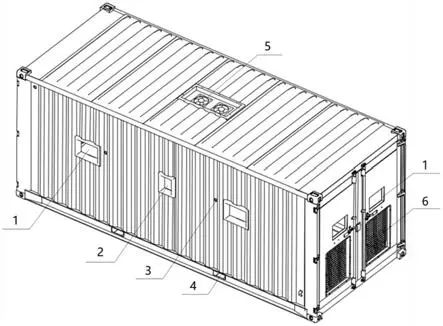
In our view, although a large-scale fire test ultimately comes down to the structure "holding out", the details of the test matter too. After all, a single burn can cost several million yuan, which is no laughing matter.
We can provide manufacturers with an integrated solution covering passive fire protection design, material selection, test planning, sample preparation, test execution and reporting, tailoring the most suitable test plan to each client's needs and product characteristics, with the aim of "passing first time".
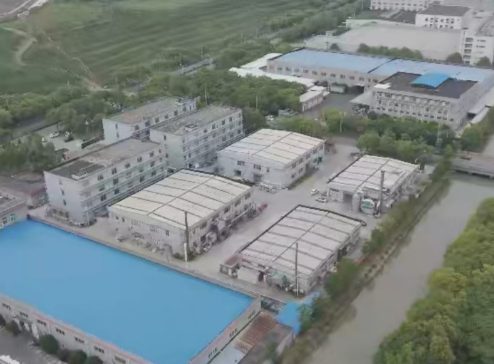
Large-scale fire testing becoming routine marks a shift in energy storage safety from "passive defence" to "active prevention". As the new energy sector grows rapidly, the demands on energy storage safety will keep rising. Huahui Fire will continue to provide clients with technical support throughout, from consultancy to testing and certification compliance, improving pass rates and safeguarding energy storage safety.
If you have any questions about large-scale burn testing, don't hesitate to get in touch. Contact us: +86 21 6991 3579, [email protected], or send a test request on this website.

First published on our WeChat channel: read the original