
Scope
| Market | Standard | Within CNAS scope |
|---|---|---|
| US, Canada | UL 10C (positive pressure), UL 10B (neutral pressure) | Yes |
| Europe, Middle East | EN 1634-1 (classified to EN 13501-2) | Yes, excluding radiation |
| International | ISO 3008-1:2025 | Yes |
| China | GB 12955, GB/T 7633, GB/T 38252, GB/T 41480 (smoke leakage) | Yes |
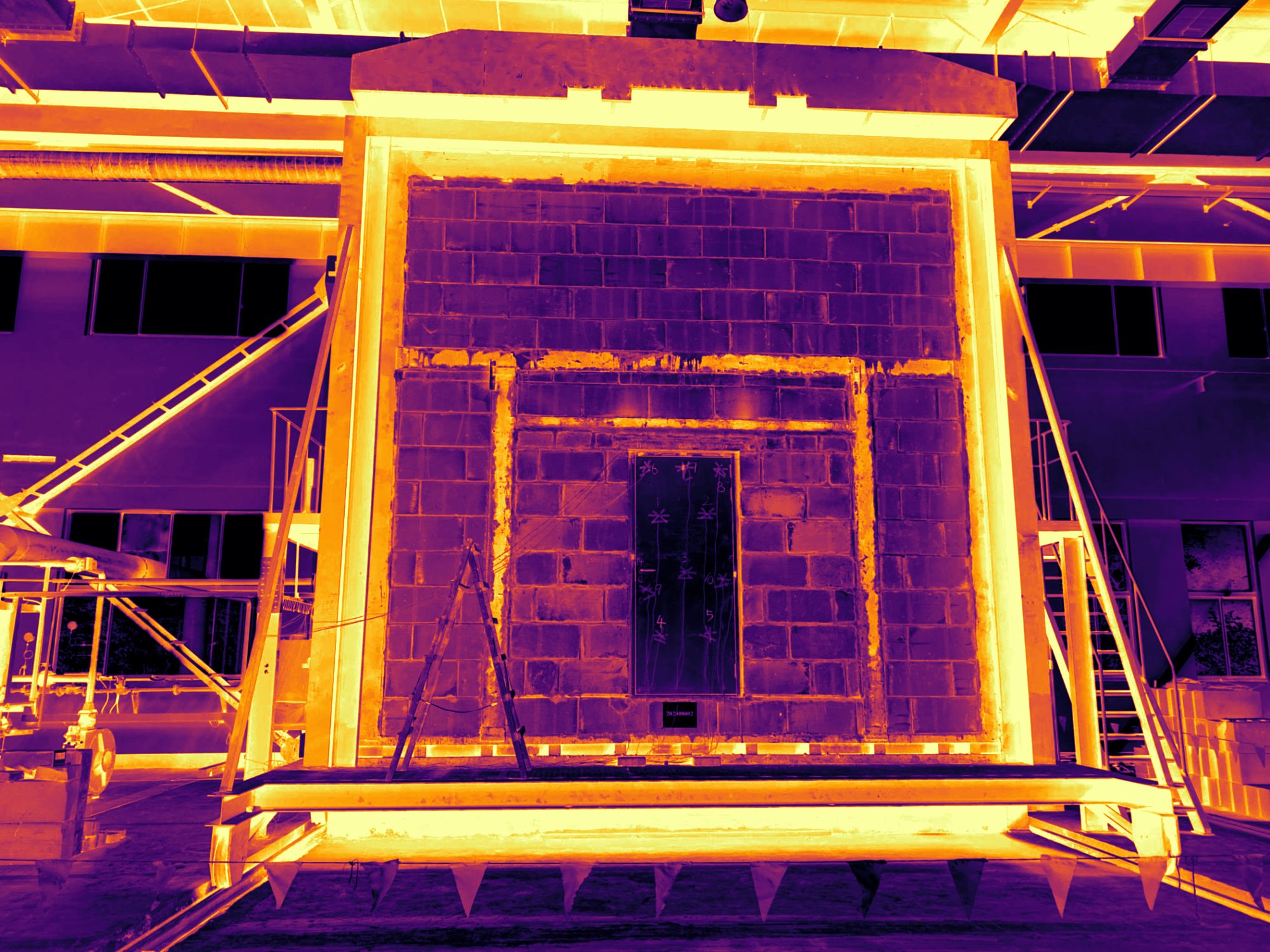
Products: steel and timber hinged doors, pivoted doors, sliding doors and shutters, glazed doors, openable windows, and doors for data centre modules and energy storage enclosures.
Why fire doors fail
From our test records, three causes account for most failures:
- Core and infill materials that decompose fast at high temperature.
- Weak frames, hinges and locks. Distortion opens the gap; fittings loosen under heat and the hose stream.
- Seals that do not close the gap, especially under the positive pressure of UL 10C and EN 1634-1.
Routine production checks cannot reproduce these conditions, so we recommend an indicative test before the witnessed certification test. It costs far less than a failed certification, redesign and re-test.
Deliverables
- Fire resistance test report under CNAS accreditation
- Witnessed test for your certifier on request
- Indicative test and failure analysis with design recommendations
Frequently asked questions
We failed at another lab. Can you help?
Yes. Send us the report, photos and drawings. We will review where and why it failed — usually the edge seal, hardware or frame fixing — and suggest changes before a re-test.