

In our last article we looked at the new EU Battery Regulation (EU) 2023/1542. As is well known, the Regulation on batteries and waste batteries (EU) 2023/1542 has applied since 18 February 2024. It brings the whole battery industry chain under more comprehensive regulation, governing the full life cycle of a battery from production to reuse and recycling, and it has a major impact on battery companies.
For Chinese batteries, or products containing batteries, to be exported to the EU smoothly, cross-border sellers must make sure the products comply with the relevant EU battery legislation and meet CE, RoHS, WEEE and UN38.3 certification and conformity assessment requirements, so that the batteries are safe, environmentally sound and safe in transport, and the products comply with the relevant regulations and standards.
These certifications and assessments must be carried out by third-party bodies recognised by the EU. For what each certification involves, see our article Which certifications do batteries need for export to the EU?
Battery certification is a complex and detailed process, covering everything from basic performance to safety and from environmental adaptability to electrochemical properties. It involves complex testing, such as testing for hazardous substances, overcharge tests and forced discharge tests.
Today, though, we look at a test that matters a great deal for lithium batteries: the thermal runaway test.
Many exporters to the EU may overlook this test, but with the new Battery Regulation (EU) 2023/1542 in force, it has become vital.
Let us look at what the new Regulation (EU) 2023/1542 requires in terms of thermal runaway testing.
Regulation (EU) 2023/1542 on batteries and waste batteries, Annex V, point 10: fire test, assessing the risk of explosion by exposing the battery to fire.
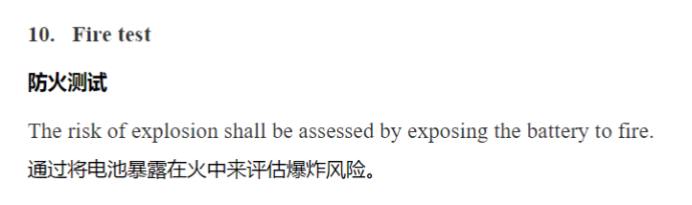
Point 10 requires a fire test, in which the battery is exposed to flame to assess its risk of explosion under extreme conditions. The aim is to make sure battery products perform safely in a fire, reducing potential loss of life and property and harm to the environment.
Why does the Regulation include this provision?
Lithium-ion batteries are prone to thermal runaway at high temperatures, leading to decomposition of the electrolyte and release of flammable gases, which can cause fire or explosion.
Numerous fires involving batteries in electric vehicles, energy storage installations and other applications have highlighted the risks batteries pose under extreme conditions. These incidents have caused strong public concern about battery safety and pushed regulators to tighten the requirements.
A battery explosion threatens not only the user's life but can also set off a chain reaction affecting the surroundings. A fire test identifies potential risks early and makes product design safer.
The fire test requirement in Annex V, point 10 of (EU) 2023/1542 does not specify which test method to use, which gives the industry flexibility.
Several widely recognised fire test standards are on the market, such as UL 9540A and IEC 62619. This also serves to align with international standards, helping to harmonise the global market and making it easier for batteries to circulate.
The EU allows companies to choose a test method suited to their product. Several methods can serve as reference:
UL 9540A
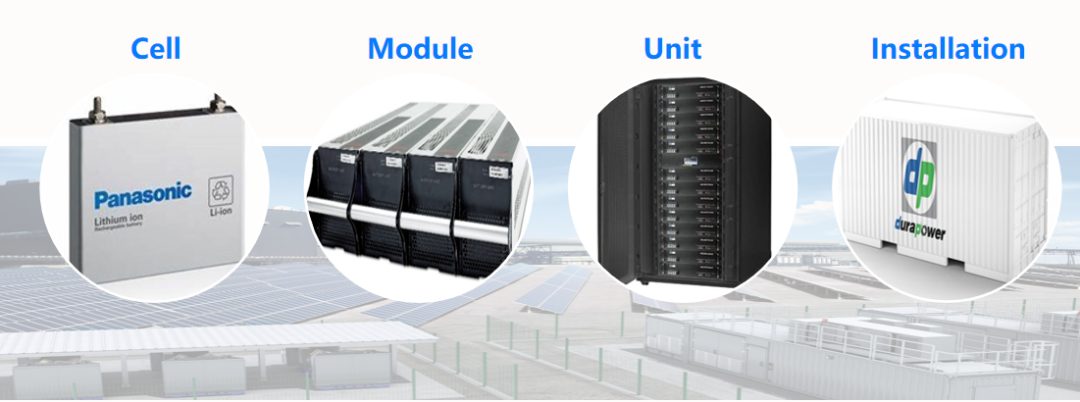
The industry commonly refers to the UL 9540A test method, which analyses battery safety comprehensively through thermal runaway tests at several levels and fire assessment, focusing on how cells, modules and battery packs behave under fire conditions. It looks at whether explosion occurs, whether fire spreads, and the composition and quantity of gas released. This matches the fire test requirement of the new EU Battery Regulation.
IEC 62619
IEC 62619 is a safety assessment for industrial lithium-ion batteries. Its flame test exposes the battery to an open flame and observes the burning time, whether it explodes and whether it releases harmful gases. Its test conditions and data requirements are simpler than those of UL 9540A.
SAE J2464
SAE J2464 is the Society of Automotive Engineers' recommended practice for safety and abuse testing of rechargeable energy storage systems (RESS) in electric and hybrid electric vehicles.
Its flame test also exposes a battery module directly to fire and measures the rate of flame spread, smoke production and whether an explosion occurs. However, it mainly assesses the safety of traction batteries under extreme conditions (such as high temperature, fire and collision). It is focused on electric vehicle applications and does not apply to batteries for small electronic devices.
UL 9540B
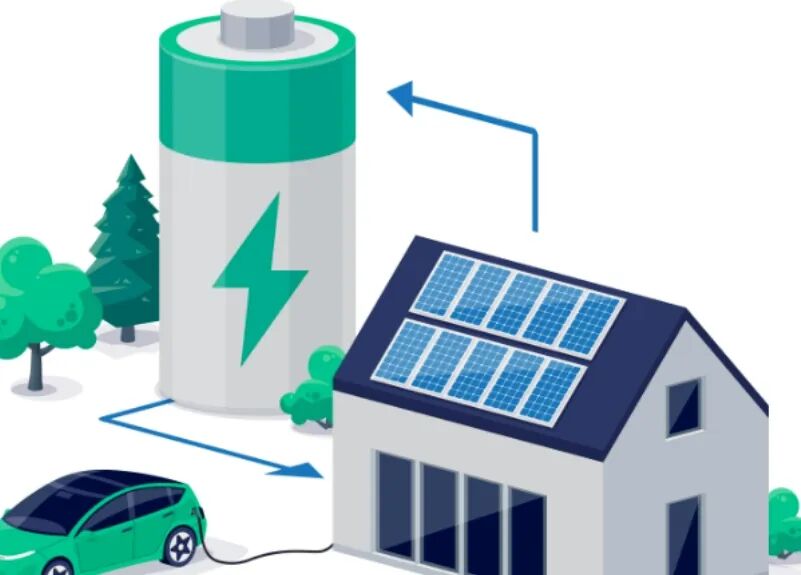
UL 9540B covers residential energy storage systems of 20 kWh or less. It requires the thermal runaway gas of the energy storage unit to be ignited, to assess how the battery energy storage system (ESS) behaves under thermal runaway, analysing thermal propagation and fire risk in particular through measures such as total heat release (THR) and peak heat release rate (PHRR). This meets the Regulation's requirement to assess explosion risk.
However, it is aimed mainly at energy storage systems and is of limited relevance to other battery types (such as consumer electronics). Small batteries (such as those for consumer electronics or electric vehicles) may need other test methods in addition to cover the Regulation's aims.
CSA TS-800
CSA TS-800 is safety guidance published by the CSA Group (Canadian Standards Association), focused on the design and installation of battery energy storage systems and especially on safety assessment under fire and thermal runaway conditions. It too requires a single ESS unit to be fully involved in fire: the battery energy storage system is exposed to an external fire source, and its burning behaviour and protective performance are observed. Its focus on the fire behaviour of battery energy storage systems matches the core aim of the Regulation's fire test. However, it is aimed mainly at battery systems and applies less directly to single cells. Its test procedure is also rather vague, and we can expect CSA to refine it further.
We recommend that manufacturers choose a suitable test method based on the product's characteristics, application and the legal requirements, to ensure compliance with EU legislation while making the product safer and more competitive. For example, for lithium batteries UL 9540A testing may be chosen, as it may well satisfy the Regulation's fire test requirement; for traction batteries, standards better suited to them, such as SAE J2464 or GB 38031, are recommended.
If no single standard fully meets the EU requirements, we recommend combining several standardised test methods (such as IEC standards and UL 9540A) to cover the legal requirements in full.

First published on our WeChat channel: read the original