

As global trade integration accelerates, Chinese fire door manufacturers are expanding their export business. But fire door testing and certification systems differ markedly between countries and regions, and complex regulations and local particularities pose many challenges for market access.
As a Chinese laboratory specialising in fire door testing, we draw on the latest regulatory policies and industry practice worldwide to help fire door manufacturers fully understand the testing and certification requirements of their main export markets, and offer targeted solutions to help them open up international markets.
Global fire door certification: framework and differences
Fire doors are a key component of a building's passive fire protection. Their testing and certification centre on core measures such as fire resistance (integrity and insulation) and hose stream performance, with ISO 834 as the international reference standard.
However, countries generally set their own national standards and certification rules based on local building safety needs, and most make certification a mandatory requirement of their building regulations: products without the corresponding certification cannot enter the local market.
The Americas: the US applies standards such as NFPA 80 and UL 10B/10C, with emphasis on positive pressure testing and third-party certification (such as UL). Although it recognises the accreditation of some international laboratories, certification must be led by a US body. Canada uses CAN/ULC S104, which has a high degree of mutual recognition with the US UL system, but products must still meet local building regulations.
Europe: the EU's core standards are EN 16034 and EN 1634-1, and CE marking is essential for market access; only test results to EU harmonised standards from recognised laboratories are accepted. Since Brexit, the UK has introduced UKCA marking, and the BS 476 series is widely recognised in places such as Hong Kong (China) and the UAE.
Belt and Road countries: as an important market for Chinese fire door exports, countries along the Belt and Road combine mandatory certification with compatibility with international standards. China (GB 12955) and Russia (GOST standards) require mandatory local certification, so certificates must be converted to meet local compliance requirements. Pakistan, Indonesia and others accept conversion of international certifications such as UL and CE, but subject to local interpretation of building regulations. Iran, Kenya, Malaysia and others explicitly give priority to local testing and verification, and international certification must be assessed and confirmed by a local body.
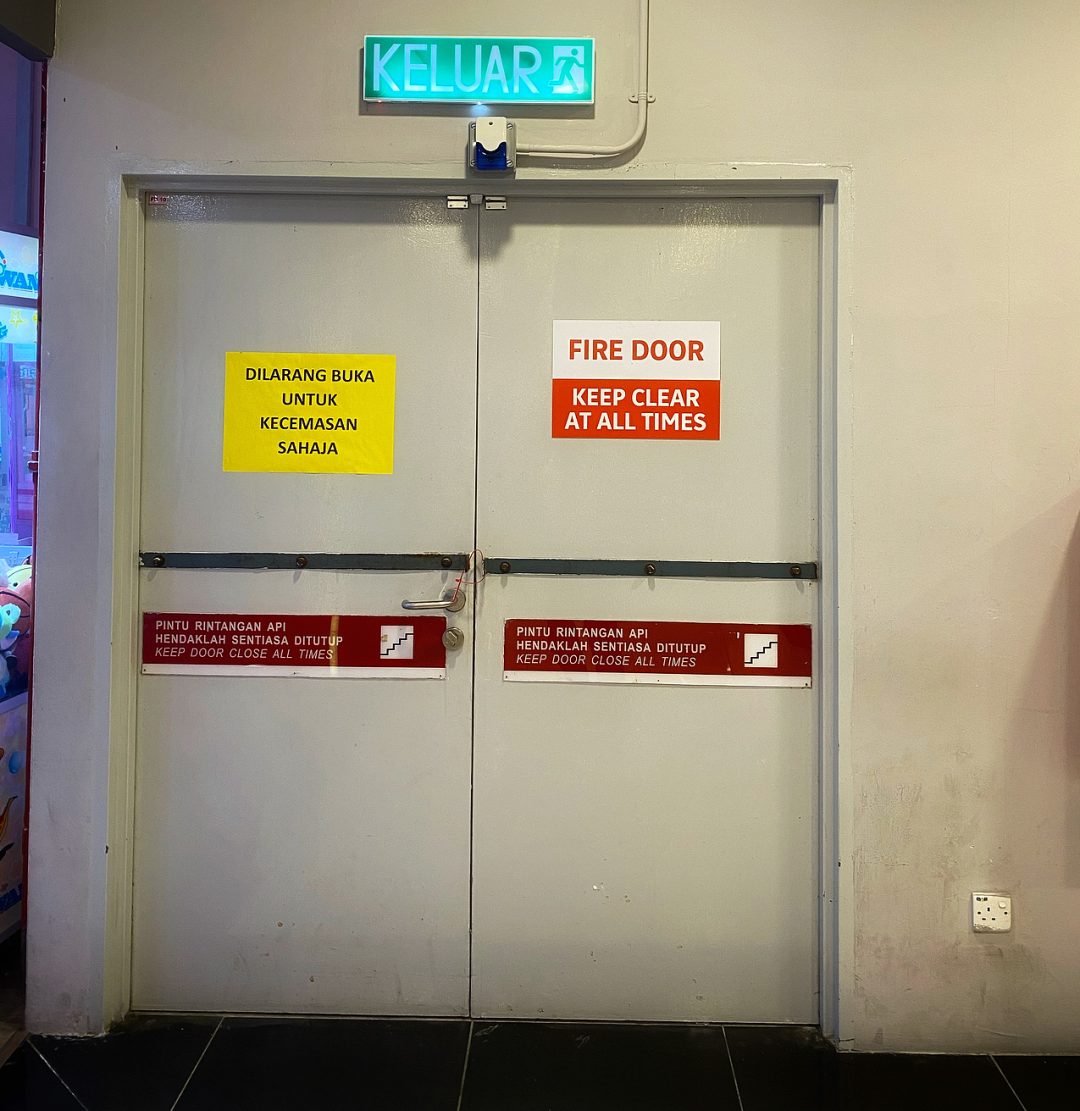
Certification requirements of the main export markets
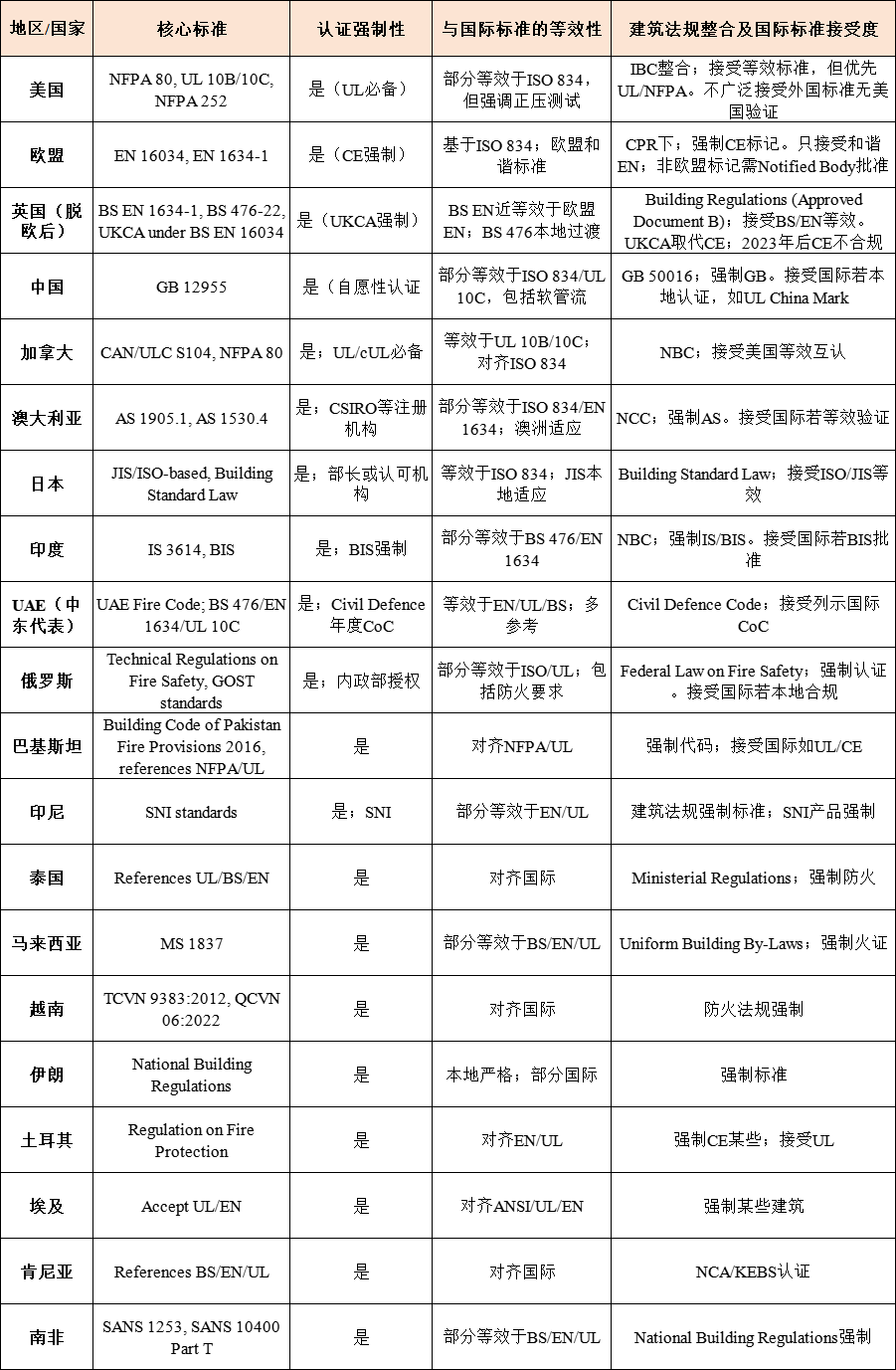
The table below sets out the core standards of the main export markets worldwide, their equivalence to international standards, and the certification requirements:
Key points for export certification
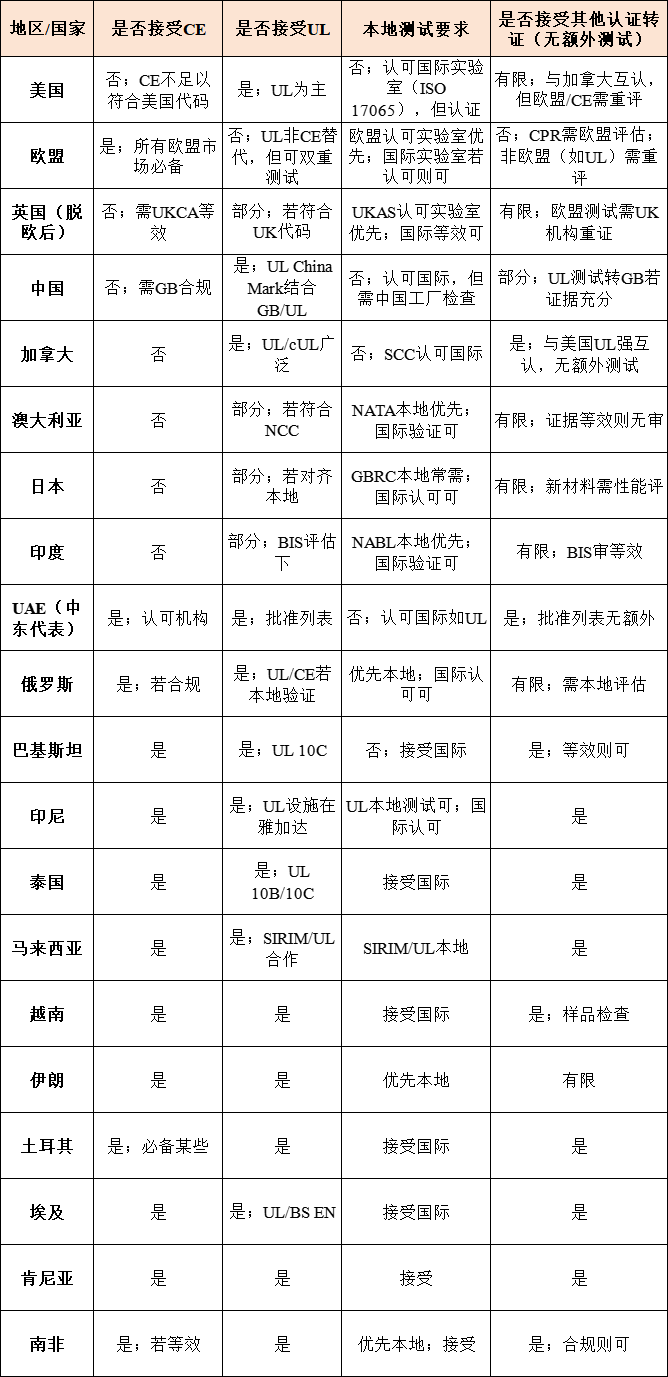
Reviewing the certification requirements of the main markets makes one thing clear: in most countries and regions, fire door certification for export requires local testing or test reports issued by a locally recognised laboratory. Only a few markets accept full conversion of international certification.
These local particularities create multiple risks for manufacturers. Without enough preparation, they can easily lead to failed certification, cost overruns or delayed market access:
Equivalence risk: international standards (such as ISO 834) are only a baseline reference, and countries interpret "equivalence" differently. For example, results of the US UL hose stream test are not directly recognised in the EU, and additional testing to EN standards is needed. China's GB standards overlap with UL and EN standards on some measures, but local certification still requires the differences to be verified. Manufacturers that rely blindly on international test reports may have to test again.
Local laboratory accreditation: most countries require testing to be done in a locally recognised laboratory. India requires a NABL-accredited laboratory, Russia gives priority to bodies authorised by its Ministry of Internal Affairs, and Malaysia also requires testing in a locally recognised laboratory. If the international laboratory a manufacturer chooses is not recognised in the target market, the test results will be rejected and the whole initial investment wasted.
Differences in interpretation and enforcement: in emerging markets (such as Pakistan and Kenya), local interpretation of certification standards leaves room for flexibility, and the same test item may be disputed because regulators understand it differently. Some countries (such as the UK and Turkey) update their standards frequently, and if manufacturers do not keep up with the latest requirements, tests already completed may become invalid as the standards change.
Limits on certificate conversion: although some countries accept conversion of international certification, there are strict limits. The US and Canada recognise each other, but the EU/CE requires reassessment; since Brexit, CE marking is no longer compliant in the UK after 2023 and UKCA marking is required; in China, converting UL to GB needs full supporting evidence, and a factory inspection is essential.
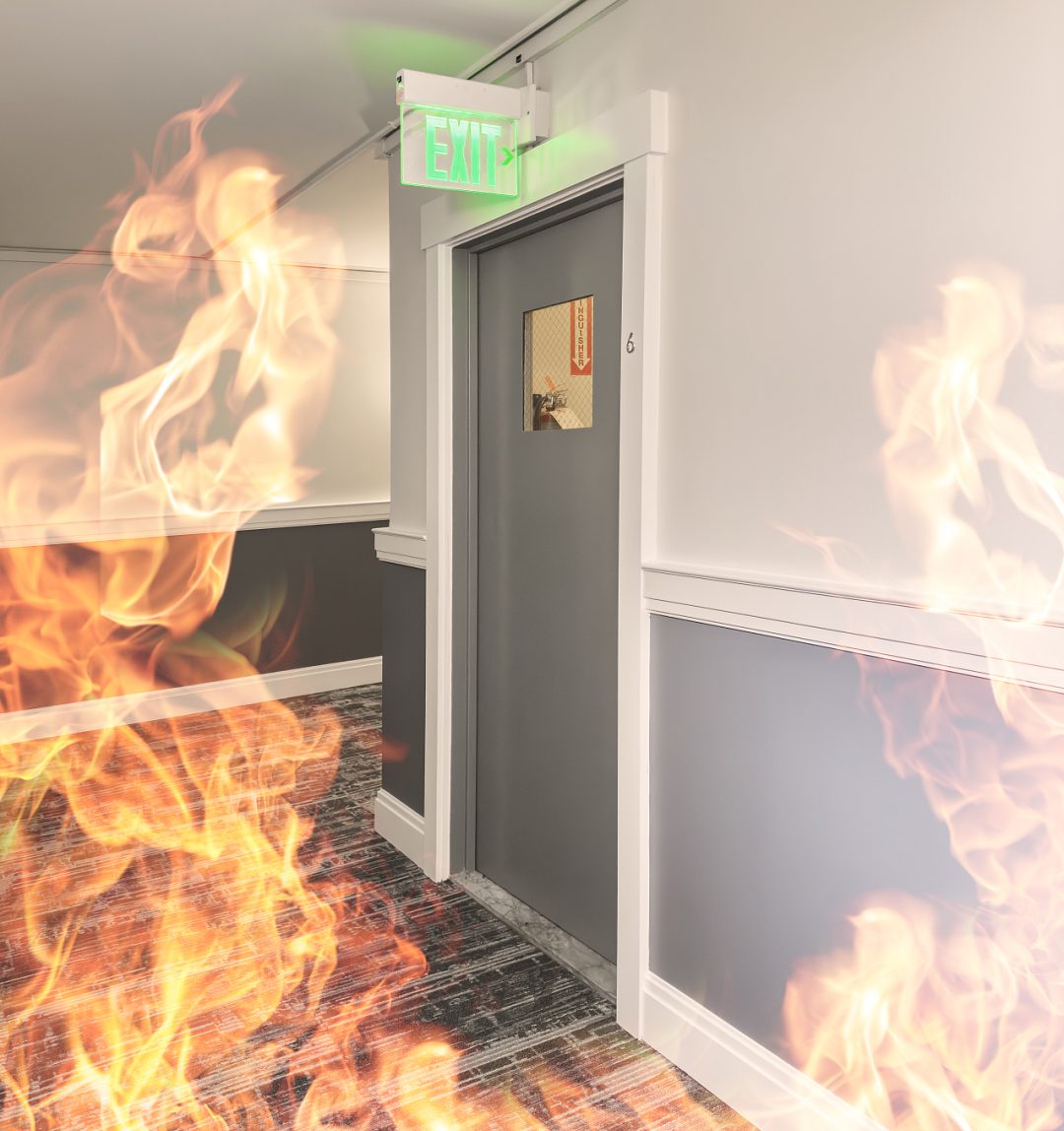
Why pre-checks and pre-testing matter
Given how complex and risky certification is worldwide, manufacturers that want to move their export business forward efficiently and avoid repeat testing and wasted cost need comprehensive pre-checks and pre-testing before formally applying for certification. Testing early lets them identify where their product falls short of the target market's standards, refine the product design and production process accordingly, and reduce the chance of failing formal certification.
In light of these risks, we recommend that fire door manufacturers carry out the following pre-checks and pre-tests before formal export certification:
1. Product pre-testing
Carry out comprehensive pre-tests to the target market's standards to check whether the product meets the basic requirements;
Focus on test items specific to the target market (such as positive pressure testing in the US and smoke control requirements in the EU);
Assess and adjust the product design and choice of materials accordingly;
2. Analysis of differences between standards
Compare the target market's standards with Chinese standards in detail;
Analyse differences in test methods and pass criteria;
Assess whether the product design needs adjusting to meet specific requirements;
3. Research on local regulations
Check whether the target market accepts foreign certification;
Confirm whether a local agent or branch is needed;
Understand the certification process, timescale and budget;
Follow the latest regulatory changes and implementation timetables;
4. Sample preparation and test planning
Prepare representative samples to the target market's requirements;
Draw up a phased test plan: pre-testing first, then formal certification;
Consider testing to several standards to cover several target markets, optimising a common product design and reducing duplicated investment in certification for multiple markets.
How a specialist laboratory can help
As a Chinese testing laboratory accredited to ISO 17025, Huahui Fire has worked in fire door testing and certification for many years and has built up an extensive database of standards and practical experience. We support manufacturers throughout the process:
Interpretation of standards and gap analysis: our experts help manufacturers understand the requirements of each country's standards in depth, analyse the differences from Chinese standards and give targeted technical advice.
Custom pre-check and pre-testing programmes: we set up pre-tests tailored to the manufacturer's export destinations and issue detailed test reports with recommendations for improvement, helping manufacturers resolve compliance issues in advance.
Technical support and coordinated certification throughout: we help manufacturers connect with locally recognised laboratories in the target market, coordinate overseas laboratory resources and provide a one-stop certification solution, so that certification applications move forward efficiently.
Fire door certification for export involves aligning with standards on many levels and adapting to local conditions, and the prevalence of local testing and its potential risks should not be underestimated. Choosing a specialist testing partner and carrying out pre-checks and pre-testing early is key to reducing certification costs and shortening the time to market.
We are glad to bring our extensive industry experience and precise technical support to fire door manufacturers at every stage, helping them overcome the hurdles of export certification and expand steadily into global markets. If you would like details of certification for a particular market or a custom test programme, get in touch with us at any time.
First published on our WeChat channel: read the original