

Origins of the standard
For ships sailing in international waters, fire is one of the deadliest threats. Ship spaces are enclosed and escape routes are limited, so once a fire starts it spreads very quickly, with potentially disastrous consequences. For this reason the International Convention for the Safety of Life at Sea (SOLAS) and the International Code for Application of Fire Test Procedures (FTP Code), both drawn up by the International Maritime Organization (IMO), set stringent requirements for the fire resistance of marine materials.
The 2010 FTP Code came into force on 1 July 2012. It governs the testing and approval of fire protection materials and fire-resisting constructions under SOLAS Chapter II-2. Besides technical updates to each part, it consolidates the former MSC.61(67), MSC.101(73) and the scattered standards they referenced, giving shipyards, designers, approval bodies, manufacturers and third-party type-testing laboratories a clearer and more direct understanding.
Part 3 sets strict technical requirements for the fire resistance of "A", "B" and "F" class divisions. Its core aim is to regulate the fire resistance of divisions within a ship's structure, so that in a fire they effectively stop it spreading and buy time for evacuation and firefighting. The Code applies to all kinds of ships, including high-speed craft, cargo ships and passenger ships, and its requirements cover key elements such as bulkheads, decks, ceilings, linings, doors, windows and pipe penetrations.
Under the amendments adopted in 2004 (MSC.173(79)), Part 3 further refined the test requirements for the different fire resistance classes and added provisions specific to high-speed craft (Parts 10 and 11), specifying the test methods for fire-restricting materials and fire-resisting divisions. The 2010 revision of the FTP Code strengthened international harmonisation, requiring all ship materials to be certified by testing laboratories recognised under the IMO framework so as to ensure consistency worldwide.
Classification system and key indicators
Part 3 of the FTP Code sets out the fire resistance requirements for "A", "B" and "F" class divisions in ship structures. These classes are used to assess the integrity, insulation and resistance to flame penetration of bulkheads, decks, ceilings, doors, windows and similar structures in a fire. The key indicators are summarised below:
Integrity: in the standard fire test, the division must prevent the passage of flame and smoke.
Insulation: the temperature rise on the unexposed face must be kept within specified limits (for example, A-60 requires an average temperature rise of ≤ 140 °C and a rise at any single point of ≤ 180 °C).
Test duration: depending on the class, the duration ranges from 0 to 60 minutes (for example, A-60 requires 60 minutes).
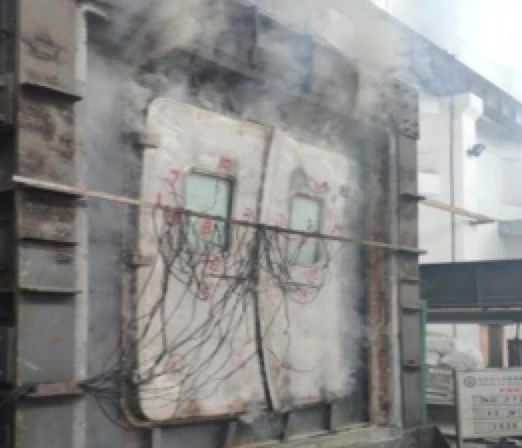
Technical requirements for "A", "B" and "F" class divisions
1. "A" class divisions
"A" class divisions are the most fire-resistant structures on a ship, used mainly to separate high-risk spaces (such as machinery spaces and fuel tanks) from accommodation. They must pass a 1-hour standard fire test. The core requirements are:
Materials and construction: the main structure is steel or an equivalent non-combustible material, with fire-rated seals at the joints.
Insulation: in the standard fire test, the average temperature rise on the unexposed face must not exceed 140 °C and the maximum rise at any single point must not exceed 180 °C. There are four classes by fire resistance time:
A-60: 60 minutes (highest class)
A-30: 30 minutes
A-15: 15 minutes
A-0: 0 minutes (smoke and flame tightness only)
Integrity: at the end of the 1-hour test, the structure must remain intact and prevent the passage of smoke and flame.
2. "B" class divisions
"B" class divisions are used mainly in lower-risk areas (such as corridors and cabins). Their fire resistance is lower than "A" class, but they must still meet basic fire protection requirements:
Materials: approved non-combustible materials; surface finishes may be low flame-spread materials.
Insulation: the average temperature rise on the unexposed face must not exceed 140 °C and the maximum rise at any single point must not exceed 225 °C. There are two classes:
B-15: 15 minutes
B-0: 0 minutes
Integrity: the division must prevent the passage of flame and smoke during a 30-minute fire test.
3. "F" class divisions
"F" class divisions are intended for special spaces (such as galley exhaust ducts). They must pass a 30-minute fire test, with the focus on resistance to flame penetration.
Specimen sizes
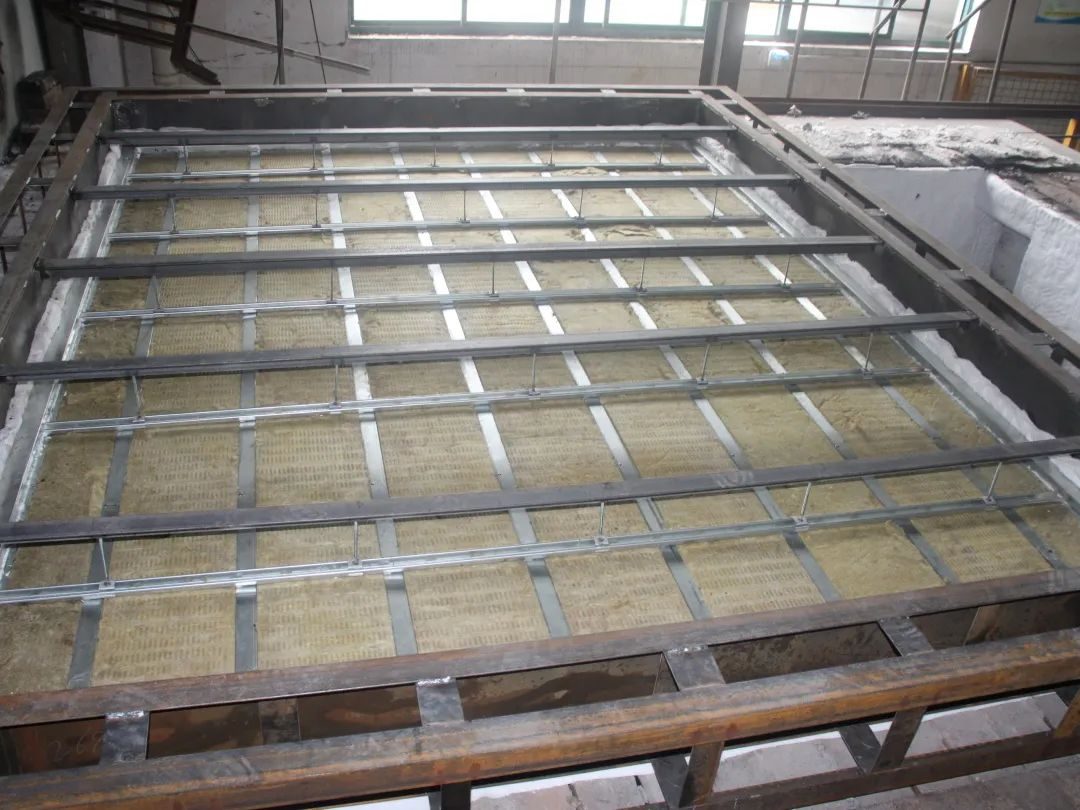
Decks: 3040 mm × 2400 mm × thickness
Bulkheads: 2500 mm × 2440 mm × thickness
If the maximum overall height in actual use is less than the above, the specimen must be the maximum height used in practice.
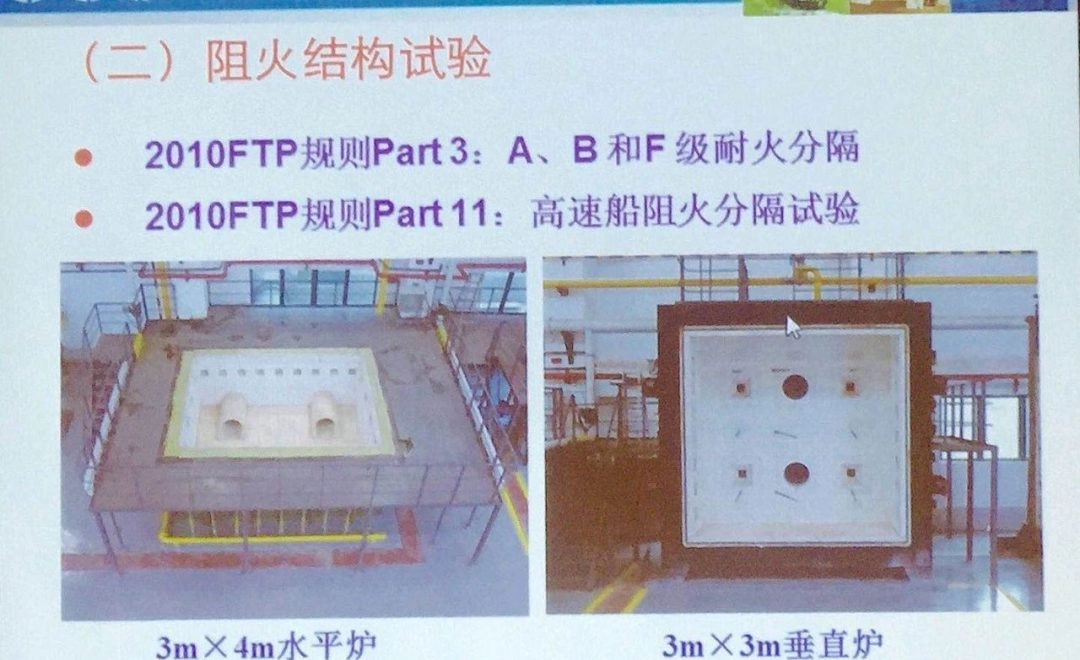
Test method
The test is carried out by the method in IMO FTP Code Part 3 (fire resistance test for "A", "B" and "F" class divisions). This method is based on ISO 834, and the furnace and test procedure are similar to those of ISO 834. The thermocouples measuring furnace temperature must be evenly distributed so as to give a reliable reading of the average temperature around the specimen. At the start of the test the measuring junctions are 100 mm from the specimen surface, and they are kept between 50 mm and 150 mm from it throughout the test.
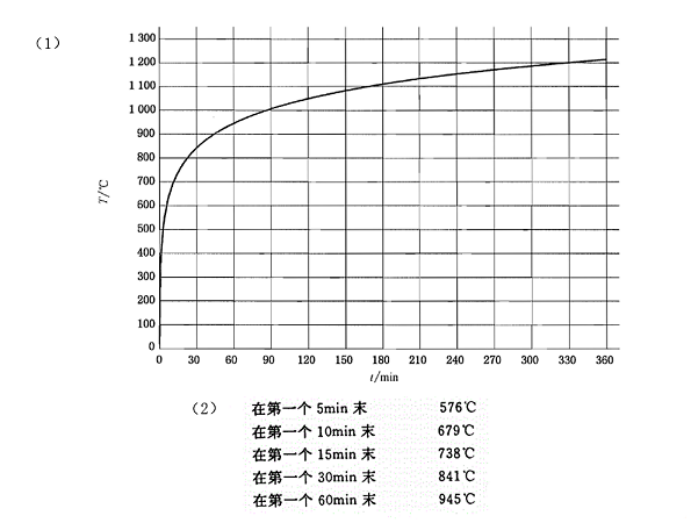
The standard time–temperature curve used in the standard fire test is the same as the ISO 834 heating curve, defined as follows:
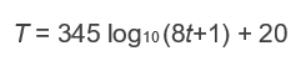
where T is the average furnace temperature in °C and t is the time in minutes.
At any time after the first 10 minutes of the test, the furnace temperature measured by any single thermocouple must not deviate by more than ±100 °C from the standard furnace temperature given by the standard time–temperature curve.
Fire resistance requirements
The specific criteria and requirements are summarised below.
Insulation:
"A" class divisions: within the time limit for each class, the average temperature rise on the unexposed face, determined as the standard requires, must not exceed 140 °C, and the temperature rise recorded by any individual thermocouple on the unexposed face must not exceed 180 °C.
"B" and "F" class divisions, including "B" and "F" class doors: within the time limit for each class, the average temperature rise on the unexposed face, determined as the standard requires, must not exceed 140 °C, and the temperature rise recorded by any individual thermocouple on the unexposed face must not exceed 225 °C.
Integrity:
All "A", "B" and "F" class divisions, including "A", "B" and "F" class doors, must meet the following requirements within the minimum test period for their class:
no flaming on the unexposed face;
the cotton-wool pad must not ignite, i.e. there must be no flaming or glowing;
the gap gauges must not be able to enter any opening in the specimen in the manner the standard specifies;
"A", "B" and "F" class doors are not required to open or close during or after the specified test period.
Core temperature of the structure:
For aluminium alloy load-bearing divisions, the average core temperature rise measured by the thermocouples must not exceed 200 °C above the initial temperature at any time within the minimum test period for the class.
Other requirements:
"B" class continuous ceilings and linings are tested in accordance with Appendix 4 of IMO Part 3.
Specimens of "A" and "B" class constructions are made of non-combustible materials, with exceptions allowed for adhesives, vapour barriers, sealing materials in penetration systems, glazing system fillers and the like.
Summary
Through standardised test procedures and its classification system, Part 3 of the FTP Code provides the technical foundation for fire safety on ships. Correct application of "A", "B" and "F" class divisions is not only a core requirement of ship design and construction but also key to protecting life at sea. As technology advances and the rules are updated, the industry needs to keep track of new materials and processes so that ships' fire performance in demanding conditions keeps pace. In future the IMO may further strengthen fire standards for high-speed craft and new-energy vessels. As a specialist laboratory, Huahui Fire is committed to "accurate testing, professional service", and through quality control across the whole process we help shipbuilders build safe ships that meet international rules. For more technical details or testing services, please contact us.

First published on our WeChat channel: read the original