

In construction, the quality of fire doors bears directly on a building's fire safety. To make sure fire doors give adequate protection in a fire, UL 10B and UL 10C certification, two important certification standards for fire doors, are widely used in different building fire safety designs. Both were developed by Underwriters Laboratories (UL) and are intended, by testing the fire resistance, thermal insulation and structural integrity of fire doors, to ensure that the doors can effectively protect people and property in a fire.
Although the UL 10B and UL 10C tests are very similar, there are both differences and links between them.
The UL 10B certification test
The UL 10B standard grew out of the construction industry's early, pressing need for a performance specification for fire doors. As urbanisation accelerated and buildings became denser, a fire could easily cause mass casualties and large property losses. As a key barrier against the spread of fire and smoke, fire doors had to be well controlled for quality. The UL 10B test standard was created to evaluate accurately how fire doors and their hardware perform in a fire, so that occupants can evacuate and firefighters can operate effectively.
The UL 10B certification standard mainly tests the "fire resistance" of fire doors, focusing on the door's resistance to heat and fire when exposed to a fire. In a fire, a fire door stops the fire spreading, gives people enough time to escape, and gives firefighters time to fight the fire.
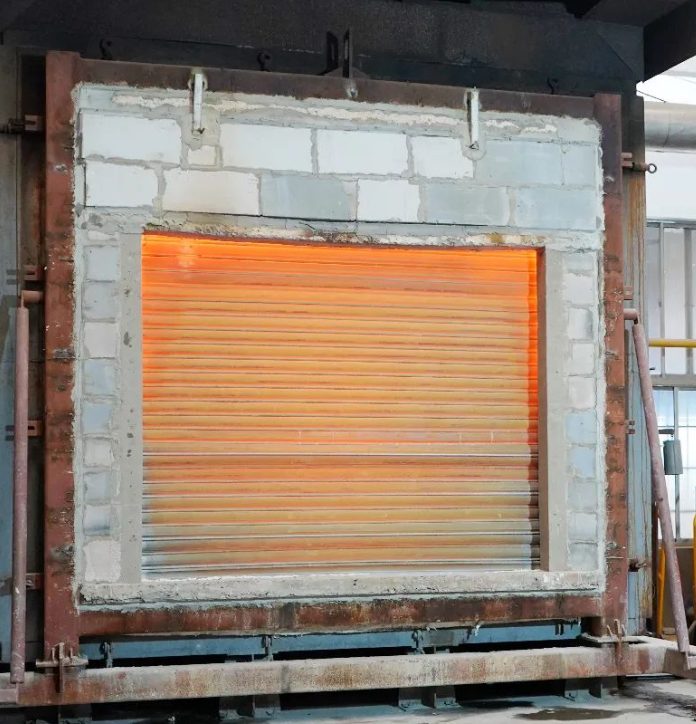
The core of the UL 10B test is a simulated fire that evaluates how the door performs under flame exposure, including its insulation, structural integrity and fire resistance. The test is carried out in a conventional fire environment, and the pressure in the fire test is usually ambient.
The UL 10C certification test
UL 10C likewise arose in response to fire safety needs. Having reviewed real fire cases and drawn on advances in fire technology, UL recognised the need to update and refine the test standard for fire doors.
UL 10C came somewhat later than UL 10B. It incorporates newer fire simulation techniques and building fire safety concepts, and focuses on further improving the reliability of fire doors, particularly their performance under extreme fire conditions such as high temperature and high pressure.
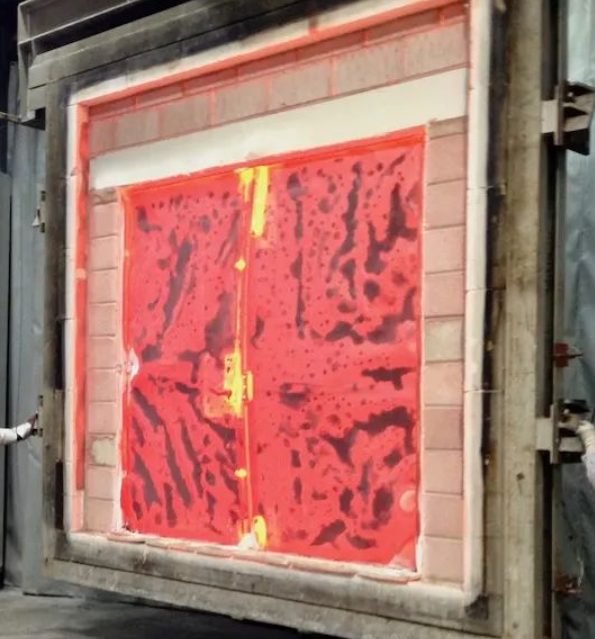
The UL 10C test environment is more severe. Compared with UL 10B, the UL 10C certification test is carried out under positive fire pressure. During a fire, hot gases and smoke make the air rise, creating positive pressure in the fire. This places higher demands on the sealing and structural integrity of the fire door.
The UL 10C test environment takes account of the pressure caused by positive pressure in real fires and evaluates how the fire door performs under it.
What UL 10B and UL 10C have in common
The core purpose of both UL 10B and UL 10C is to verify how fire doors perform in a fire, particularly their fire resistance and insulation. Both standards require the door to withstand the high temperatures of a fire for a set time (usually 30, 60, 90 or 120 minutes) and to prevent flames, heat and smoke spreading.
Although their test environments differ, the test methods and evaluation criteria of UL 10B and UL 10C have much in common. Both require fire doors to meet the following basic performance:
Fire resistance: the fire door must maintain a set period of fire resistance in a fire, stopping flames spreading through the door.
Thermal insulation: one side of the door is exposed to the fire; on the other side there must be no flaming and no hot gases able to ignite a cotton pad, and for doors with a temperature-rise rating the maximum temperature rise at 30 minutes is limited (for example 450 °F, i.e. 250 °C), to stop the fire's heat spreading further.
Structural integrity: the fire door must keep its structure intact in the fire, preventing flames, heat and smoke from penetrating.
Sealing: the fire door must stop smoke and flames penetrating by means of its seals and the construction between frame and leaf.
How UL 10B and UL 10C differ
Although UL 10B and UL 10C have much in common, their different test environments and requirements lead to clear differences:
- Test environment
UL 10B: tested in a fire environment at ambient pressure. The test simulates a common fire environment, usually without additional air flow or pressure. Testing focuses on the door's ability to withstand high temperature and to insulate during a fire.
UL 10C: tested in a fire environment under positive pressure. The fire produces hot gas flows, and the rising hot gases and smoke create positive pressure, placing additional demands on the fire door. The door must not only withstand high temperatures but also stay structurally intact under positive pressure and effectively stop flames and smoke from penetrating.
- Sealing requirements
UL 10B: because the test is at ambient pressure, the sealing requirements for the door are lower; the focus is on the fire resistance and insulation of the door itself.
UL 10C: because of the particular demands of a positive pressure fire environment, the fire door needs better sealing to prevent flames, hot gases and smoke from penetrating. UL 10C therefore places higher demands on the design of the frame, leaf and seals, and the door's sealing must be rigorously evaluated.
- Scope
UL 10B: applies to all types of door, such as those listed in the standard: swing doors, sliding and rolling doors, horizontal slide-type elevator doors, access-type doors and chute-type doors, dumbwaiter and service-counter doors;
UL 10C: applies only to swing doors.
- Difficulty of certification
UL 10B: the test environment is relatively simple and the door must meet basic fire resistance and insulation requirements, so certification is comparatively easier to achieve.
UL 10C: because positive pressure is involved, the test conditions are more complex and the door needs better sealing and structural integrity, so certification is harder to achieve.
UL 10B and UL 10C are two certification standards for fire door performance. Their goal is to ensure that fire doors can effectively stop the spread of fire and protect the lives of the people in a building.
The main difference between them lies in the test environment: UL 10B is carried out at ambient pressure and UL 10C under positive pressure, which means UL 10C places higher demands on the door's sealing and structural integrity. Although the test methods differ, the core purpose of both is the same: to ensure that fire doors provide effective protection in a fire.
For fire door manufacturers, both UL 10B and UL 10C certification matter; together they help products meet the needs of different markets.

First published on our WeChat channel: read the original