

On 31 December 2025, the State Administration for Market Regulation published the new mandatory national standard GB 8624-2025 (China's classification for burning behaviour of building materials and products). It is the first full revision of the standard since 2012 and comes into force on 1 January 2027.
The new standard is a complete transformation, moving from a relatively static classification of materials to safety in scenarios much closer to real life. One of the biggest changes from the 2012 edition is a return to real fire scenarios: several new scenario-based fire test methods have been added, increasing the number of test items by about 50%. Its scope also extends beyond traditional flat materials and floorings to new applications such as thermal insulation, roofing materials and PV modules.
For building insulation foams such as EPS, XPS, polyurethane and phenolic foam, the standard explicitly requires the welding spark ignitability test (to GB/T 40237-2021) to be added when classifying foam insulation as B1 or B2. Why has a new test method attracted so much attention? What does it test, and how? Let's take a detailed look.
Why add a welding spark test?
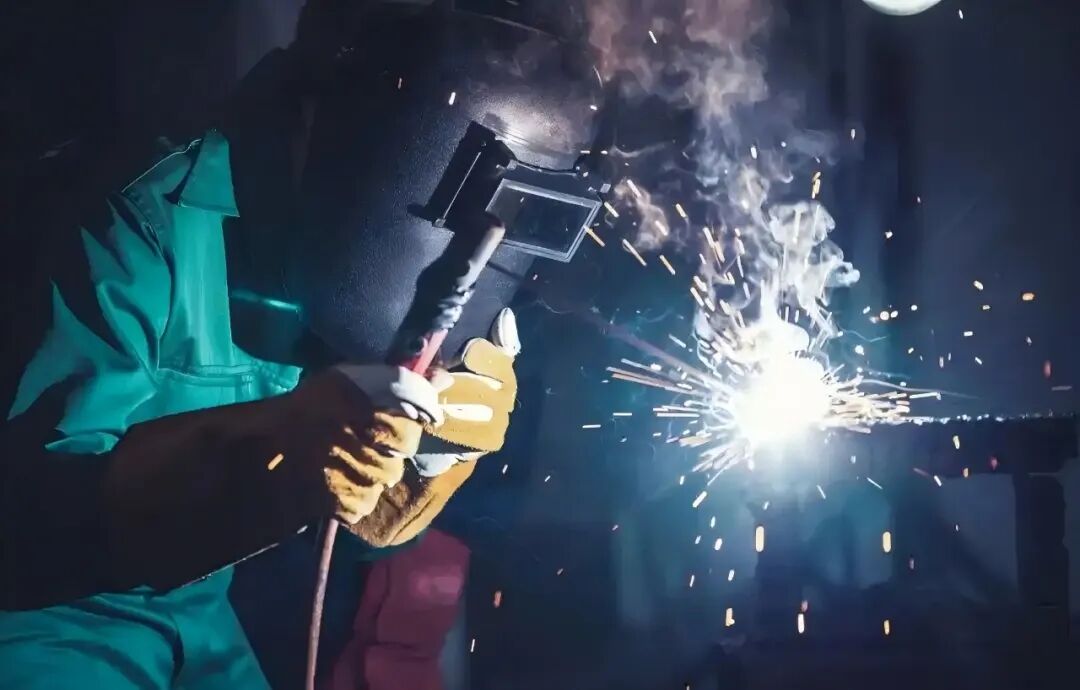
Organic foam plastics are used in large quantities for external wall insulation and roof insulation. During steel welding, curtain wall installation and hot work on building services, welding slag exceeds 1000 ℃ and can be thrown several metres; it easily lands on unprotected foam surfaces and starts fires. Fires of this kind account for more than 60% of fires on building sites.
Before GB 8624-2025, the old GB 8624-2012 used small flames and radiant heat sources for ignition: static, mild ignition sources that cannot simulate the sustained, high-temperature impact of spattering welding slag. Many insulation materials that met the oxygen index requirement and were classified under the single burning item test still caught fire quickly when hit by welding sparks on site. The old tests could not reproduce real welding spark impact, so there was no way to assess this behaviour.
The revised GB 8624 addresses this by controlling insulation foams separately. The standard sets a firm requirement: for all B1 and B2 foam plastics used in building walls, roofs and sandwich panels, the reaction-to-fire classification report must include GB/T 40237 welding spark test data, and no complete classification can be issued without it. This fills the gap in fire assessment for hot work on construction sites.
What is the GB/T 40237 welding spark test?
The full title of the welding spark method is GB/T 40237-2021 (test method for ignitability of foam plastics: welding spark method). This national standard was published back in 2021 and is an important standard for assessing the fire safety of foam plastics in specific construction environments.
Scope
It applies to all kinds of rigid and flexible foam plastics, including but not limited to polystyrene, polyethylene, polyurethane and phenolic foam, covering almost every common building insulation foam on the market, and assesses a material's resistance to ignition under sustained bombardment by welding sparks.
Principle
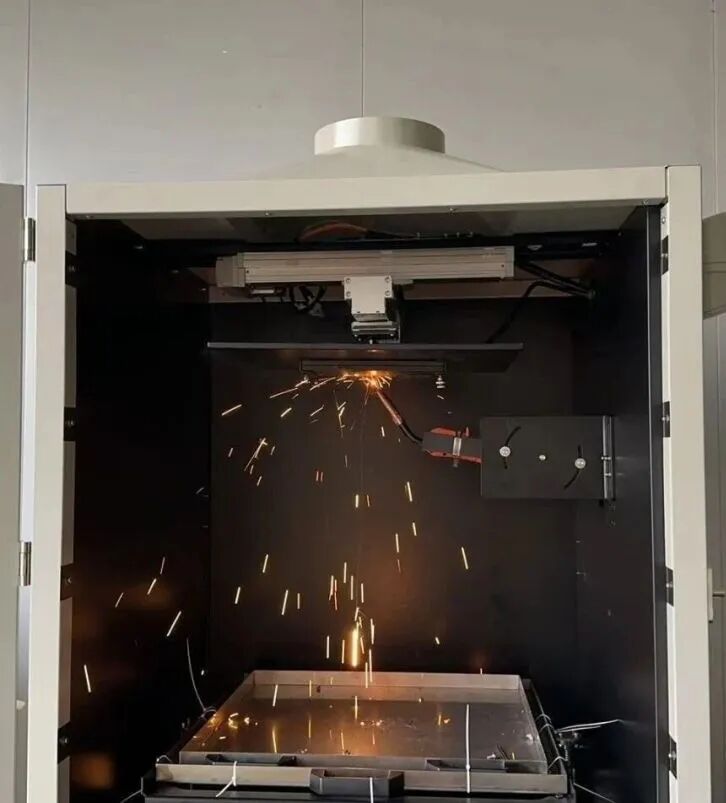
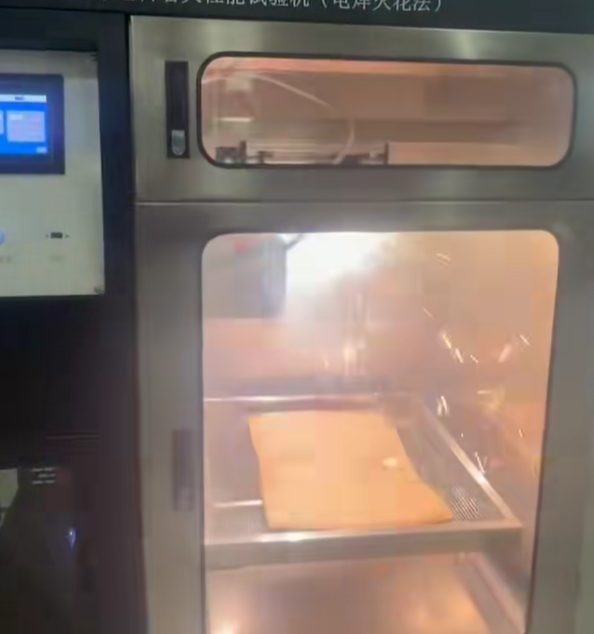
The test simulates welding on site: dedicated equipment produces a continuous, steady stream of welding sparks of controllable intensity, which bombard a horizontally placed foam plastic specimen. By observing burning, smouldering, melting and dripping and other behaviour of the specimen, the fire risk of the material under welding sparks is assessed as a whole.
Put simply, the welding sparks of a building site are recreated in the lab, and the foam specimen is placed underneath to see whether it ignites and whether there is a risk of fire spread.
Apparatus
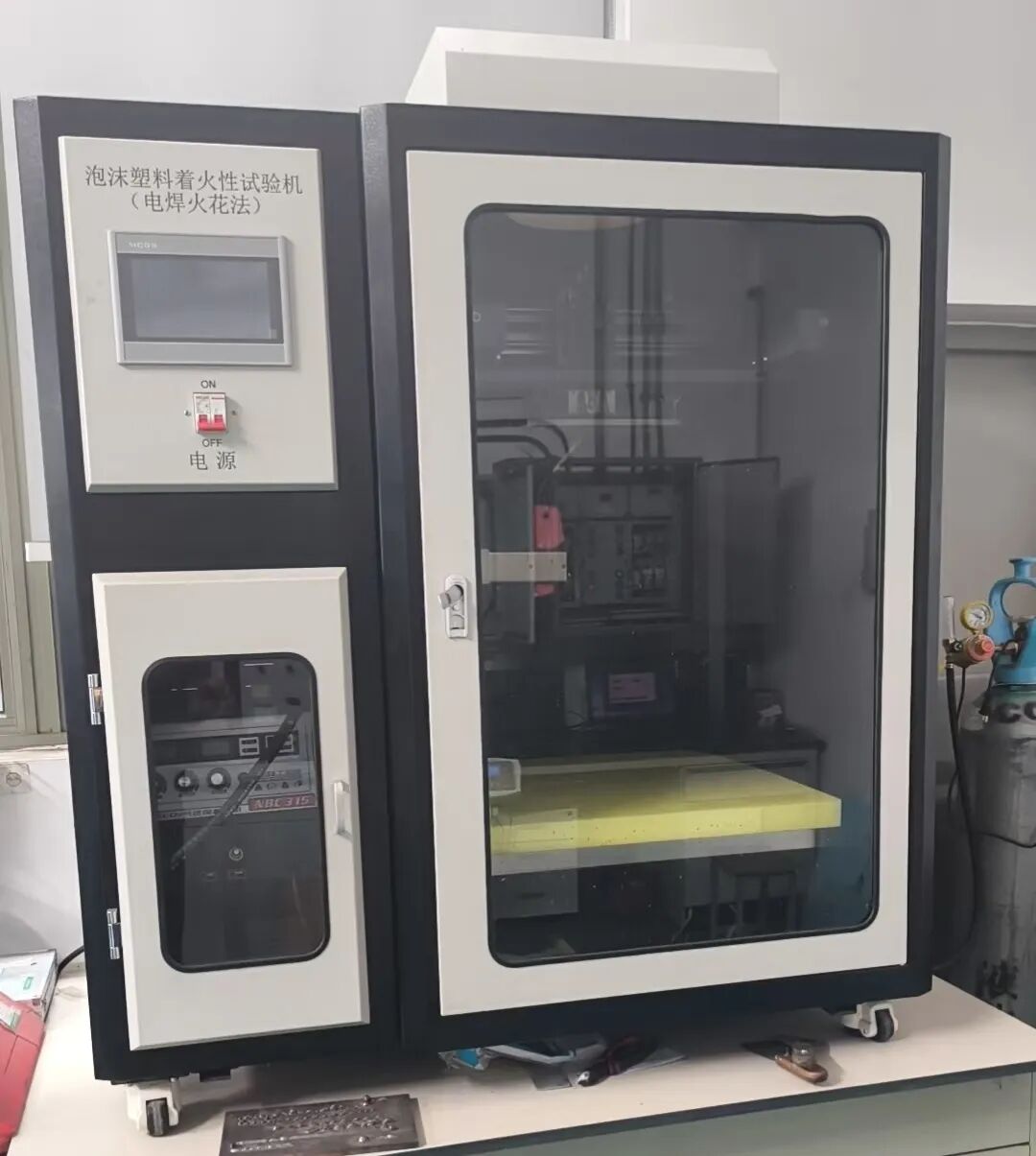
The welding spark test apparatus consists of five main parts: the combustion chamber, the welding ignition system, the base, the specimen holder and the tray, each with clearly specified parameters.
Specimen preparation
Specimen size: the standard specimen is a rectangular block measuring (600 ± 5) mm × (600 ± 5) mm × (50 ± 2) mm. If a single piece is thinner than 50 mm, pieces may be stacked to 50 mm, or another thickness used (the actual thickness must be stated in the report). The specimen surface must be flat and free from flash and burrs, and the face exposed to fire in use must be kept as the exposed face.
Number of specimens: each test set requires 3 specimens. The density of each specimen must not deviate by more than 5% from the mean density of the set; otherwise new specimens must be prepared.
Procedure
Preparation: adjust the welder's current, voltage and wire feed speed; fix the low-carbon steel plate and adjust the torch angle; set the micro-motor speed and the ignition time (60 seconds as standard; any other time must be stated).
Specimen installation: place the specimen horizontally and centrally on the specimen holder and adjust the holder height to the specified distance; place absorbent cotton in the tray directly beneath the holder; close the heat-resistant glass window of the combustion chamber.
Ignition test: switch on the test. Welding sparks bombard the specimen continuously for 60 seconds, and the time to ignition, flaming time, smouldering time, any melting and dripping, and whether the cotton is ignited are observed and recorded throughout. If the specimen is still burning or smouldering after ignition ends, recording continues until it is completely extinguished (smouldering is recorded for no more than 24 hours).
Repeat tests: test each of the 3 specimens following the steps above.
Criteria
Individual specimens (any one of the following means a fail):
the specimen ignites during the test, with flaming lasting more than 5 seconds;
the specimen does not flame but smoulders for more than 30 seconds;
the specimen melts and drips, and the drips ignite the cotton in the tray.
The set of specimens:
if 2 or more of the 3 specimens fail, the batch of material fails outright;
if only 1 specimen fails, 3 new specimens must be retested; if all of the retest set pass, the final result is a pass, otherwise it is a fail.
The addition of the welding spark test to GB 8624-2025 marks a new phase in which China's fire assessment of building foams moves from small-flame laboratory tests to the real risks of the building site. By providing a standardised simulation of hot welding slag as an ignition source, GB/T 40237 fills the scenario gap in traditional flame retardancy tests and directly governs the assessment of insulation foams such as EPS, XPS and polyurethane.
Our laboratory has the complete GB/T 40237 welding spark test apparatus and is qualified for the full range of reaction-to-fire classification tests for foam plastics. We can issue a complete set of test reports covering oxygen index, single burning item and the welding spark method together, providing compliant, authoritative testing support for building materials manufacturers and construction projects.

First published on our WeChat channel: read the original