

The National Fire and Rescue Administration has recently issued an important notice: under the plan of the Standardization Administration of China, the drafting and revision of 11 national standards in the fire protection field, including Fire-resistive coatings for steel structures (GB 14907), has been completed, and they have formally entered the stage of public consultation on the draft for approval. The deadline for comments is 24 May 2026.
The original document is available on request. Contact us: +86 21 6991 3579, [email protected], or send a test request on this website.
Fire-resistive coatings for steel structures are an important safeguard of building fire safety and are widely used in all kinds of industrial and civil buildings. Since it came into force, the current standard GB 14907-2018 has played an important role in regulating product quality and guiding the industry. However, with technical progress and changing market needs, the standard has begun to show some limitations:
Outdated product classification: it cannot cover new coating products such as solvent-free types, which holds back the uptake of environmentally friendly products.
Inadequate technical criteria: the fire resistance and environmental requirements struggle to meet today's demand for high-quality coatings.
Difficult quality supervision: there is no effective means of identifying counterfeit and substandard products, and consistency of quality is a particular problem for intumescent coatings.
This is the third revision, following the 2018 edition, and comes six years after the current 2018 edition came into force. To keep up with the emergence of new products and rising demand for environmental performance and higher fire resistance, the draft for approval not only adjusts the product classification but also makes major changes to the environmental criteria, durability and engineering applicability. Let us look at the core changes in the draft compared with the 2018 edition.
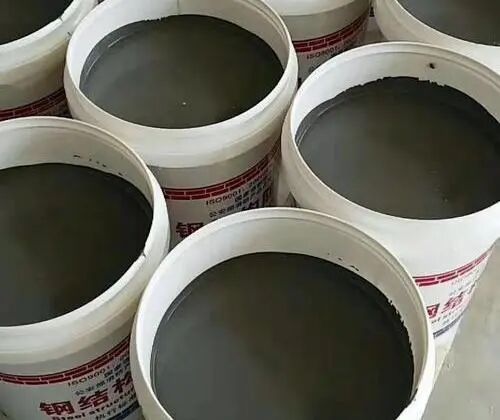
Changes in content
1. Classification and designation
New category: by solvent and dispersion medium, "solvent-free fire-resistive coatings for steel structures" are added to the existing "water-based" and "solvent-based" types.
Simplified designation: the "fire resistance class code" has been removed from the product designation. This avoids the confusion of one product having several designations for different fire resistance ratings and makes product management and supervision easier.
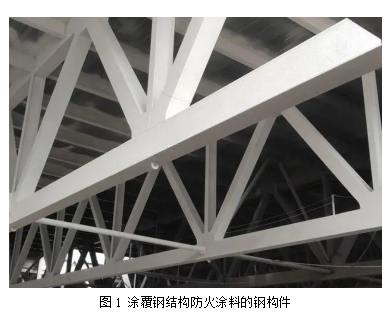
2. Technical requirements
(1) New key criteria.
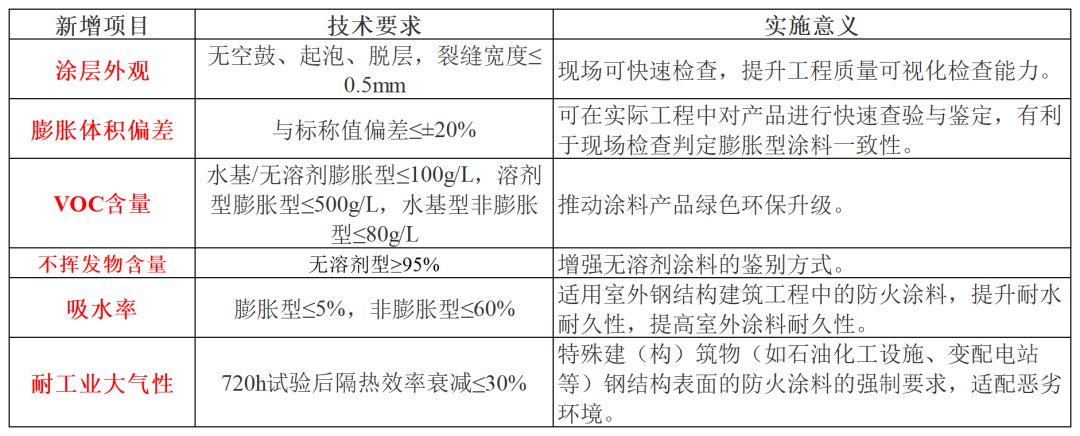
(2) Higher core performance criteria.
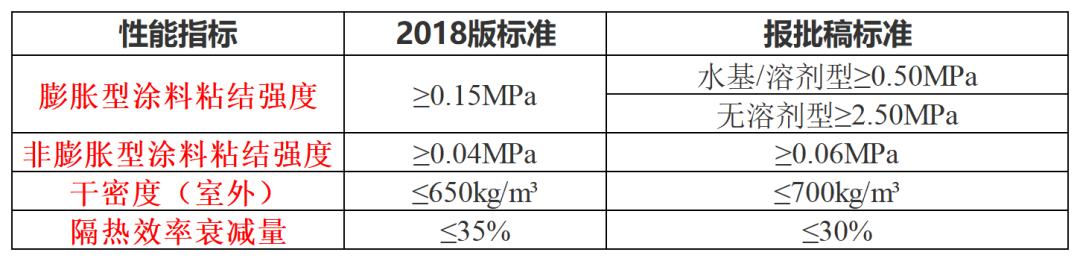
(3) Fire resistance fully opened up.
The previous limits on fire resistance — a maximum of 2 hours for intumescent coatings and 3 hours for non-intumescent coatings — have been removed, and the fire resistance of both types is extended to 4 hours, meeting the fire protection needs of super high-rise buildings and special projects.
3. Test methods
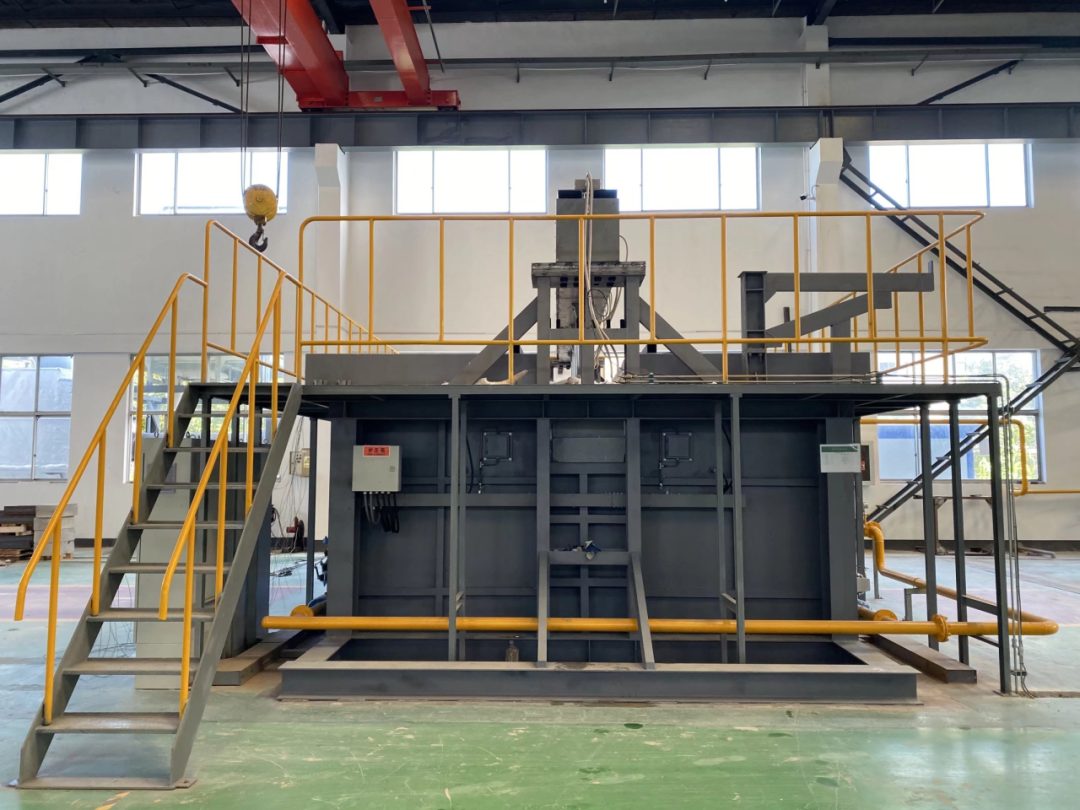
Single substrate: only the 36b hot-rolled I-section is retained, removing result deviations caused by differences in section.
New criteria: maximum steel member temperature ≤ 649 °C and average temperature ≤ 538 °C, making the assessment more rigorous.
New methods: tests for coating appearance, expansion volume, VOC content, water absorption, resistance to industrial atmosphere and more.
Durability tests: the relevant test methods have been changed, specifying the conditioning time for large specimens after each durability test before the reduction in insulation efficiency is measured, so that results are traceable.
4. Inspection rules
Factory inspection: sampling items such as water absorption and expansion volume deviation have been added, and the sampling interval (every six months) and production volume thresholds (1,000 t for Type P, 2,000 t for Type F) adjusted, maintaining quality while reducing the burden on manufacturers.
Type testing: covers all applicable items to ensure product consistency.
Use of results: an outdoor coating that passes may substitute for an indoor coating of the same rating, and a special coating may substitute for an ordinary coating of the same fire resistance time, but this must be combined with design to the section parameters of the steel member, to avoid the risk of applying test results directly.
5. Upgraded annexes
Two new normative methods are added:
Annex A: test method for intumescent performance.
Annex D: equivalent thermal resistance / equivalent thermal conductivity test (supporting engineering design calculations).
In summary:
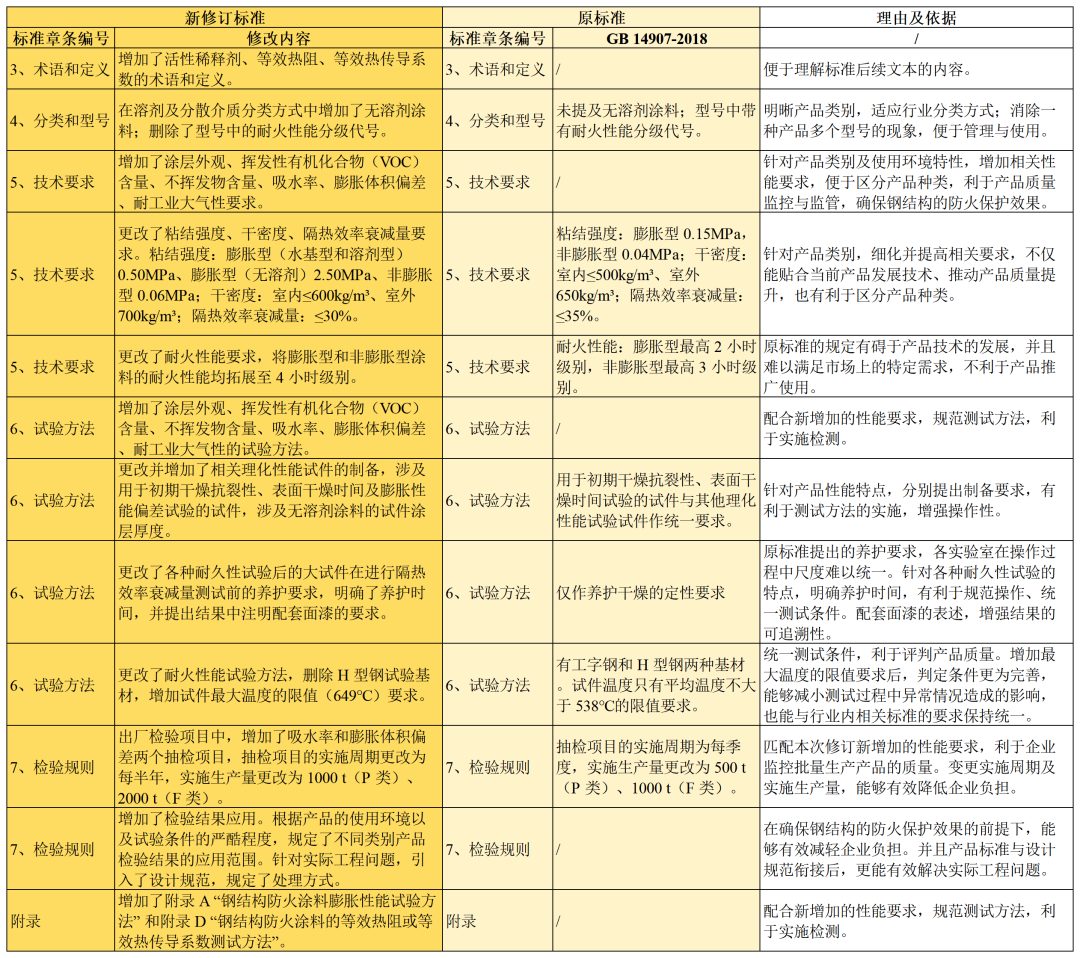
The new GB 14907 Fire-resistive coatings for steel structures is a major upgrade of a mandatory national standard. In response to the gradual emergence of new materials, it not only updates the performance criteria and test methods of the 2018 standard but also provides a basis for spot checks on actual construction sites and technical guidance for designers and regulators in resolving issues of engineering application, safeguarding the effectiveness of fire protection for steel structures in real projects.
The standard is currently at the public consultation stage for the draft for approval (until 24 May 2026). Once the standard is implemented, GB 14907-2018 will be withdrawn. Companies concerned should compare their products against the draft for approval as soon as possible and complete product upgrades, process adjustments and test preparation for a smooth transition to the new standard. We look forward to the new national standard building a stronger line of defence for building fire safety.
First published on our WeChat channel: read the original