
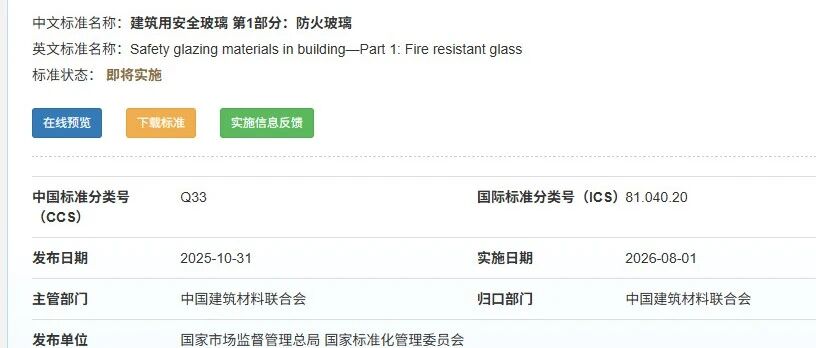
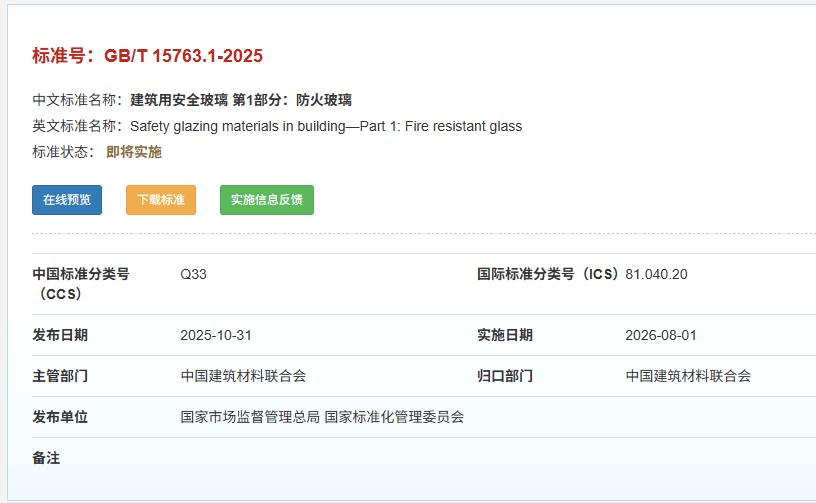
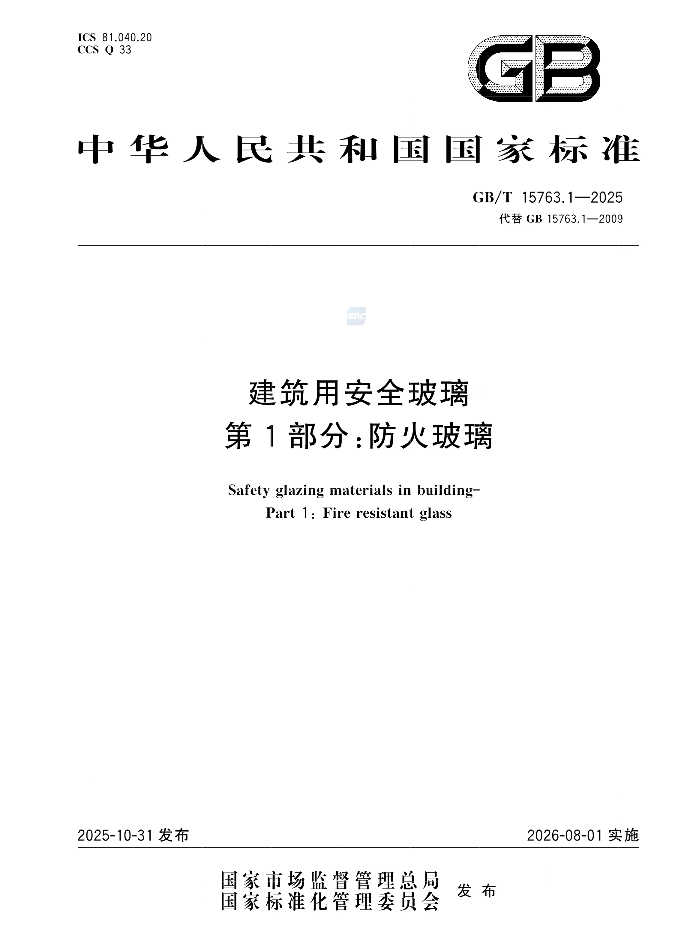
On 31 October 2025, the State Administration for Market Regulation and the Standardization Administration of China jointly published GB/T 15763.1-2025, Safety glazing materials in building – Part 1: Fire-resistant glass. For the first time, it defines insulating glass units with fire-resistant glass (hollow fire-resistant glass) and sets out their classification and marking requirements, which will have a significant effect on product selection and site acceptance.
The standard comes into force on 1 August 2026, less than 8 months away at the time of writing, marking a new round of standards upgrades for China's fire-resistant glass industry.
What is fire-resistant glass?
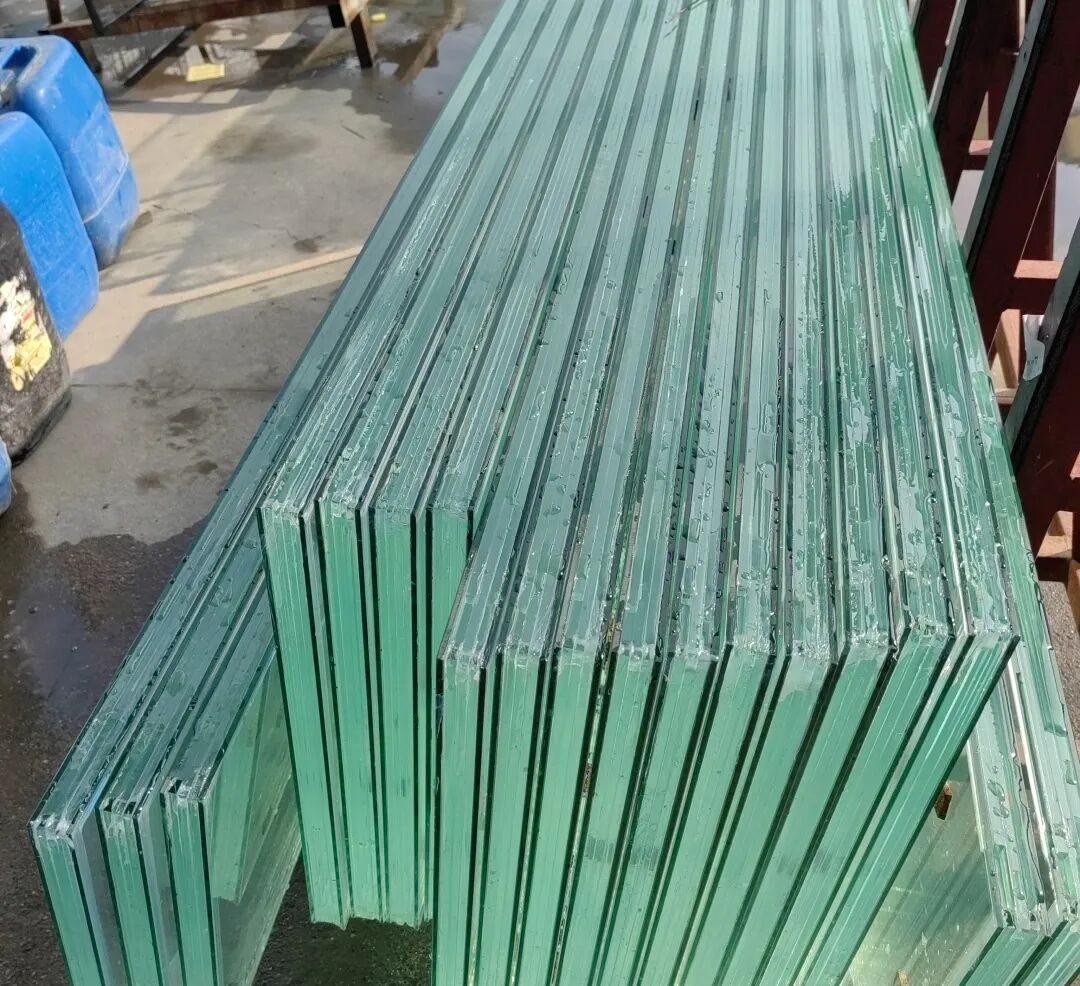
Fire-resistant glass is a special glass made from float glass by laminating or toughening. It is essentially a measure-type fire protection material: for a set time it resists fire, slowing the spread of flames, smoke and heat in a fire and buying time for evacuation and firefighting. Fire-resistant glass undergoes special material modification or composite construction so that it keeps its basic performance at high temperatures and does not fail suddenly, which would breach the fire compartment.
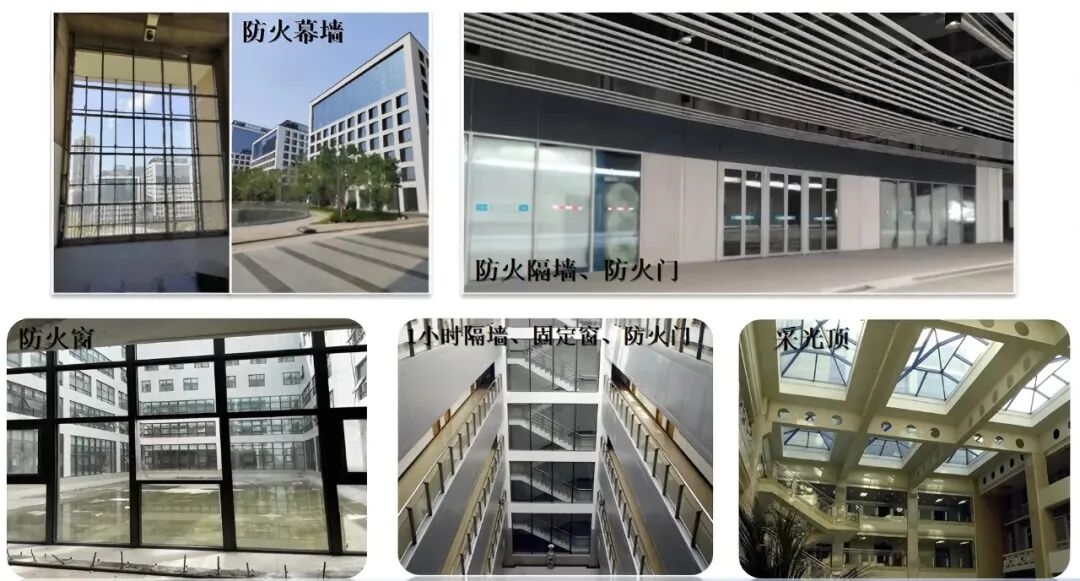
Fire-resistant glass is used in building elements such as fire windows, fire doors, fire-resisting partitions, curtain walls and rooflights, providing horizontal and vertical fire separation and subdividing large spaces. It is widely used where fire safety requirements are very high, such as high-rise buildings, commercial complexes and rail transit.
With the growth of green and smart buildings, the market increasingly expects fire-resistant glass to offer light transmission, energy efficiency and sound insulation, and composite products such as insulating and laminated units have gradually become mainstream. This gave a practical basis for revising the standard.
Background to the standard
Architectural glass is among the glass materials people encounter most often in daily life, used in the largest quantities and across the widest range of applications, so its quality control bears directly on public safety and on the industry's development. Standardised requirements are essential to safeguard product quality and make Chinese architectural glass more competitive internationally.
The architectural glass industry has built a standards system based on the GB/T15763 series (safety glazing materials in building), supplemented by standards for other functional products. As early as 2009, the former national standard GB 15763.1-2009, Safety glazing materials in building – Part 1: Fire-resistant glass, was published and implemented, providing the basic technical reference for the production and use of fire-resistant glass.
GB 15763.1-2009 had been in force for more than a decade. In that time, technology in China's construction industry advanced quickly, the range of fire-resistant glass products grew, and the old standard increasingly struggled to keep up. The new standard is a comprehensive revision of the 2009 edition, refining the classification, technical requirements and test methods for fire-resistant glass to match the industry's current development and needs.
Classification of fire-resistant glass
By construction, fire-resistant glass is classified as composite fire-resistant glass, monolithic fire-resistant glass, laminated fire-resistant glass and insulating (hollow) fire-resistant glass.
Composite fire-resistant glass (FFB): mostly used inside buildings. Fire-resistant glass made of two or more panes of glass with fire-resistant interlayers between them, meeting the relevant fire resistance requirements.
Monolithic fire-resistant glass (DFB): mostly used on building façades. Fire-resistant glass consisting of a single pane, meeting the relevant fire resistance requirements.
Laminated fire-resistant glass (JFB): a laminated glass product in which at least one layer is monolithic or composite fire-resistant glass, meeting the relevant fire resistance requirements.
Insulating fire-resistant glass (ZFB): an insulating glass unit in which at least one pane is monolithic or composite fire-resistant glass, meeting the relevant fire resistance requirements.
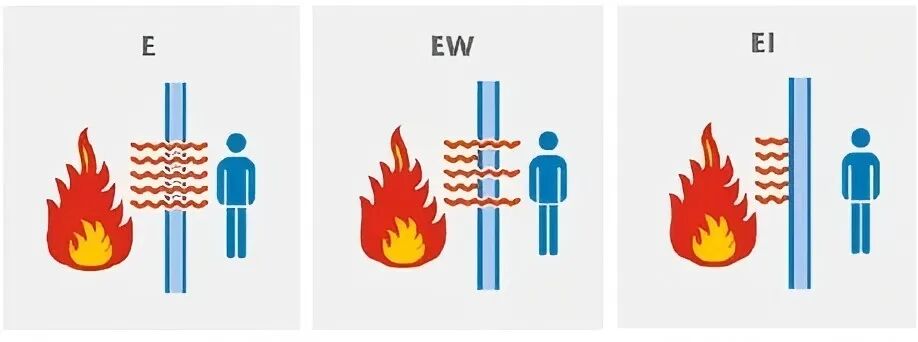
By fire resistance performance, fire-resistant glass is classified as insulated fire-resistant glass (Class A), partially insulated fire-resistant glass (Class B) and non-insulated fire-resistant glass (Class C).
Insulated fire-resistant glass (Class A): fire-resistant glass that meets the requirements for both integrity and insulation; that is, for the specified time no flames pass through and heat is effectively prevented from reaching the unexposed face. It is mostly used inside buildings, and corresponds to EI-class fire-resistant glass in European standards.
Partially insulated fire-resistant glass (Class B): fire-resistant glass that meets the requirements for both integrity and heat flux (EW-class fire-resistant glass in European standards; in the Chinese standards it is used in fire doors, fire-resistant windows and similar).
Non-insulated fire-resistant glass (Class C): fire-resistant glass that meets the integrity requirement only, corresponding to E-class fire-resistant glass in European standards, and mostly used on building façades.
By fire protection application, fire-resistant glass is classified as:
fire-resistant glass, or the relevant face, suitable only for external fires (designated W);
fire-resistant glass, or the relevant face, suitable for both internal and external fires (designated N).
By fire resistance period:
Fire-resistant glass is graded by fire resistance time (fire resistance period) into five classes: 0.50 h, 1.00 h, 1.50 h, 2.00 h and 3.00 h.
Main changes in the new standard
Compared with the 2009 edition, the 2025 edition of GB/T 15763.1 has been comprehensively updated and improved. The main changes are:
New terms and definitions: the new standard adds a term and definition for "fire-resistant glass", clarifying the concept. It also revises the definitions of terms such as "fire integrity", "fire insulation", "fire resistance period", "composite fire-resistant glass" and "monolithic fire-resistant glass", making them more precise and consistent.
Improved classification: besides keeping the existing classification by construction and fire resistance performance, the new edition further refines the classification rules and sets out the classification and marking requirements for insulating fire-resistant glass.
Revised technical requirements: the new standard sets new requirements for the technical properties of fire-resistant glass. It adds requirements for partially insulated fire-resistant glass and a new requirement for humidity resistance; revises the test conditions and acceptance criteria for heat resistance, cold resistance and radiation resistance; and removes the old standard's requirements for impact resistance and fragmentation.
Updated test methods: the new edition updates several test methods to make testing more scientific and practical. The fire resistance test method has been revised, and test methods for surface stress and surface stress uniformity have been added to assess the surface stress state of fire-resistant glass. The new standard also specifies dedicated test methods for laminated and insulating fire-resistant glass. These updates make the test methods more complete and help ensure that fire-resistant glass products perform as the standard requires.
Technical requirements for fire-resistant glass
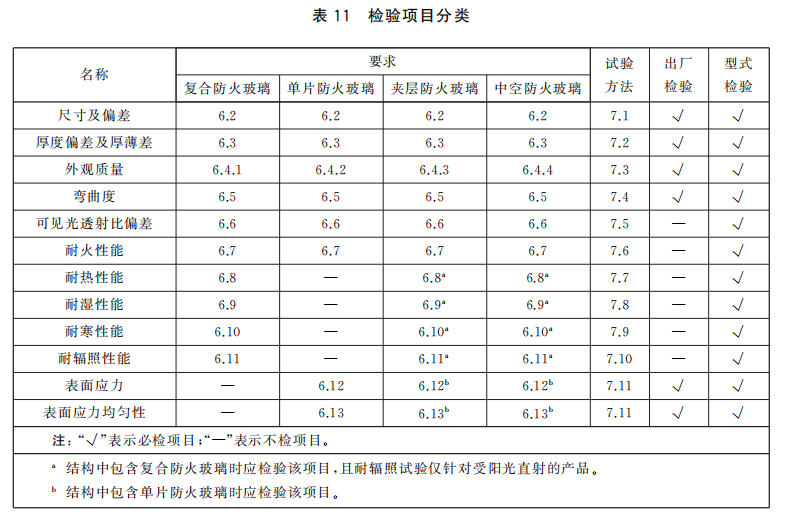
The technical requirements for fire-resistant glass for buildings are as follows:
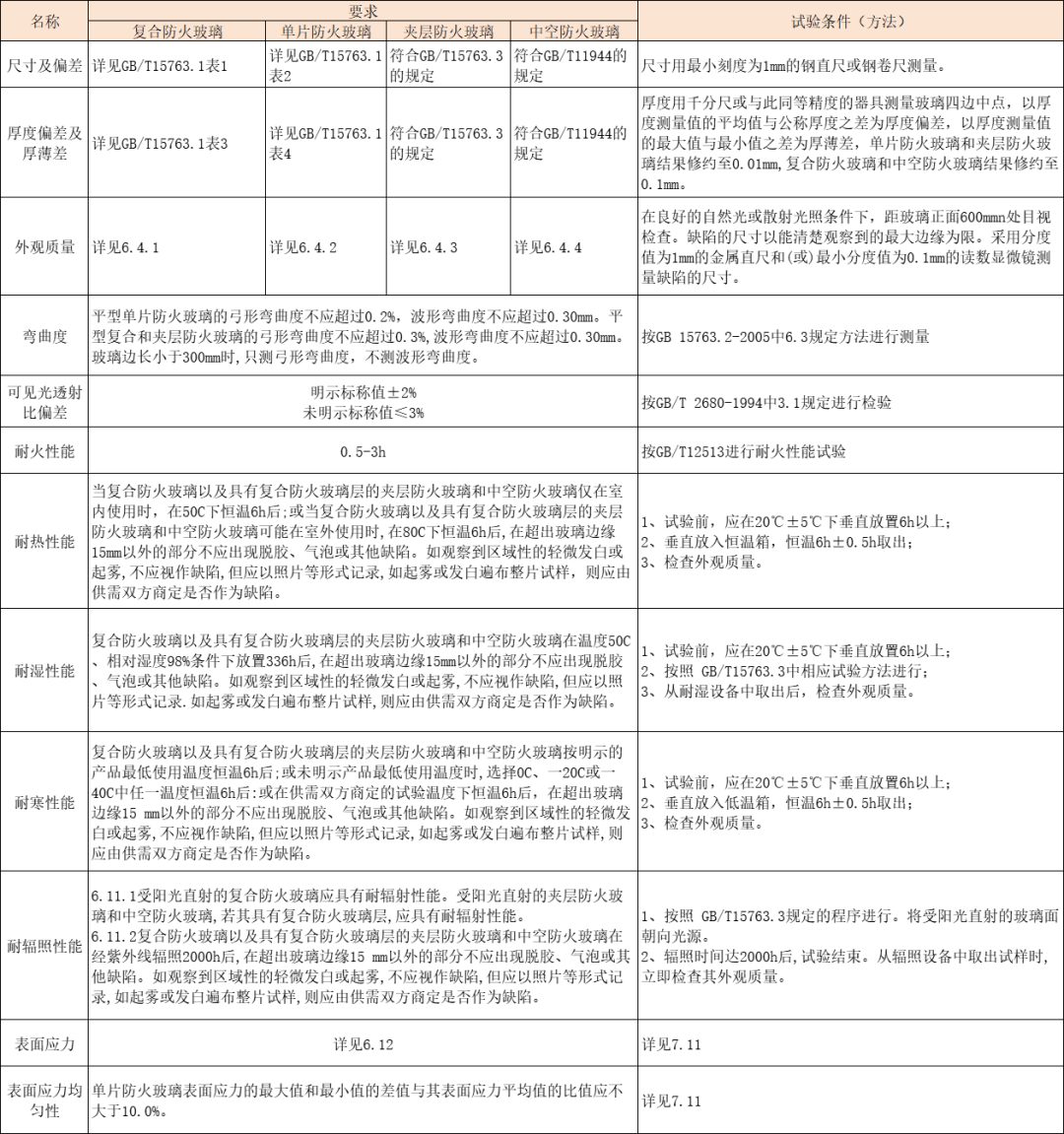
The test methods for fire-resistant glass for buildings are as follows:
Fire resistance of fire-resistant glass
Of all the properties of fire-resistant glass, fire resistance is the most critical. It directly determines how well the glass protects in a fire, and it is the main focus of assessment under the new standard. Fire resistance comprises integrity and insulation.
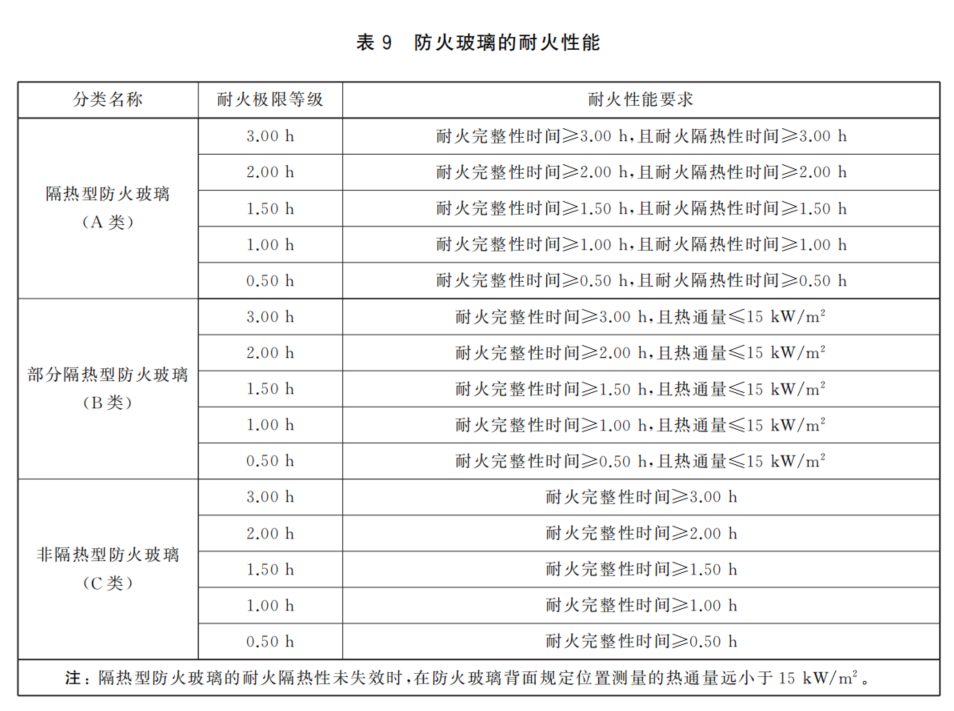
Integrity is the time, under standard fire test conditions, until flames or hot particles penetrate the glazed element (including its frame) from the exposed side, or until flaming appears on the unexposed face. Put simply, it is the ability of the fire-resistant glass not to be burnt through or holed for a given time. Non-insulated fire-resistant glass (Class C) need only meet the integrity requirement, whereas insulated fire-resistant glass (Class A) must also meet the insulation requirement.
Insulation is the time, under standard fire test conditions, for which the temperature rise on the unexposed face of the glazed element stays within the specified limits. For insulated fire-resistant glass (Class A), the temperature rise on the unexposed face must be strictly limited: typically, over the specified time, the average temperature rise must not exceed 140 ℃ and the maximum rise at any single point must not exceed 180 ℃.
Fire resistance testing is usually carried out in a dedicated fire resistance furnace. Under the new standard, fire resistance tests on fire-resistant glass are to be carried out to GB/T 12513 (China's fire resistance test method for glazed elements). In the test, the fire-resistant glass specimen is mounted in a frame on the furnace and the exposed face is heated following the standard fire curve. Throughout the test, the temperature on the unexposed face and any flame penetration are observed and recorded to determine whether the specimen achieves the specified fire resistance period.
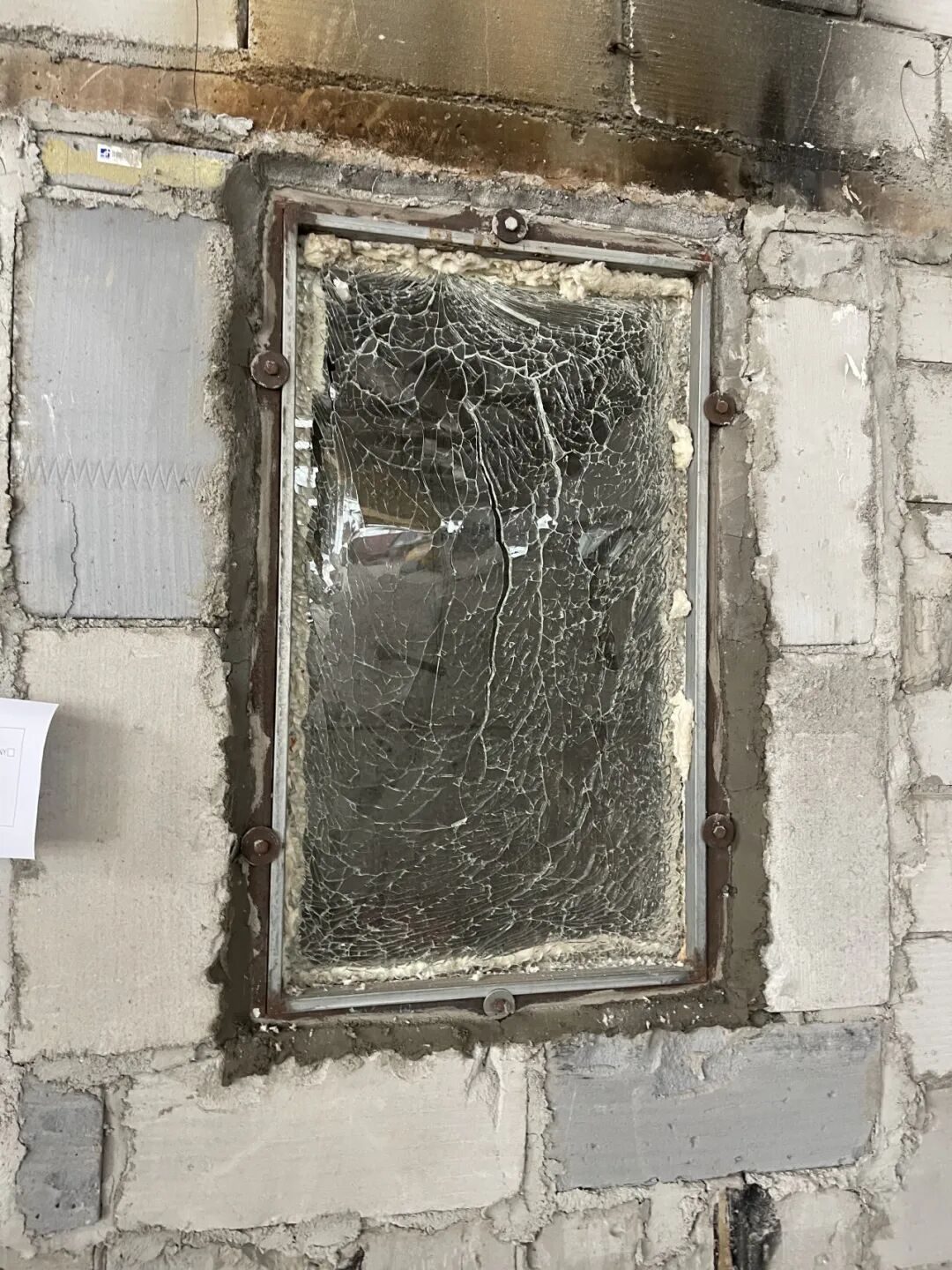
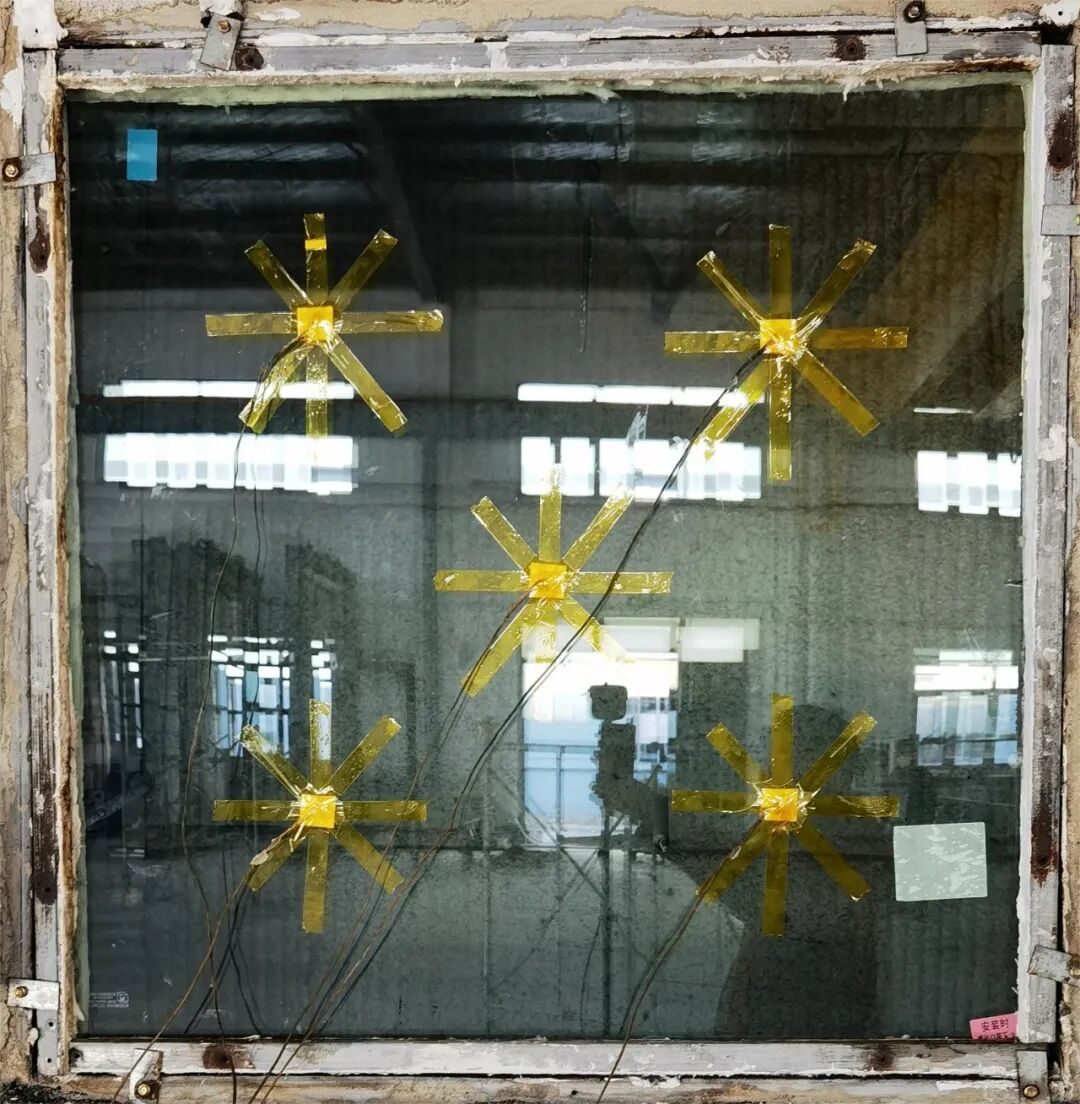
Fire resistance is the "hard metric" of fire-resistant glass and an important basis for design and specification. For example, under the Code for fire protection design of buildings (GB 50016) and related codes, locations such as the external windows of refuge rooms in high-rise buildings and the fire-resistant glass in firefighting lift lobbies should use insulated fire-resistant glass with a fire resistance period of at least 1.5 hours.
Pre-testing and testing
With less than 8 months to go before the new standard comes into force, manufacturers need to press ahead with updating to the new standard, optimising their processes and testing their products.
Pre-test early to find and fix problems: we recommend that, before the new standard takes effect, manufacturers commission a third-party testing body holding CMA and CNAS accreditation to run a full pre-test of their main products. A pre-test reveals problems early and leaves enough time to optimise processes and adjust formulations, avoiding non-compliant products, and the financial losses they bring, once volume production is under way.
Focus on fire resistance: fire resistance is the core property of fire-resistant glass and the most complex and expensive part of testing. We recommend that manufacturers carry out simulated tests or small-scale checks of fire resistance before submitting products for testing. For example, samples can be given a short high-temperature test in a small furnace to see how the glass behaves as it approaches the standard fire resistance time and whether it shows obvious signs of cracking or deformation. This is not a formal test under the standard, but it can serve as a preliminary assessment. If a sample shows serious problems as it approaches the specified time, the manufacturer should promptly analyse the cause and improve the process or change materials, reducing the risk of failing the formal fire resistance test.
Certify early: start product certification in parallel, completing the conformity certification process against the new standard and fixing the process parameters that achieve compliance, so that products can go straight to market in compliance once the standard takes effect and gain a first-mover advantage.
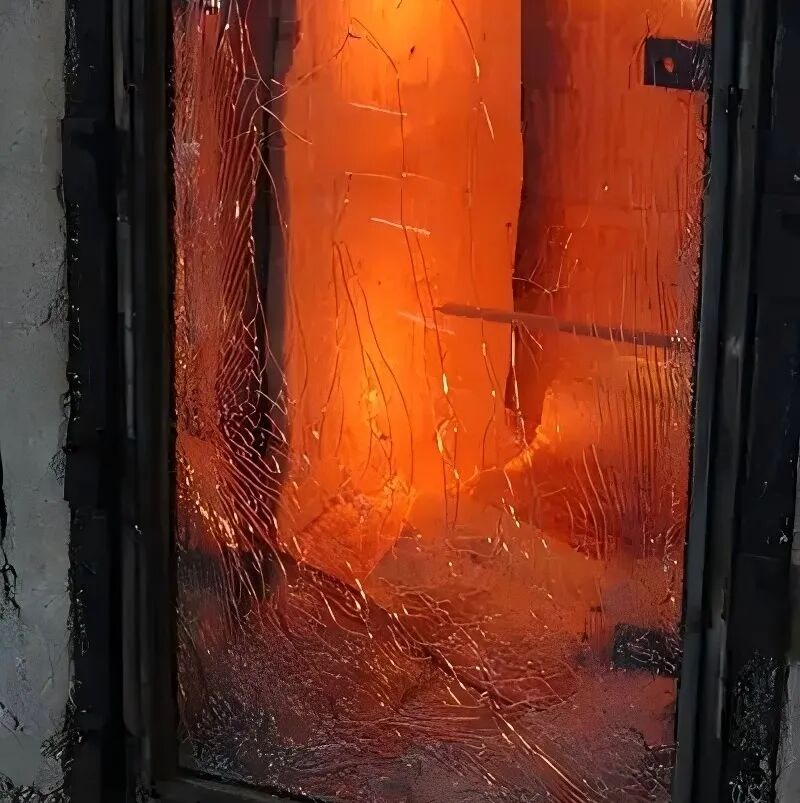
Fire-resistant glass is not easy to test, and many factors affect the result, such as coating technology, framing conditions and the fire resistance period. The countdown to the new standard has begun, and we recommend that manufacturers act quickly, drawing up plans for the transition and for pre-testing in the light of their own products. As a specialist third-party testing body, we provide end-to-end testing services and technical support to help manufacturers bring their products into compliance.
For details of how to interpret specific clauses of the new standard or how to plan a pre-test for your product, please get in touch at any time.
First published on our WeChat channel: read the original