
Background
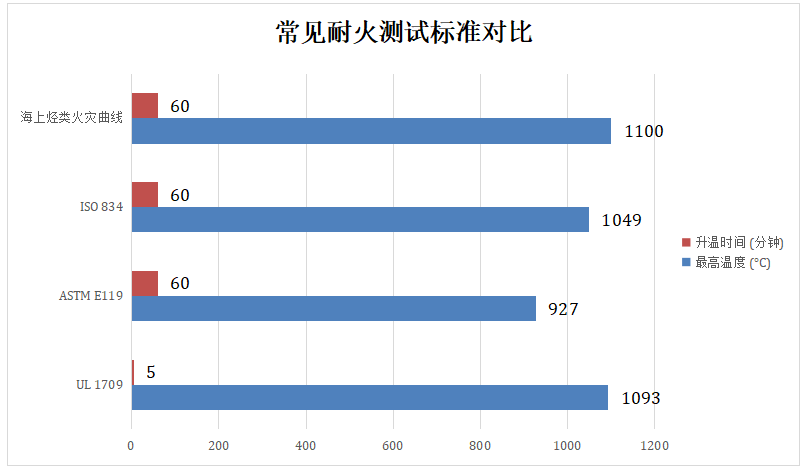
In industrial settings such as petrochemical plants, refineries and tank farms, fires caused by hydrocarbon leaks heat up fast, radiate intensely and are highly destructive. They can exceed 1000 °C within 5 minutes, far outstripping the rate of temperature rise in an ordinary building fire. Traditional fire standards (such as ASTM E119) are designed around ordinary building fires and cannot accurately simulate the extreme conditions of a hydrocarbon fire. As a result, some protection systems designed to traditional standards have failed in industrial fires, leading to serious accidents such as the collapse of steel structures.
UL 1709 was written for exactly this harsh environment. UL 1709, the standard for rapid rise fire tests of protection materials for structural steel, is an important standard developed by Underwriters Laboratories (UL) to evaluate the fire resistance of fire protection materials for structural steel exposed to hydrocarbon fires. First published in 1989, it sets rigorous test requirements for steel protection materials subjected to high-intensity hydrocarbon fires. Six revisions have progressively refined the test method and evaluation framework, and it has become the globally recognised core standard for evaluating fire performance in rapid-rise industrial fire scenarios, providing key technical support for structural safety in high-hazard industries.
About the standard
UL 1709, Standard for Rapid Rise Fire Tests of Protection Materials for Structural Steel, simulates the rapid temperature rise of a hydrocarbon fire to evaluate the fire resistance of fire protection materials and systems for structural steel. It ensures that, under extreme fire conditions, steel structures maintain their structural integrity and load-bearing capacity for a specified time, buying valuable time for evacuation and emergency response.
By simulating extreme scenarios, the standard fills a gap left by traditional fire standards in high-hazard industrial settings. Its test results are an important basis for product fire certification, engineering design and selection, and industry safety regulation.
Scope
UL 1709 applies mainly to fire protection materials for structural steel in the oil, gas and petrochemical industries, including fire protection coatings, boards and wraps. These materials protect steel columns, beams and other structural members in plants and facilities from rapid failure in a hydrocarbon fire. Specifically, it covers:
Types of protection material or system: intumescent coatings, thick-film fire protection coatings, fire protection boards, fire protection enclosures, ceramic fibre blankets, sprayed fire protection materials and all other kinds of fire protection products for structural steel;
Applications: petrochemical units, refineries, LNG tank farms, industrial buildings, and key steel members in high-rise buildings (in areas at risk of extreme fire);
Test specimens: full-size steel columns, steel beams, composite concrete-steel members and so on. The steel column test is the basic test; the steel beam test requires a concrete slab on top to simulate real loading conditions.
Note that the standard applies only to the evaluation of steel protection. It does not apply to elements of other materials, such as timber or plain concrete structures, and the test scenario is limited to hydrocarbon fires (burning flammable liquids or gases such as petrol, diesel and natural gas). It does not cover other types of fire, such as wildfires or electrical fires.
Test principle
The principle of UL 1709 can be summed up in one sentence: in the laboratory, use a controlled, extremely severe fire environment to quantify objectively how a fire protection system performs in a real hydrocarbon fire.
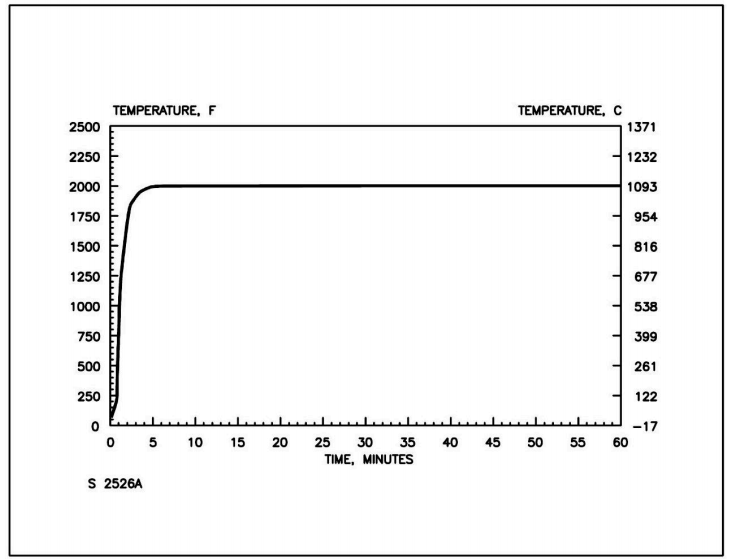
Heating curve: a rapid-rise mode is used, with the furnace temperature rising from ambient to 1093 °C (2000 °F) within 0–5 minutes and then held constant. At the same time, the total heat flux in the furnace is controlled to 204 kW/m² (±16 kW/m²), accurately reproducing the radiant intensity of a hydrocarbon fire;
Performance-based: it does not dictate which material you must use (coating, board, blanket and so on). It looks only at the end result: how long the protected steel member can go before its structural strength fails because of high temperature.
Failure point: the standard sets a clear failure criterion, an average steel temperature of 538 °C (about 1000 °F). This is based on the mechanical properties of steel: at this temperature the yield strength of ordinary structural steel falls to about 50 % of its value at room temperature, and the structure is at risk of collapse.
Structural integrity: at high temperatures, steel members deform thermally. Deflection, displacement and other parameters are monitored to judge whether the member keeps its load-bearing capacity and to guard against collapse through excessive deformation.
Test preparation
Steel member specifications:
Steel columns: at least 2.44 m (8 ft) long, covering the open and hollow sections commonly used in practice;
Steel beams: exposed length at least 3.66 m (12 ft), with a normal-weight concrete slab on top (density 140–150 pcf) to simulate real loading;
Installing the protection material:
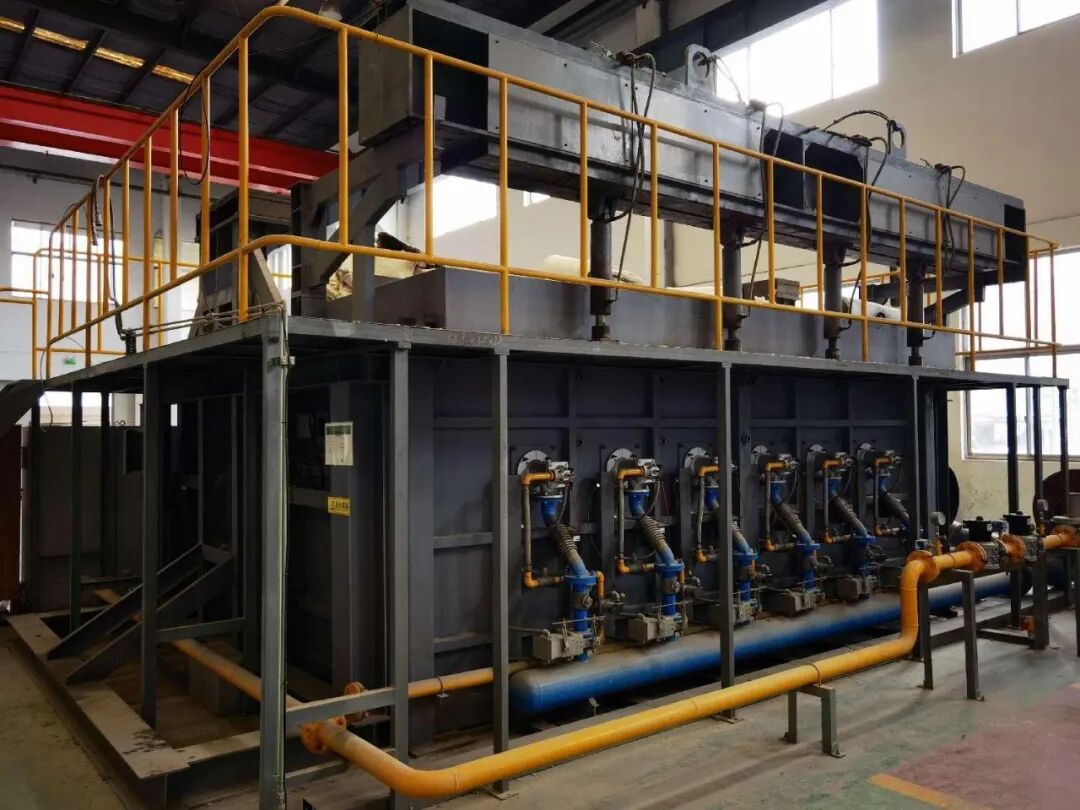
Before the test, the fire protection material must be installed on the steel column or beam in the way it is intended to be used in practice, and the strength and moisture content of the specimen must be brought to a state similar to real service conditions. The specimen is usually mounted vertically on a stand in the furnace, at least 20 inches (about 0.5 m) above the furnace floor, so that the flames fully engulf it. In addition, for equipment that must keep working in a fire (such as valve actuators), electrical, hydraulic or pneumatic control systems can be connected during the test to observe how it operates at high temperature.
Specific furnace control requirements:
(1) The furnace must reach a total heat flux of 204 kW/m² and an average temperature of 1093 °C within 5 minutes, and be held at 1093 °C throughout the test.
(2) The furnace is controlled to the time-temperature curve shown below.
Test procedure
Set-up: the conditioned specimen is fixed in the test furnace, with the member loaded as it would be in practice. Thermocouples are fitted on the steel surface at the specified locations (at least 20 for an open-section column and at least 16 for a hollow column), 102 mm from the exposed face of the specimen, at one third and two thirds of the specimen's height.
Heating: the furnace is started and the control system heats the specimen strictly to the "hydrocarbon fire time-temperature curve", rising rapidly to 1093 °C within 0–5 minutes while maintaining a heat flux of 204 kW/m²; after 5 minutes, temperature and heat flux are held constant.
Data recording: temperature and deformation data are recorded every minute for the first 30 minutes and every 5 minutes thereafter, so that changes in the member's performance are fully captured.
End of test: the test may be ended when any of the following conditions is met:
the intended test duration is reached (commonly 30, 60 or 90 minutes, depending on the product's design requirements);
the average steel temperature reaches or exceeds 538 °C (1000 °F);
the temperature at any single point on the steel reaches or exceeds 649 °C (1200 °F);
the steel member suffers structural failure such as collapse or severe deformation.
Acceptance criteria
(1) The steel column or beam must keep its structural integrity, and;
(2) the heat transmitted through the protection material must not raise the average temperature of the steel column or beam at any of the four measurement levels above 538 ℃, and no single thermocouple may exceed 649 ℃.
If the specimen meets both the temperature limits and the structural integrity requirement for the intended test duration, it is judged to have "passed the UL 1709 test for that duration" and can be certified for that duration.
UL 1709, the standard for rapid rise fire tests of protection materials for structural steel, is an important safeguard for the fire safety of steel structures in the oil, gas and petrochemical industries. With its severe test conditions and comprehensive performance requirements, it ensures that fire protection materials are reliable in extreme hydrocarbon fires.
Fire protection materials certified to UL 1709 can protect critical steel structures in industrial facilities for 30 minutes or more, effectively preventing premature failure of the steel and buying valuable time for evacuation and the fire response.
In high-hazard sectors such as petrochemicals, using fire protection materials that comply with UL 1709 has become an essential safety measure. The standard applies not only to large plants and offshore platforms but also to other places where high-intensity fires may occur. Its development and implementation have driven progress in fire protection materials for structural steel and raised the level of fire safety in industrial facilities.
UL 1709 provides a rigorous test and certification framework for fire protection materials for structural steel, ensuring that they deliver the intended protection in real applications. As safety requirements in the petrochemical industry continue to rise, UL 1709 will keep playing a key role in industrial safety.

First published on our WeChat channel: read the original