
The fire
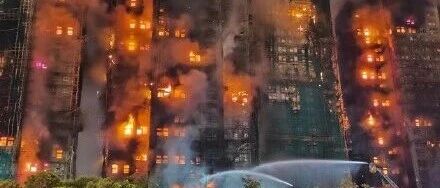
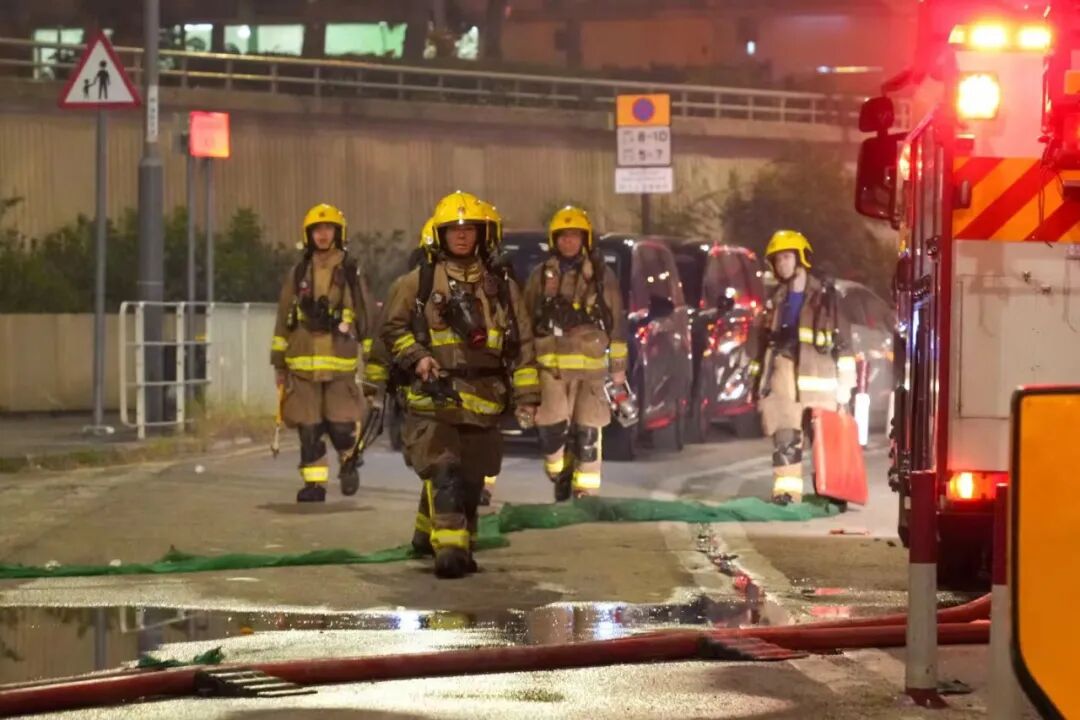
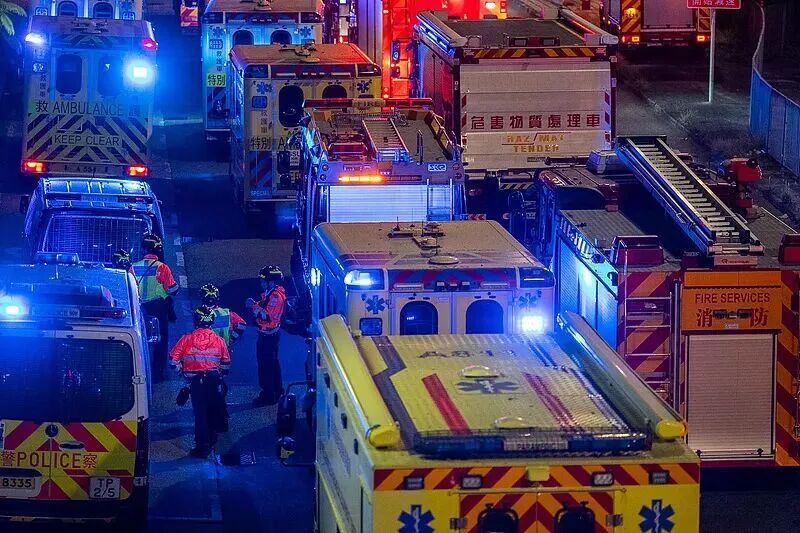
On the afternoon of 26 November 2025, a fire broke out at Wang Fuk Court in Tai Po District, Hong Kong. By the evening of the 26th the fire services had raised the alarm to the highest level, no. 5, deploying 767 firefighters, 128 fire appliances and 57 ambulances. The situation on site was extremely critical. Wang Fuk Court has eight blocks, all of which were covered in scaffolding and scaffold netting at the time for major repairs, including repairs to the external walls. These construction materials became pathways for the fire to spread rapidly, making the rescue extremely challenging.
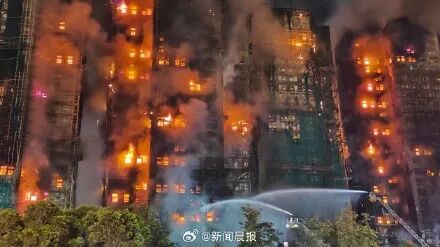
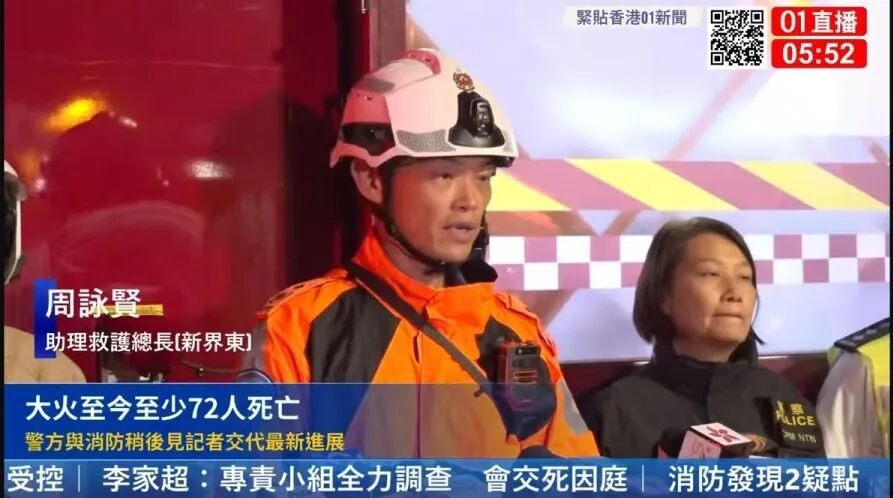
Latest figures published by the Hong Kong Fire Services Department on the 27th show that the Tai Po fire had left 44 people dead, 58 injured and 279 missing, including one firefighter who died in the line of duty. Hong Kong police said they had arrested three men on suspicion of manslaughter, and investigations were continuing.
At the time of writing, the fires in three of the Wang Fuk Court blocks had been brought broadly under control, while scattered pockets of fire remained in four others, and firefighters were continuing firefighting and rescue work.
Where the fire started
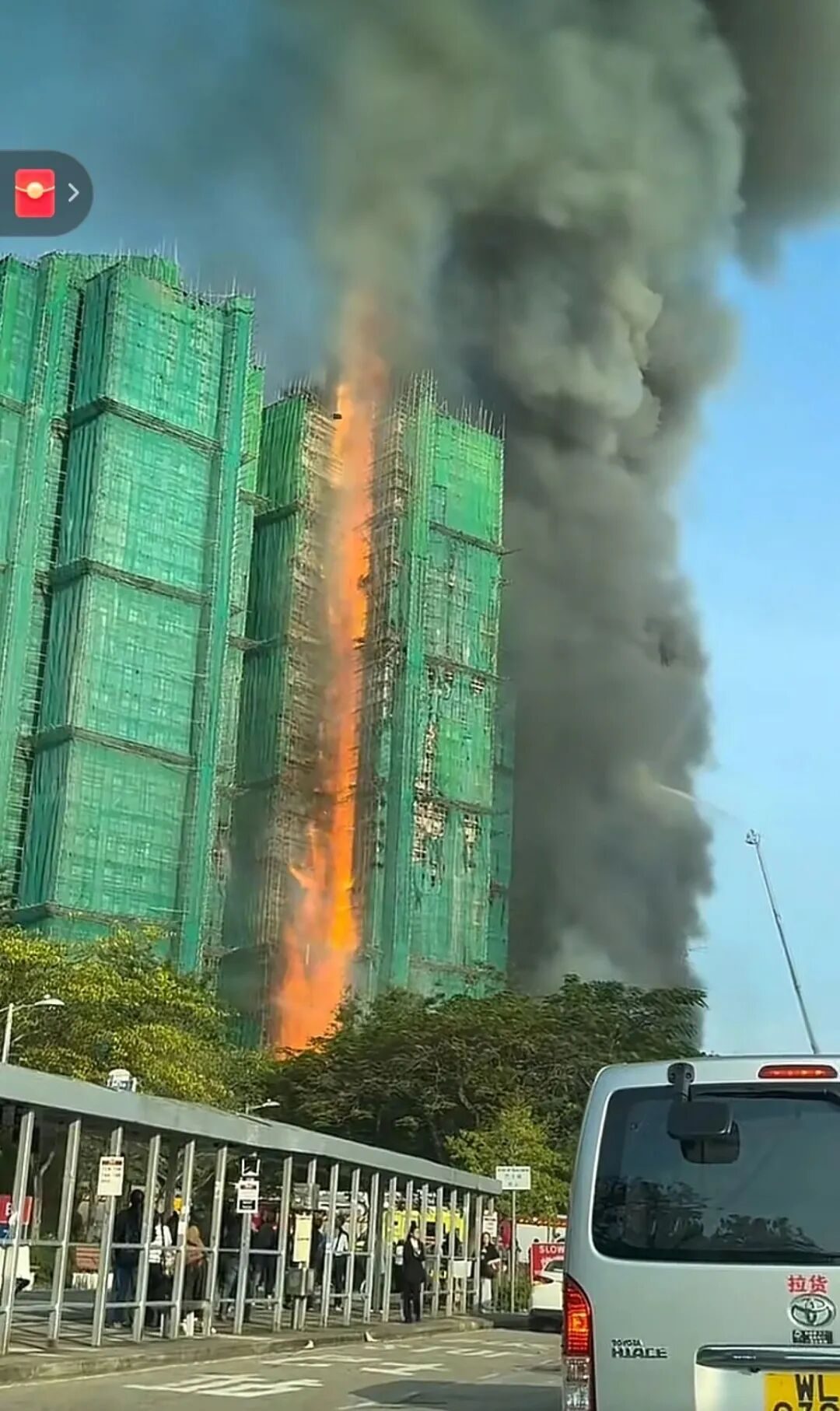
A joint investigation team from the Hong Kong police and Fire Services Department has initially established that the fire was directly linked to the external wall maintenance works at Wang Fuk Court. Several blocks were having their facades refurbished, with whole buildings wrapped in safety netting and bamboo scaffolding. At the time, workers were working outside a 32-storey residential block and may have been carrying out hot work such as electric welding in breach of the rules; sparks or hot welding slag accidentally ignited the protective netting or insulation materials on the scaffolding, starting the fire.
Besides improper work practices, the causes of the fire also involve materials and oversight. Police found on site that the protective netting, waterproof canvas, plastic sheeting and other materials laid on the buildings' external walls did not meet fire safety standards, and in another block that was not affected, polystyrene foam had even been used to seal the windows of the lift lobby. Such materials ignite very easily and burn very fast. The case is under further investigation.
Why the fire spread so fast
The Wang Fuk Court fire spread so quickly and escalated to a no. 5 alarm in a short time because of the building structure and conditions on site.
First, densely packed high-rise blocks and combustible facades were major factors in the rapid spread. Wang Fuk Court is a large estate of eight 32-storey residential towers set close together, a high-density residential area. At the time, seven of the eight blocks were on fire at once, with flames running rapidly along the facades of neighbouring blocks, setting off a chain of burning buildings.
Second, the bamboo scaffolding and combustible protective netting acted as channels for flame spread. The bamboo scaffolding was combustible and had not been given any fire-retardant treatment, so open flame or hot welding slag could easily start a major fire. Because it sat close against the external walls, flames could climb quickly up the scaffolding and then enter the flats through the windows on each floor. The green safety netting and waterproof plastic sheeting used in large quantities on site may not have met fire safety standards; when they burned they released large amounts of dense smoke and sparks, speeding the horizontal spread of fire between buildings.
Third, weaknesses in the building structure also helped the fire along. The Wang Fuk Court blocks were built in the 1980s. Being old, some of their fire protection installations had deteriorated and no longer worked, stairwells and common passages were cluttered and escape routes were narrow, all of which made evacuation and firefighting harder. Residents also reported that some blocks had insufficient or even no water pressure at the fire hydrants. These weaknesses in structure and installations meant that once a fire started it was very hard to contain, and it spread quickly out of control.
Finally, the weather also worsened the spread to some extent. On the day, winds were strong in Hong Kong's New Territories, driving the fire sideways and blowing burning debris and sparks towards neighbouring blocks, further enlarging the fire area. The strong wind also spread the dense smoke quickly, obscuring firefighters' view and making the firefighting more difficult.
Differences in fire regulation
Rules on external wall insulation: after the Shanghai fire of 15 November 2010, the mainland's Ministry of Housing and Urban-Rural Development quickly revised the standards for building insulation materials, specifying that flammable materials may not be used as external insulation on any new building and strictly limiting the use of combustible materials. Since then, flammable insulation has been almost entirely banned on new high-rise residential and public buildings, which use class A non-combustible or class B1 flame-retardant materials instead (classes under China's reaction-to-fire classification), to eliminate fire hazards from insulation. In Hong Kong, by contrast, although requirements for external wall insulation on new buildings are also being raised, many existing older buildings still use flammable insulation, as the Wang Fuk Court fire has exposed.
Fire safety rules for construction sites: in 2011 the mainland issued GB 50720-2011 (China's technical code for fire safety of construction sites), in force from 1 August 2011. Drawn up in light of the lessons of the Shanghai "15 November" fire, it sets comprehensive rules for fire safety on construction sites, including: construction sites must have temporary fire access roads and a temporary firefighting water supply; external scaffolding and formwork support frames on high-rise buildings must be built of non-combustible materials; and external scaffolding and safety netting must be flame-retardant. However, these rules are aimed mainly at new construction, and the requirements for repair and refurbishment sites on existing buildings are comparatively lax. Mainland codes also do not apply in Hong Kong, where construction safety requirements have historically been relatively weak.
Building structure and fire separation: the mainland's design codes for high-rise buildings set detailed rules on fire compartments, smoke-proof stairwells, refuge floors, fire doors, firefighting lifts and so on; for example, high-rise buildings must have a refuge floor every few storeys, and lift shafts and service shafts must be fire-stopped at every floor. Hong Kong has corresponding codes, but because many of its buildings are old, the fire protection installations in many older blocks do not meet current standards, which is one reason evacuation was difficult in this fire.
Fire protection installations: since 2005 the mainland has required high-rise buildings to have automatic sprinkler systems and automatic fire alarm systems, to strengthen early suppression and warning. Hong Kong has similar requirements for new buildings, but in many older buildings sprinklers and other installations are incomplete for financial and technical reasons. In the Wang Fuk Court fire, the fire services found that some blocks had hydrants with no water and fire alarms that had not been installed, underlining how seriously fire protection in older buildings has fallen behind.
The difficulty of high-rise rescue
Although the Hong Kong fire services did everything they could, the Wang Fuk Court fire exposed many weaknesses in high-rise rescue:
Escape and refuge provision inside high-rise buildings is inadequate. The Wang Fuk Court blocks were built in the 1980s, when design standards were far below modern requirements. Many have no refuge floors, refuge rooms or other safe spaces, so residents who cannot get downstairs have nowhere safe to shelter. In the fire, dense smoke quickly filled the stairwells and lift shafts, so residents could not evacuate by the stairs and were forced to stay in their flats and wait for rescue.
Escape routes are narrow and obstructed. In some blocks the stairwells are too narrow, and with clutter stored there day to day and fire hydrants and other equipment taking up space, evacuation becomes badly congested, costing escape time. Police found that stairwells and passages in some Wang Fuk Court blocks had been obstructed, making evacuation even harder.
Conditions on site were extremely harsh. The fire was intense, and the heat and dense smoke made it difficult for firefighters to get inside the buildings. Burning bamboo scaffolding kept collapsing, and falling debris and reinforced concrete components endangered firefighters' lives. Temperatures on some floors reached several hundred degrees Celsius, so firefighters could not get close and could only fight the fire from outside at a distance with hose jets. With several blocks burning at once, the fire services also had to deal with multiple fires simultaneously, spreading their resources thin. At 32 storeys, the blocks were beyond the reach and height of ordinary fire appliances, which could not put out the fires on the upper floors directly; firefighters had to rely on turntable ladders and aerial platforms to fight the fire from outside, which is relatively inefficient.
Internal fire protection installations failed. In some blocks the hydrants, sprinklers and other systems did not work properly, so firefighters could not use the building's own firefighting resources and had to rely on jets from outside, greatly reducing their effectiveness.
Recommendations
Urgent revision of regulations and standards: drawing on mainland experience, ban bamboo scaffolding entirely and make construction fire safety standards a binding requirement under the fire safety ordinance.
Upgrade rescue equipment: invest more in high-rise firefighting equipment, such as turntable ladders with greater reach, drone-based firefighting systems and high-rise water supply systems, to improve firefighting capability in complex fires; and set up regular maintenance and drills for the equipment so that it works, and works well, when it matters.
Mandatory maintenance of building fire protection installations: introduce regular inspection and testing of fire protection installations in older buildings.
Escape awareness: escaping a fire of this size is genuinely difficult, especially as this fire happened during the day when mostly the elderly and children were at home. Our advice is this: if you decide to leave your flat to escape, close the front door behind you, and once in the stairwell close the stairwell fire door, so that if fire reaches your flat its smoke cannot spread into the stairwell and make it unusable (escaping through a smoke-filled stairwell can easily lead to injury or death). If you cannot evacuate, choose the room least likely to be reached by the fire, close the door and wait there for the fire service. Meanwhile, take steps to keep smoke out, and call the fire service to tell them exactly where you are.
The loss of lives has sounded an alarm for building fire safety. The Wang Fuk Court fire should not be merely the record of a tragedy; it should be the starting point for reform. Only by building firm defences with binding rules and improving rescue capability by scientific means can every resident's life truly be protected and similar tragedies prevented. May those who died rest in peace and those who survive stay strong, and may Hong Kong move forward through reflection to build a safer, more liveable city.

First published on our WeChat channel: read the original