

Background and impact of the new standard
On 28 October 2024, the State Administration for Market Regulation and the Standardization Administration of China approved and published the mandatory national standard Fire doors (GB 12955-2024), which comes into force on 1 May 2026. Compared with the previous edition, the new standard makes important updates to the classification method, choice of materials and performance criteria, to keep pace with new technologies and materials and with new needs in building fire safety.

For fire door manufacturers, passing tests to the new standard is the key threshold for entering the market, and it bears directly on a product's compliance and market acceptance.
Many manufacturers, however, do not yet understand the new standard in depth. When they submit doors for testing, problems such as criteria not met, missing hardware and non-compliant materials come up frequently. These lead to repeat tests and project delays, and can cost them project opportunities. A full grasp of the key test points of the new standard, and making compliance adjustments in advance, has therefore become an urgent issue for manufacturers.
Below we set out the test items of the new fire door standard, the main difficulties and what to watch for.
Core test items
Appearance
Check the product label and the door surface for flatness and smoothness and for defects such as cracks, bubbles and dents; check that the frame and leaf are tightly assembled and the gaps even.
Dimensional tolerances
Measure the height, width, thickness and other dimensions of the door to ensure they meet the design requirements and the tolerances set in the standard.
Performance of key materials
The reaction-to-fire performance of the main frame material must be at least Class B, and the core material must meet requirements for density, resistance to efflorescence (salt bleeding), chloride ion leaching and so on.
Hardware performance
Test the function of door closers, coordinators, fire-rated locks and other hardware and whether their fire performance is satisfactory — for example, whether the closer can close the leaf automatically and whether the fire-rated lock locks and opens normally. Seals, glass and other components must also meet the requirements.
Mechanical performance
This assesses the functional requirements of the fire door as a "door" in normal use. There are four criteria that emphasise practicality and function: durability under repeated opening and closing, resistance to vertical load, resistance to static torsion, and resistance to soft heavy body impact.
Interlock signal receiving and feedback
Fire doors on escape routes fitted with interlock signal receiving and feedback devices must be able to output a warning signal when the leaf is not fully closed.
Smoke control performance
Check that the door's seals are securely installed and seal effectively, to prevent smoke and hot gases leaking during a fire.
Fire resistance
This is the most important test for a fire door. In a simulated fire, it tests the door's ability to stop flame spread and heat transfer for a given time and determines whether it meets the requirements of the relevant fire rating — for example, a Class A (甲级) fire door must achieve at least 1.5 hours of integrity and insulation.
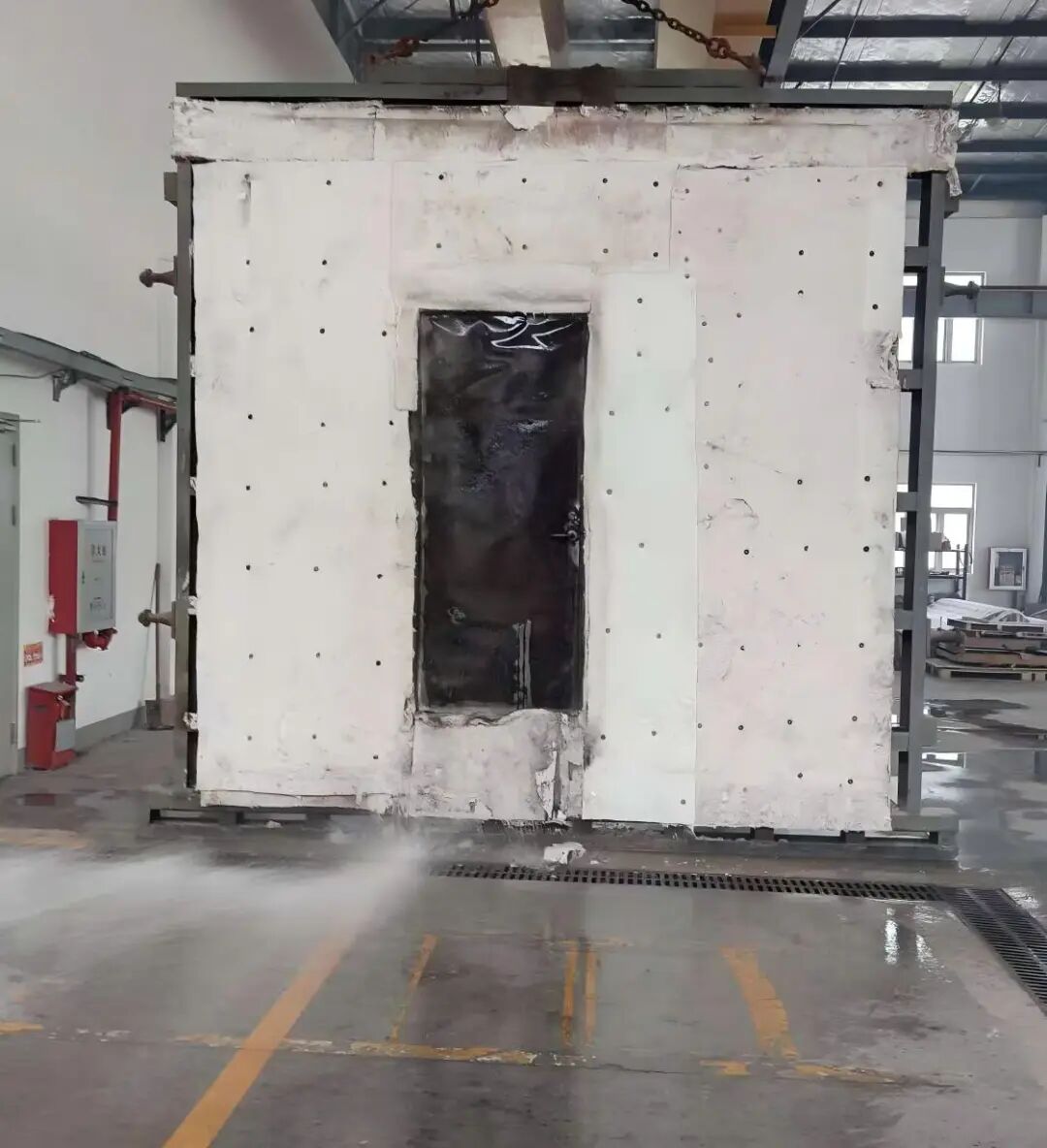
Hose stream test
Fire doors with an integrity of ≥ 60 min must undergo a hose stream test. During the test the leaf must not open or collapse, and after the test it must not lose integrity.
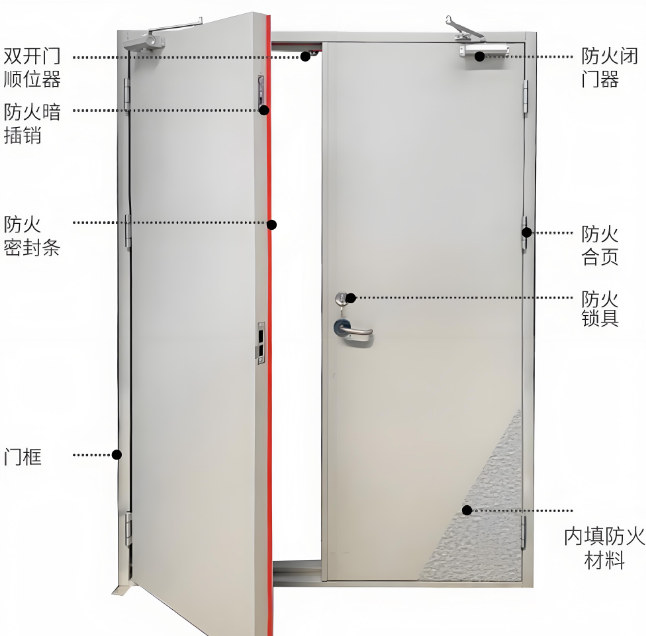
These items cover the door's appearance, dimensions, materials, hardware, mechanical performance, fire alarm interlock function, sealing, fire resistance and impact resistance. They are what manufacturers must focus on and prepare for when submitting doors for testing.
Difficulties and points to watch in the key test items
For each of the key test items above, we describe the difficulties and what manufacturers should check before submitting doors, to ensure the product meets the technical requirements of the new national standard.
Appearance
The appearance of a fire door bears directly on both its look and its performance in use.
Cracks, bubbles, dents and other defects on the door surface can affect the door's tightness and structural strength. A frame and leaf that are not tightly assembled, or uneven gaps, allow smoke and flame to leak and reduce the door's ability to stop fire and smoke.
In addition, the permanent product nameplate must be securely fixed in a prominent position. It must not be stuck on, or it may be torn off by mistake or fall off and no longer identify the product effectively.
Dimensional tolerances
Leaf thickness should be controlled to the design requirements. Only a positive tolerance is allowed, and it should not be too large, so as not to weaken fire resistance. At final inspection, the height, width, thickness and other dimensions of the door should be measured in full to ensure the tolerances meet the standard.
Key materials
Main frame material: must achieve Class B under GB 8624-2012.
Core material: for integrity > 90 min, the core must achieve Class A2; for integrity < 90 min, Class B. Note also the restrictions on materials from environmental requirements: Annex A sets criteria for density, resistance to efflorescence, chloride ion leaching, bromide ions, smoke toxicity and so on. Manufacturers should keep test reports for their materials; if a supplier does not provide them at purchase, ask for the relevant test reports promptly to show that the materials meet the standard.
Hardware performance
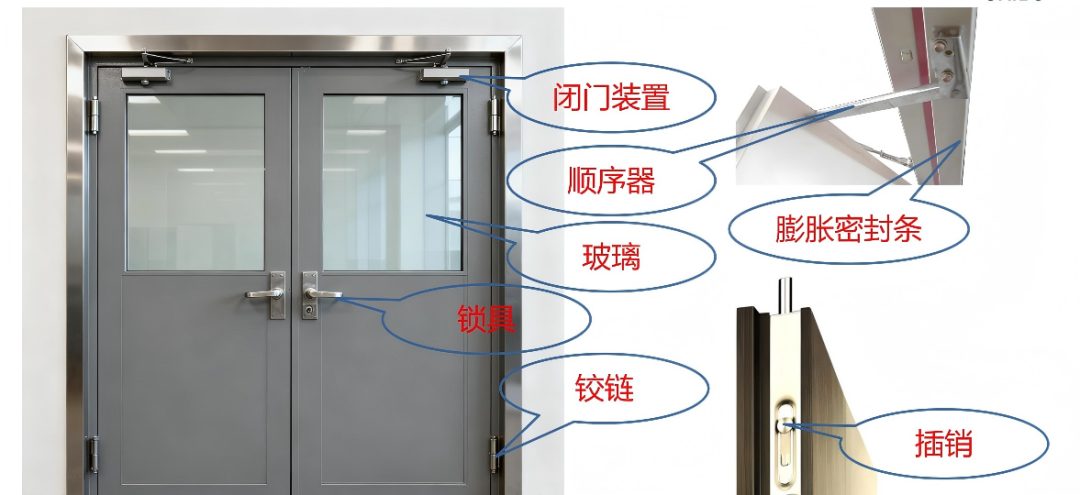
Fire-resistant glass: the integrity of the non-insulated fire-resistant glass used must not be lower than the integrity required of the fire door.
Flush bolts and coordinators: if a double-leaf door has no coordinator and the leaves close in the wrong order, it cannot close properly. These two items are no longer required to have fire performance, but they must still be made of steel.
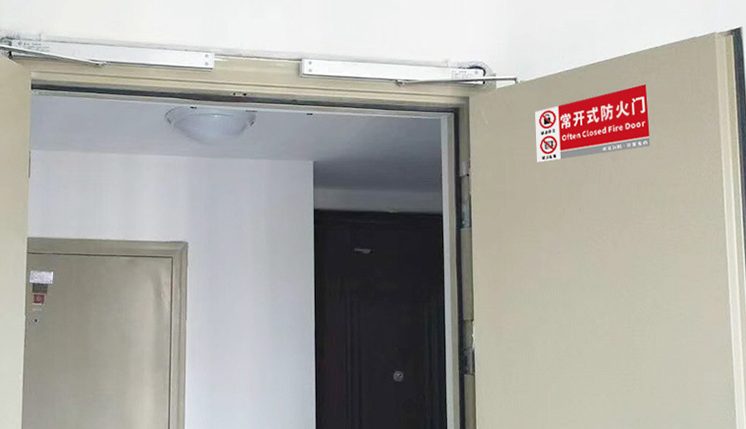
Fire-rated locks, fire-rated hinges, fire-rated flush bolts and fire-rated closing devices: these are no longer mandatory, but the door must still function as a fire door — for example, a normally closed fire door without a closer cannot close by itself after being opened. If the product design includes such hardware, it must all be fitted for the fire test, or it will directly affect the assessment of the test result.
Mechanical performance
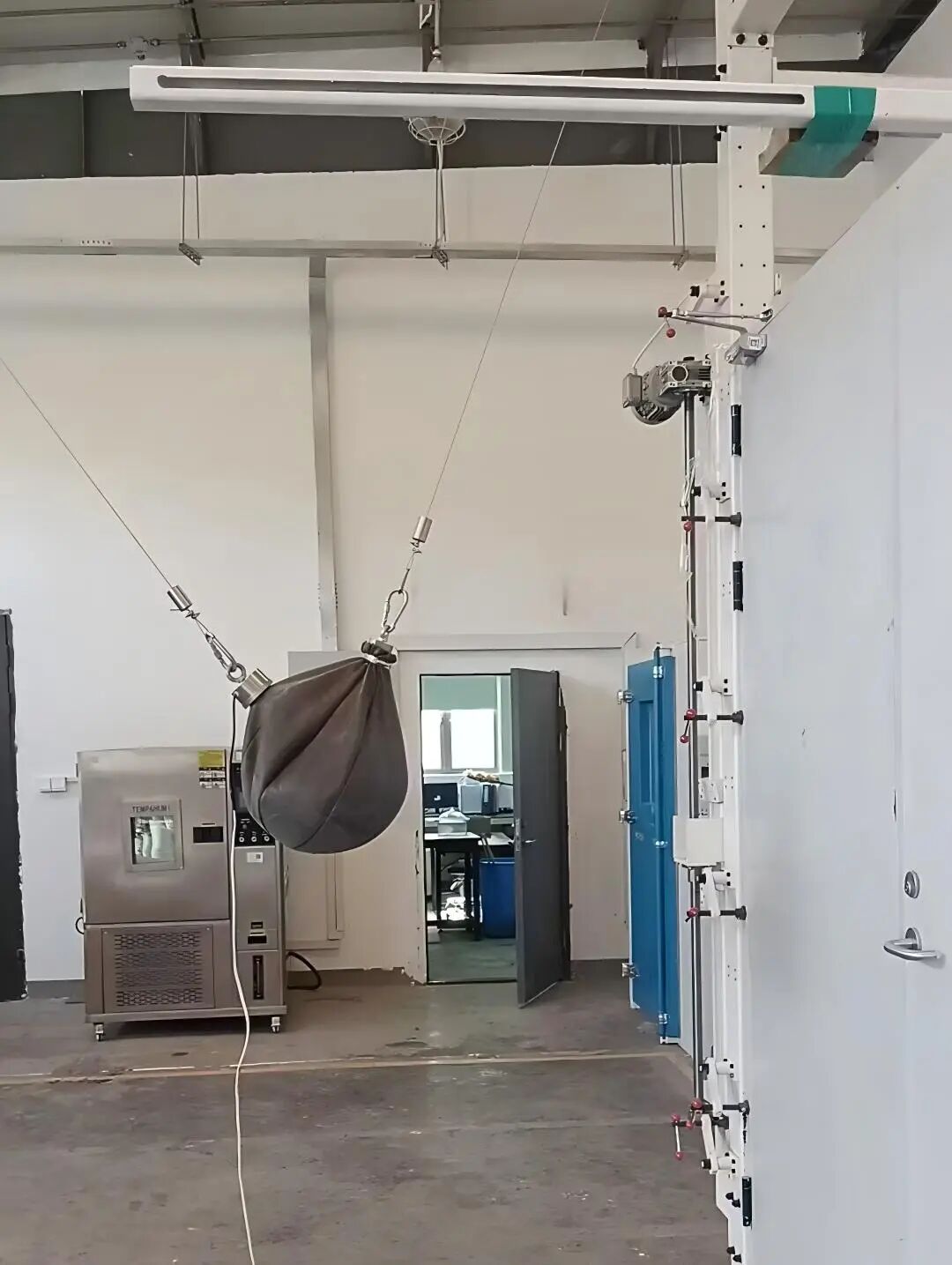
Durability under repeated opening and closing: after a set number of opening and closing cycles, no component may loosen, come off or deform seriously, and the leaf must still open and close normally. Manufacturers should give full consideration to mechanical performance at the design and manufacturing stage. For durability, the service life of the door can be extended by improving the quality and strength of hinges, closers and other hardware.
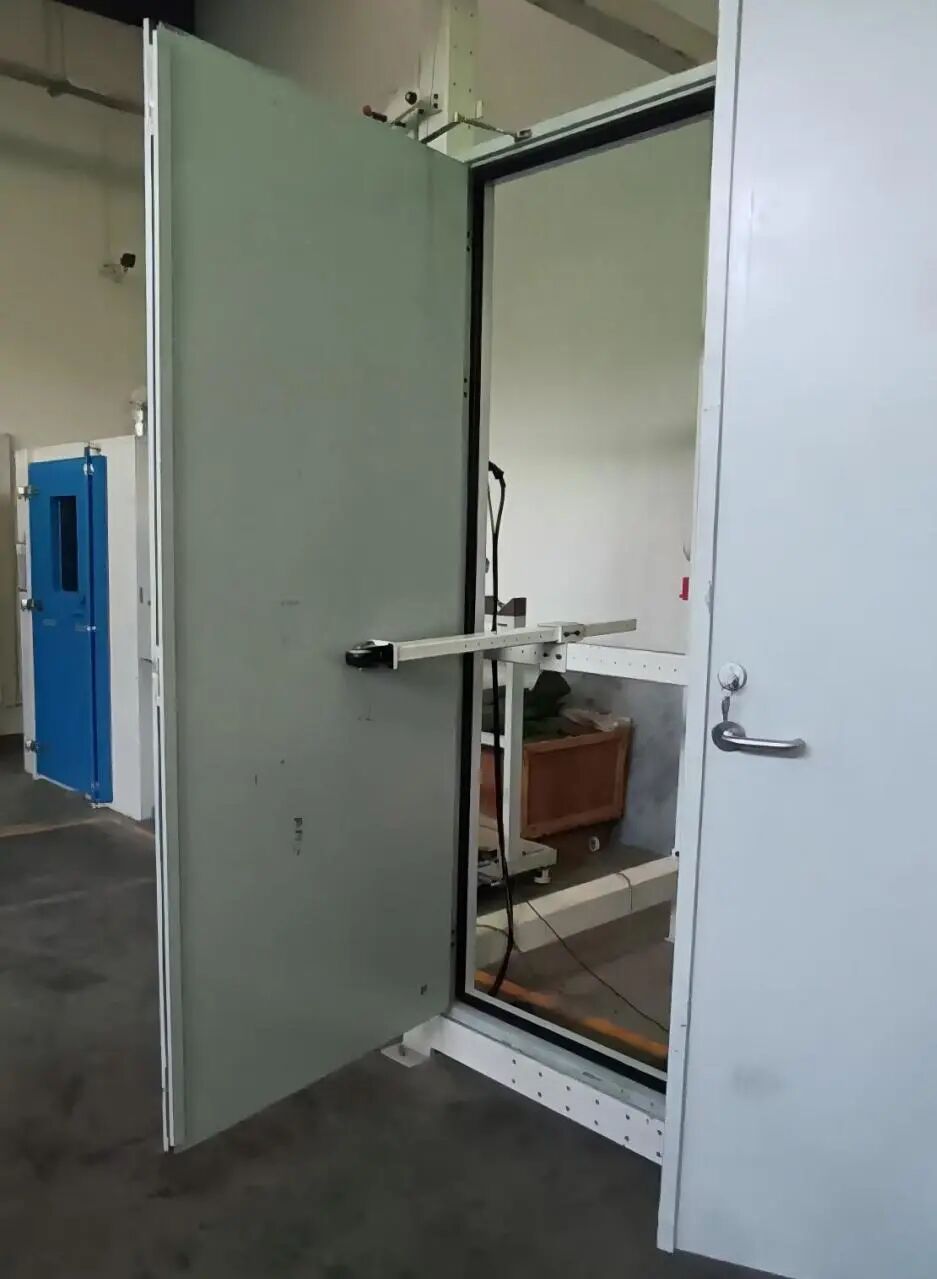
Resistance to vertical load: the structural design must prevent the leaf from deforming under its own weight. Manufacturers can use lightweight, high-strength facing materials, place stiffeners sensibly and control the overall weight of the leaf, so that the bottom of the leaf does not touch the floor after long use and prevent it closing properly.
Resistance to soft heavy body impact: the leaf needs facings with high compressive strength, filled with a high-density fire-retardant core that is firmly bonded to the facings. The impact test requires no structural damage after impact. If the impact opens up gaps, they will become paths for flame and smoke in a fire and lead directly to failure in the fire resistance test.
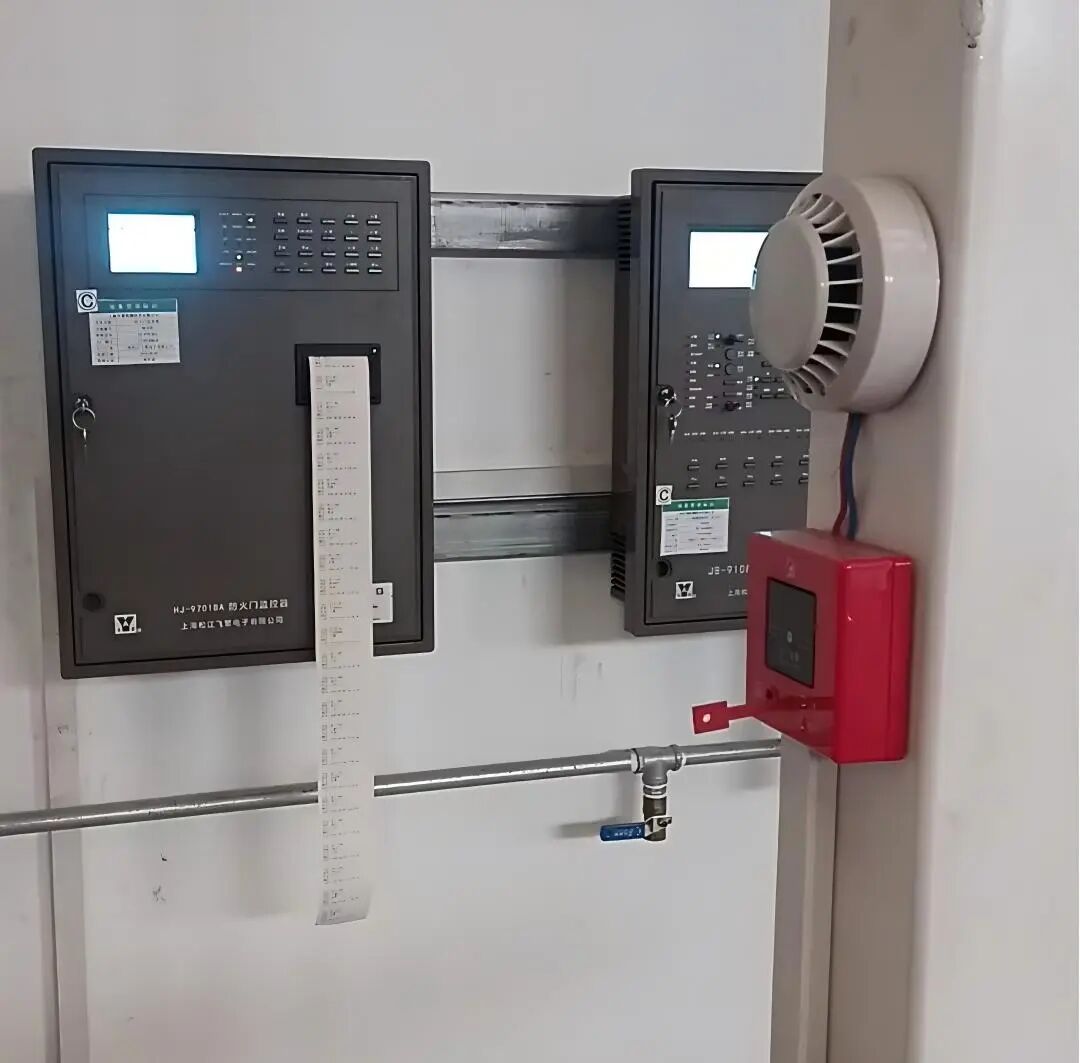
Interlock signal receiving and feedback
The interlock signal receiving and feedback function serves the needs of smart fire protection: fire doors on escape routes fitted with interlock devices must output a warning signal when the leaf is not fully closed. This means manufacturers need to integrate a signal feedback device into the door and link it to the fire alarm system.
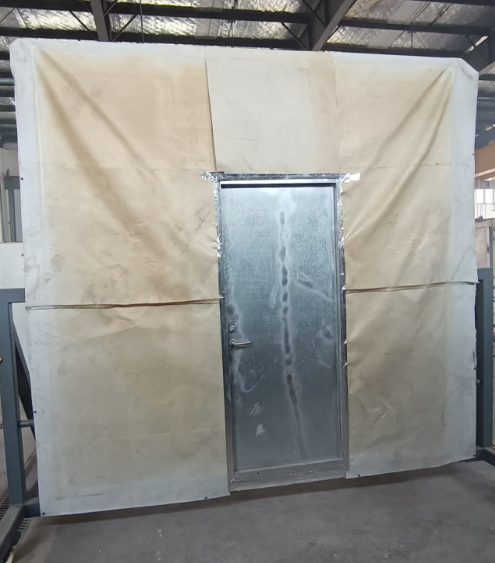
Smoke control performance
Smoke control is an important new requirement in the new standard, intended to prevent smoke and toxic gases from leaking in a fire. The test requires smoke leakage through the door at a given pressure difference not to exceed a specified value, which places high demands on the material and installation quality of the seals.
Manufacturers should use intumescent fire seals that meet national standards and ensure their width and material meet the requirements. For the gap at the bottom, a smoke seal or threshold can be added to stop smoke leaking underneath.
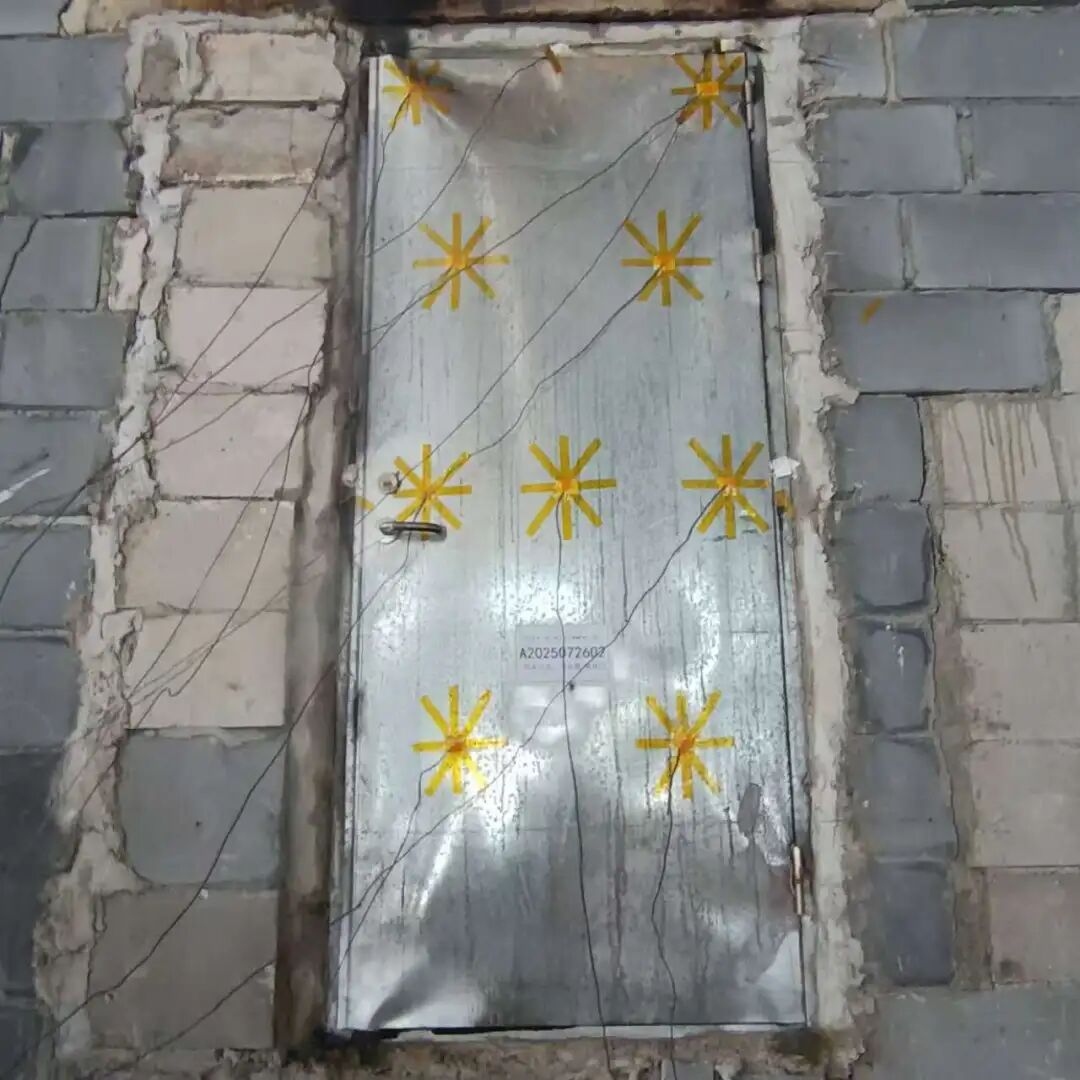
Fire resistance
Fire resistance is the most important criterion for a fire door, determining its ability to insulate and stop fire.
Many factors affect fire resistance, including the quality of the core material, the tightness of the door construction and the performance of the hardware.
Manufacturers should use high-quality core materials and reliable processes to ensure that the door does not burn or deform at high temperature. Core materials should be rigorously tested and meet all the performance requirements of the new national standard, particularly reaction to fire and insulation.
During production, the sealing of the door should be controlled so that the gaps between frame and leaf are even and the seals effective, to stop flame and smoke passing through the gaps.
The fire performance of hardware must not be overlooked either: closers, fire-rated locks and the like must withstand high temperatures in the fire test without failing.
Hose stream test
The hose stream test is a new test for fire doors with an integrity of ≥ 60 minutes, simulating the impact of a fire hose jet on the door during firefighting and rescue.
The door must maintain its integrity after being struck by a stream of water at a given pressure, without opening or collapsing. The difficulty lies in designing the door to resist the water jet without damage, and in particular whether wetting the core material affects its insulation.
Manufacturers should consider resistance to water impact in the structural design of the door, and the core material should have some water resistance and resistance to deformation so that it does not soften or fall away when wet.
Industry trends
With the implementation date of the new national standard GB 12955-2024 approaching, fire door manufacturers need to plan ahead and respond actively to the changes it brings.
On the one hand, the new standard sets higher performance requirements, and companies will need to put more effort into upgrading materials, improving processes and testing products to ensure compliance.
On the other, the new standard will also bring a shake-out in the industry: some companies whose technology and quality fall short may be eliminated, while capable companies will win more opportunities.
Many design institutes are already designing projects to the new national standard, which means its impact on the market will be felt early. Several leading door manufacturers have already passed tests to the new standard and taken the lead in the market; manufacturers that fail to adjust in time risk losing competitiveness.
We advise manufacturers to submit their products to a qualified testing body for type testing as early as possible, to confirm whether they meet all the requirements of the new national standard. Any problems found in testing should be addressed promptly by adjusting the design and process, and the improved product resubmitted to ensure it complies. In particular, companies should complete product upgrades and certification transition before 1 May 2026 to avoid delaying project delivery.
To pass tests to the new standard efficiently, you can choose our laboratory. We have specialist test equipment and an experienced technical team, and we offer testing across the whole process and guidance on compliance corrections, helping manufacturers adopt new materials and processes and bring their products into compliance quickly.

First published on our WeChat channel: read the original