
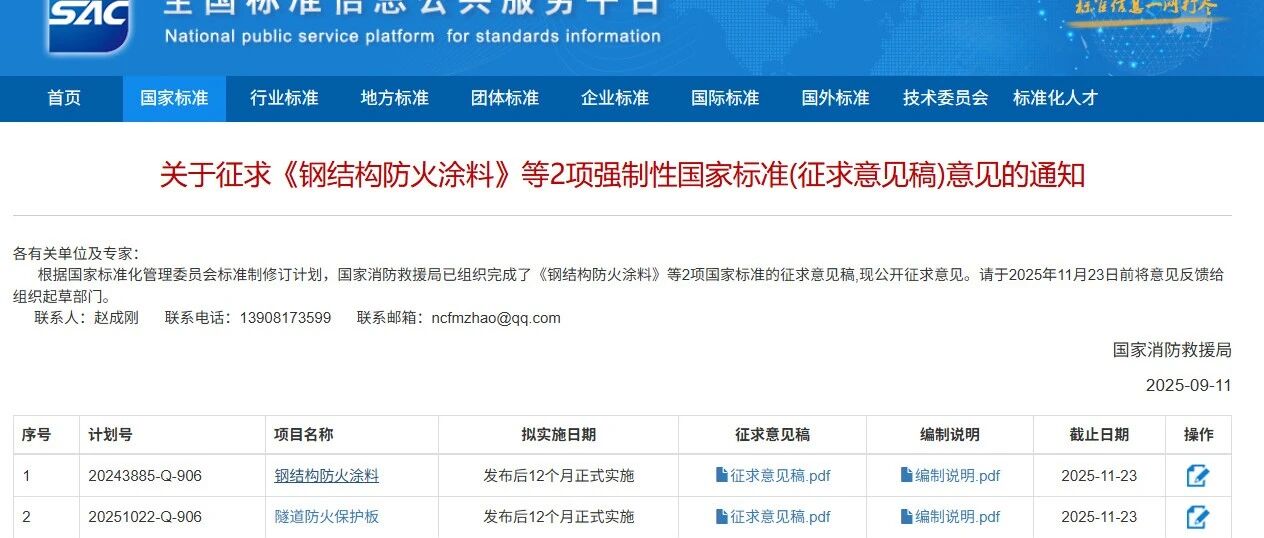
On 11 September 2025, under the standards development plan of the Standardization Administration of China, the National Fire and Rescue Administration completed the draft for comment of the national standard GB 14907, Fire-resistive coatings for steel structures, and opened it to public consultation. The deadline for comments is 23 November 2025.
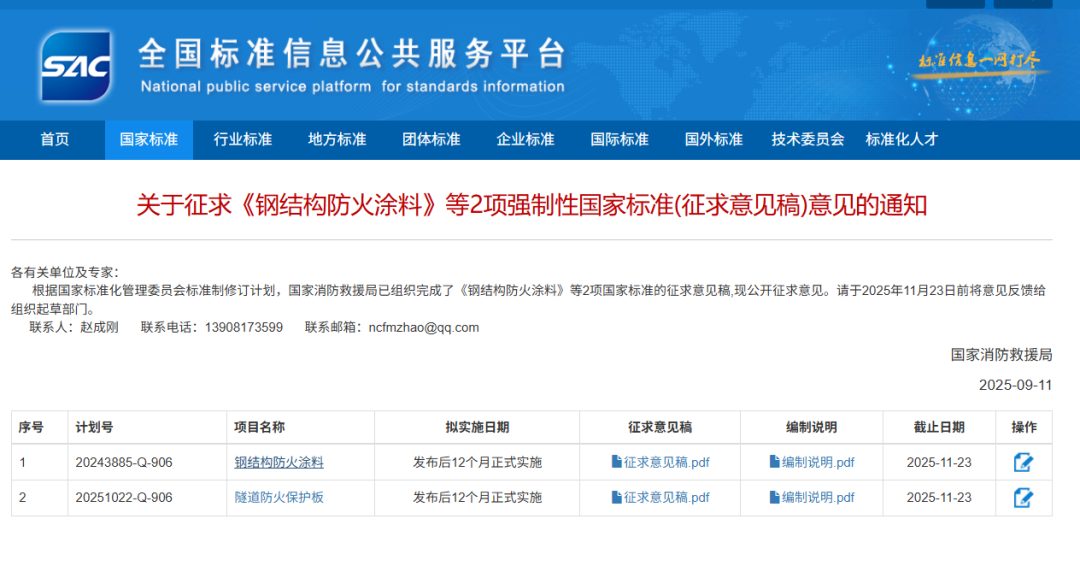
Main drafting organisations: Sichuan Fire Research Institute of the Ministry of Emergency Management, the Fire Product Conformity Assessment Centre of the Ministry of Emergency Management, Tongji University, Sichuan Tianfu Fireproof Materials Co., Ltd. and Beijing Mucheng Fireproof Insulation Special Materials Co., Ltd.
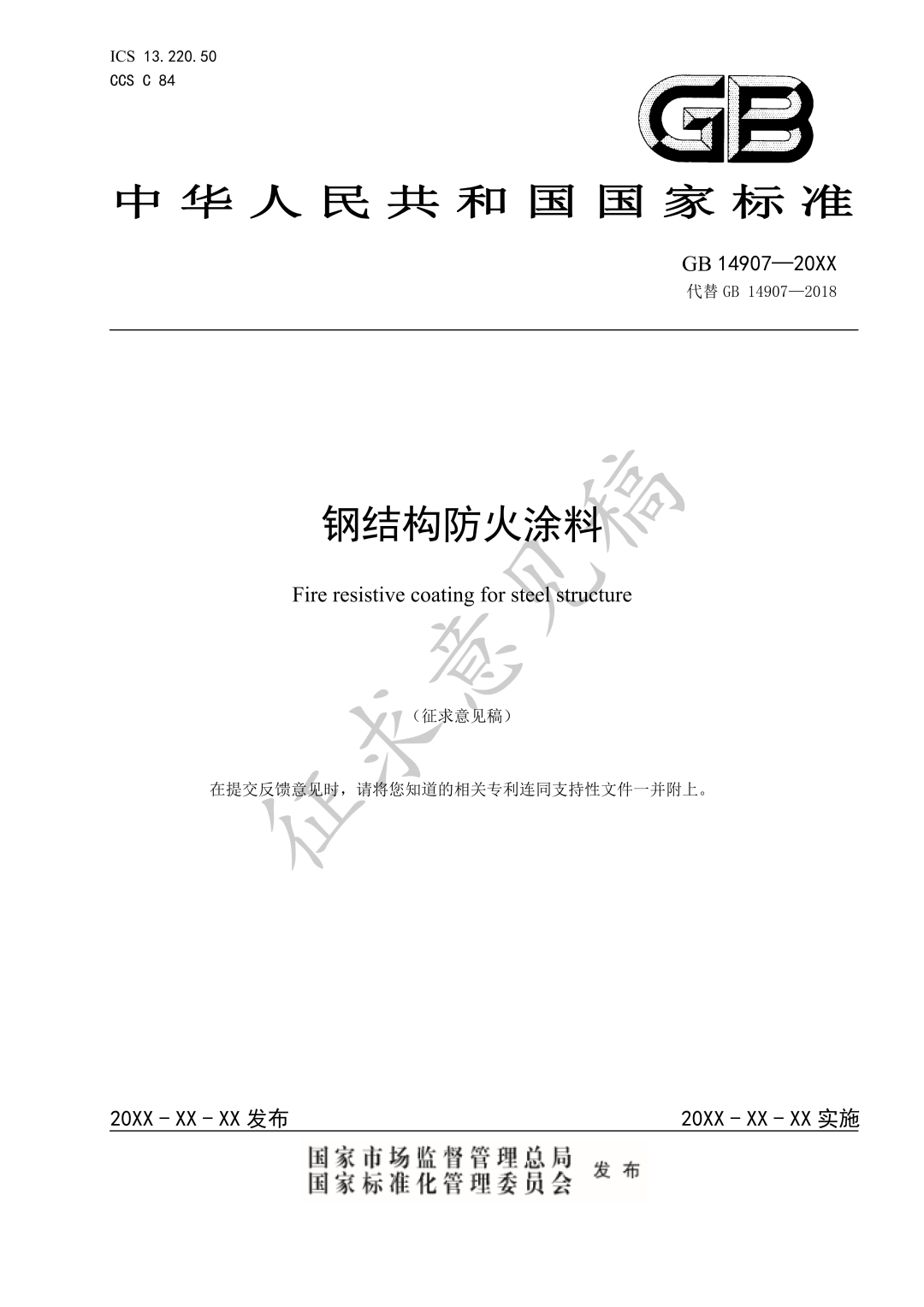
GB 14907, fire-resistive coatings for steel structures
Fire-resistive coatings for steel structures are fire protection products that safeguard lives and property and the safety of important public buildings. They are used very widely and demand is huge, so their quality has always attracted public attention.
The mandatory national standard GB 14907, Fire-resistive coatings for steel structures, was first published in 1994 and has been revised twice since (in 2002 and 2018).
In the six years since GB 14907-2018 came into force, it has played a positive role in guiding the development and production of these coatings, raising product quality, and in their design, application, testing and regulation, delivering substantial social and economic benefits.
However, as technology advances and product innovation accelerates, new types of coating for steel structures, such as solvent-free coatings, have appeared in China, and the product classification in GB 14907-2018 has shown its limits: it cannot fully cover new products or effectively guide their adoption. Some technical requirements in GB 14907-2018 have also fallen behind and do not fully meet today's pressing demand for coatings with higher fire resistance and better environmental performance, to some extent holding back progress in steel protection technology as a whole. In addition, because of the way the products are used, it is difficult to quickly tell genuine from counterfeit products on site (especially intumescent coatings), which can leave fire safety hazards in real projects.
The 2025 draft for comment is therefore a new revision based on GB 14907-2018.
What has changed
-
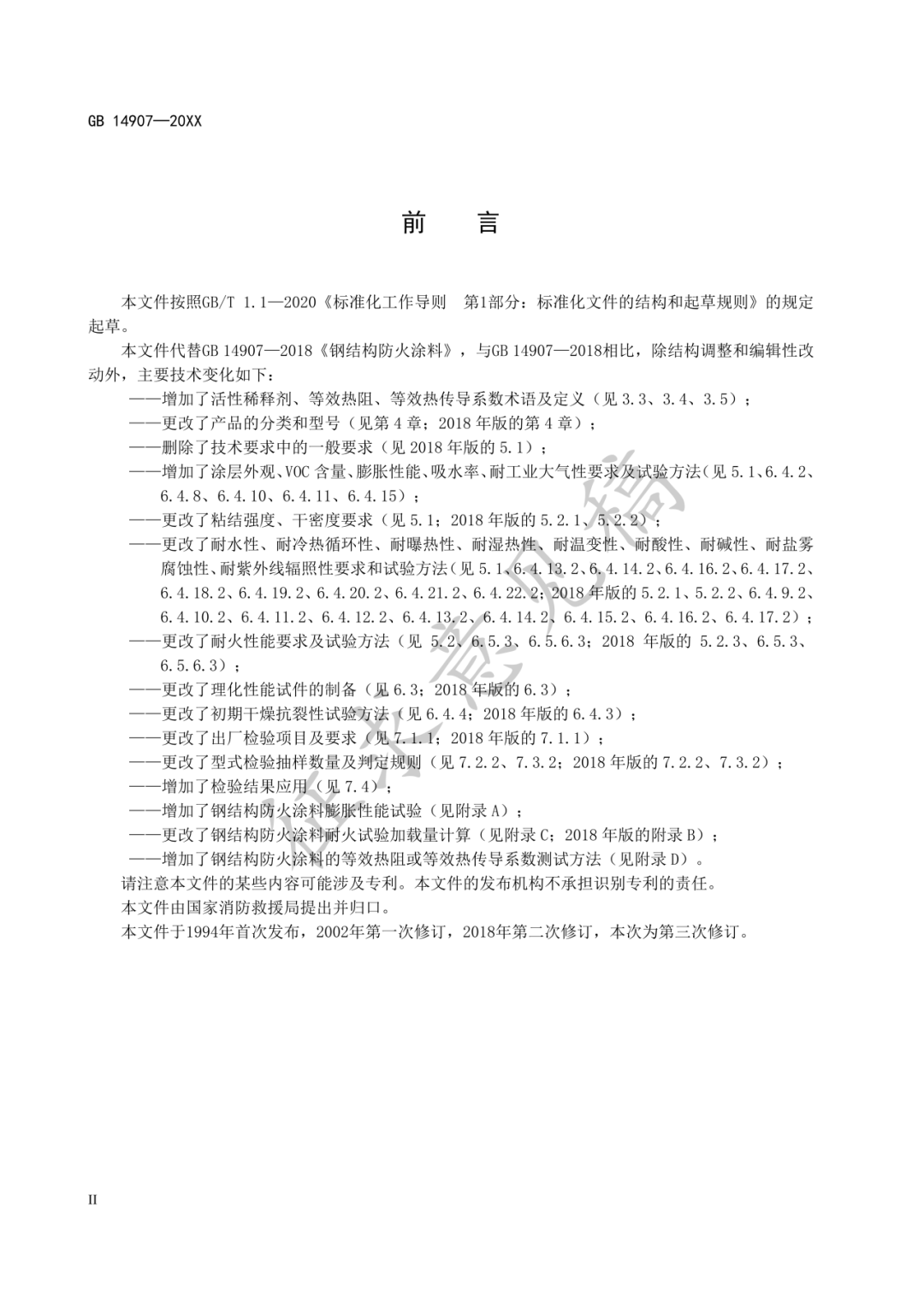
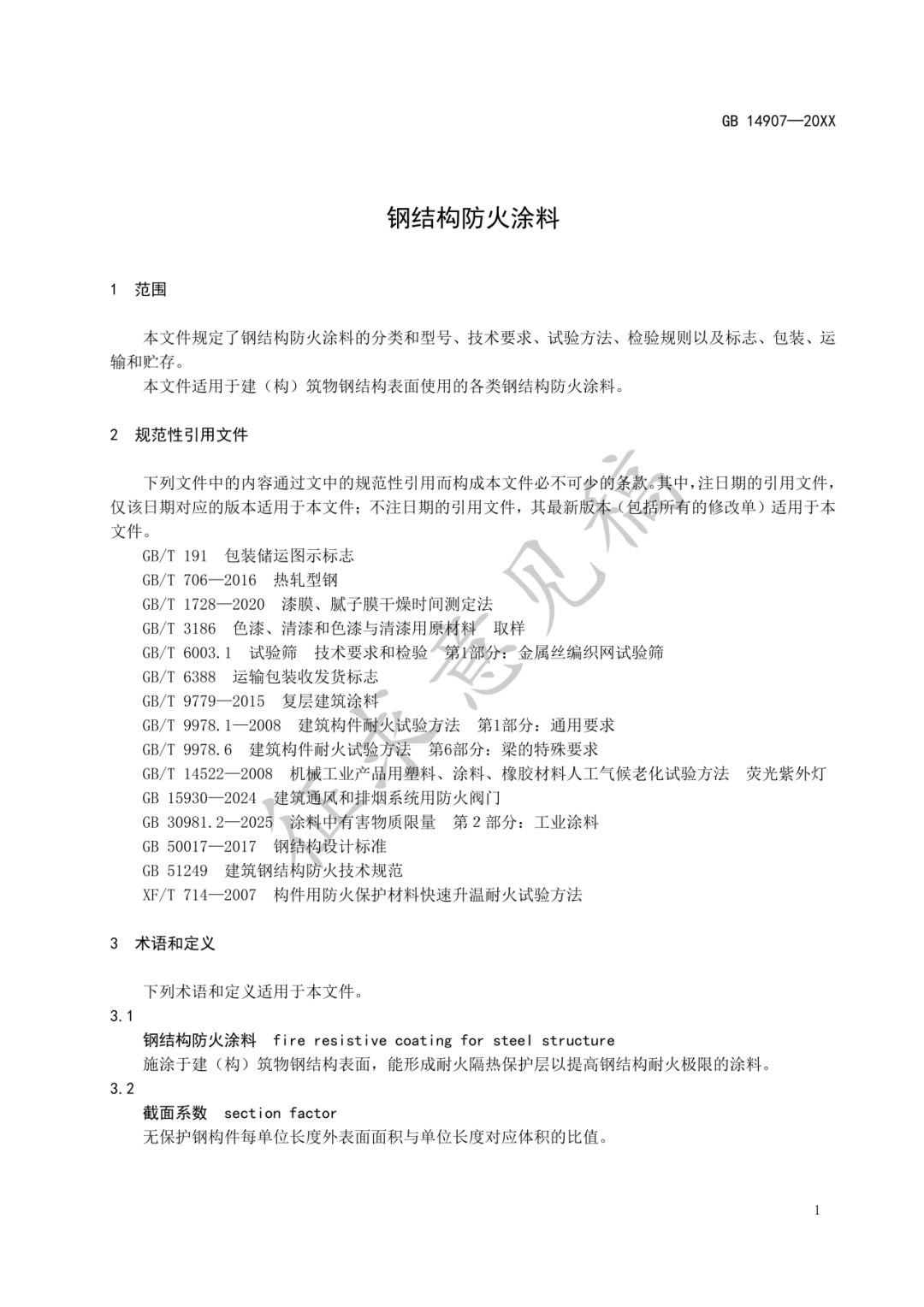
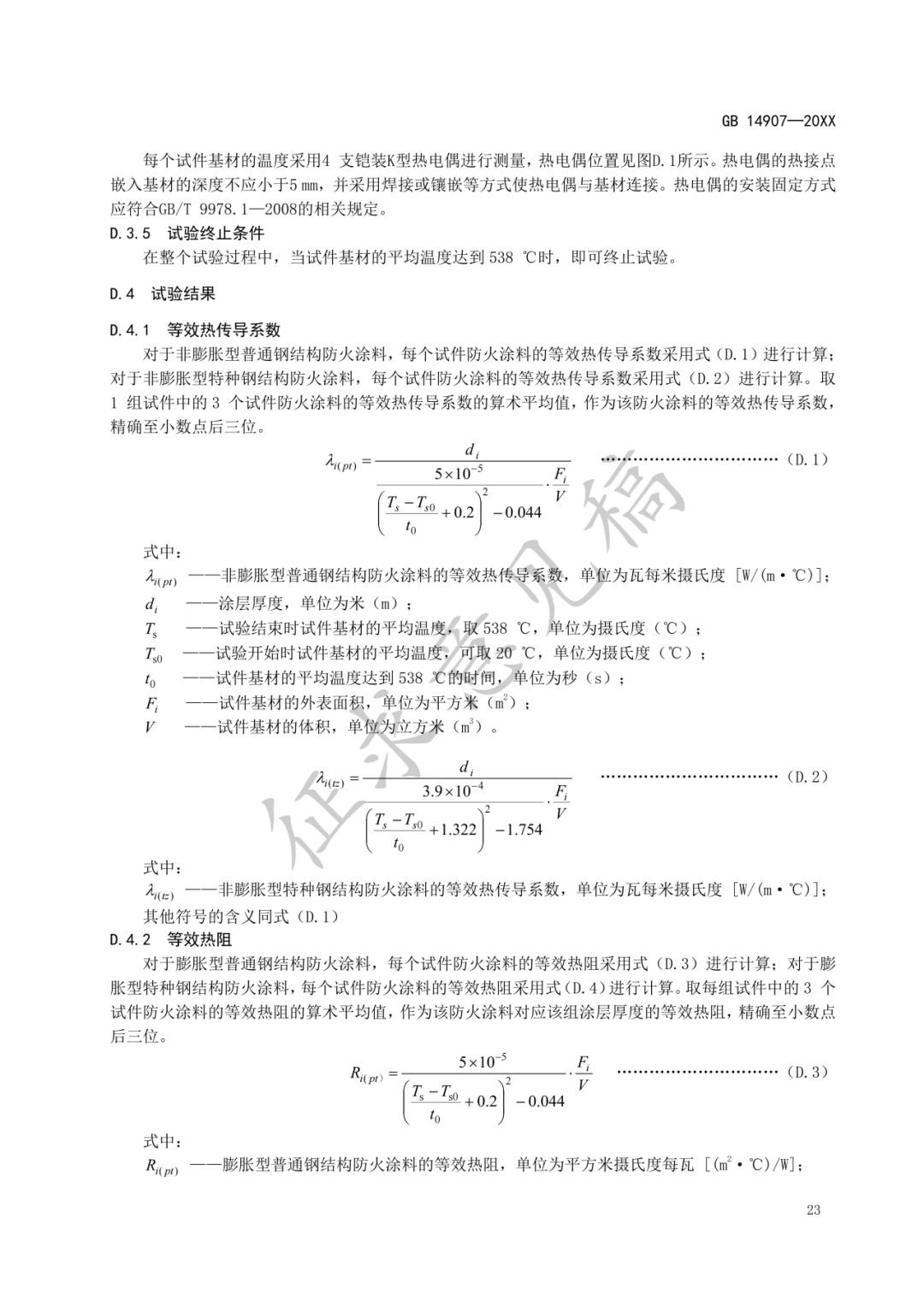
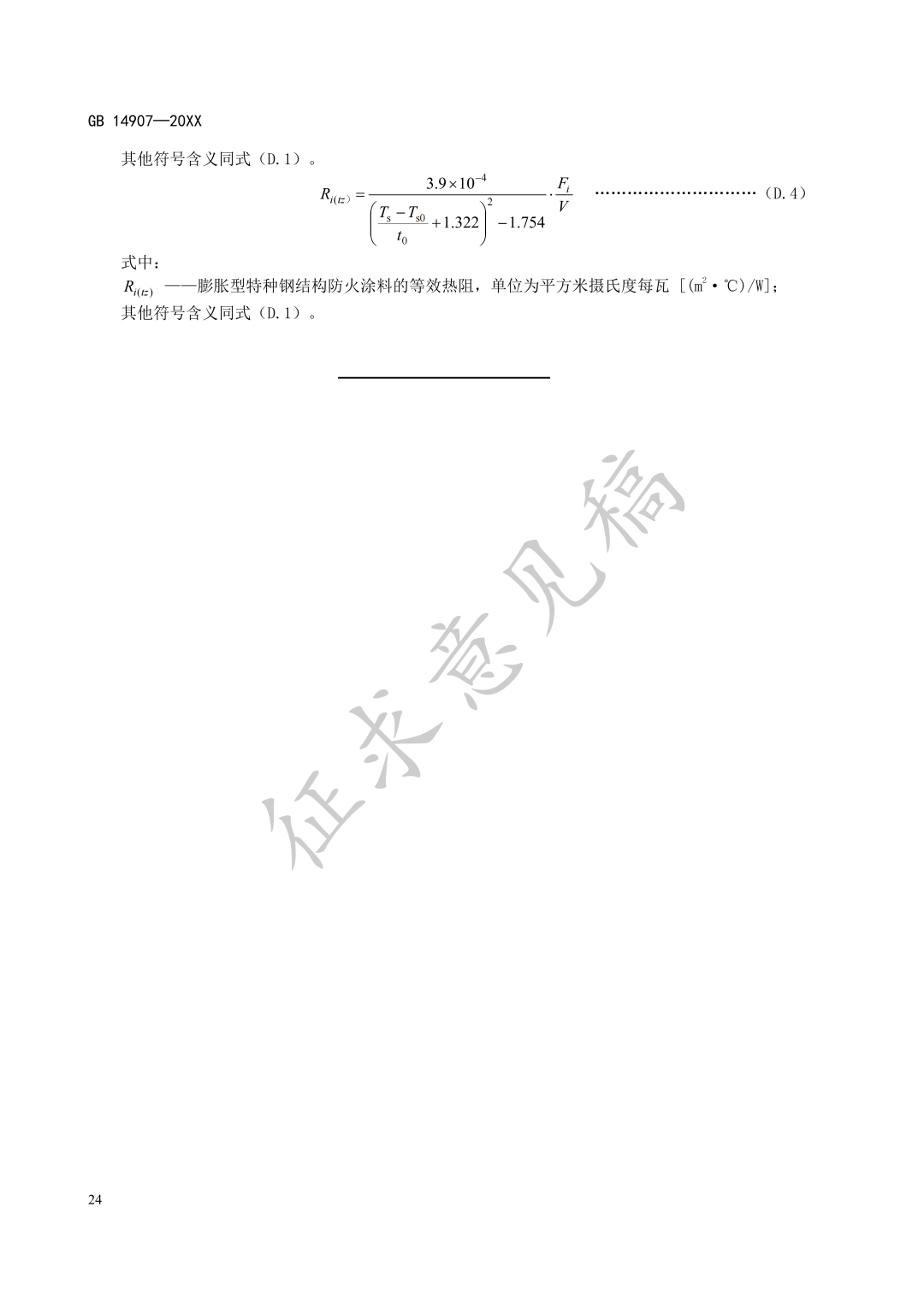
Three new terms: definitions of "reactive diluent", "equivalent thermal resistance" and "equivalent thermal conductivity" are added to support solvent-free coatings and the assessment of thermal performance. The 2018 edition had none of these terms.
-
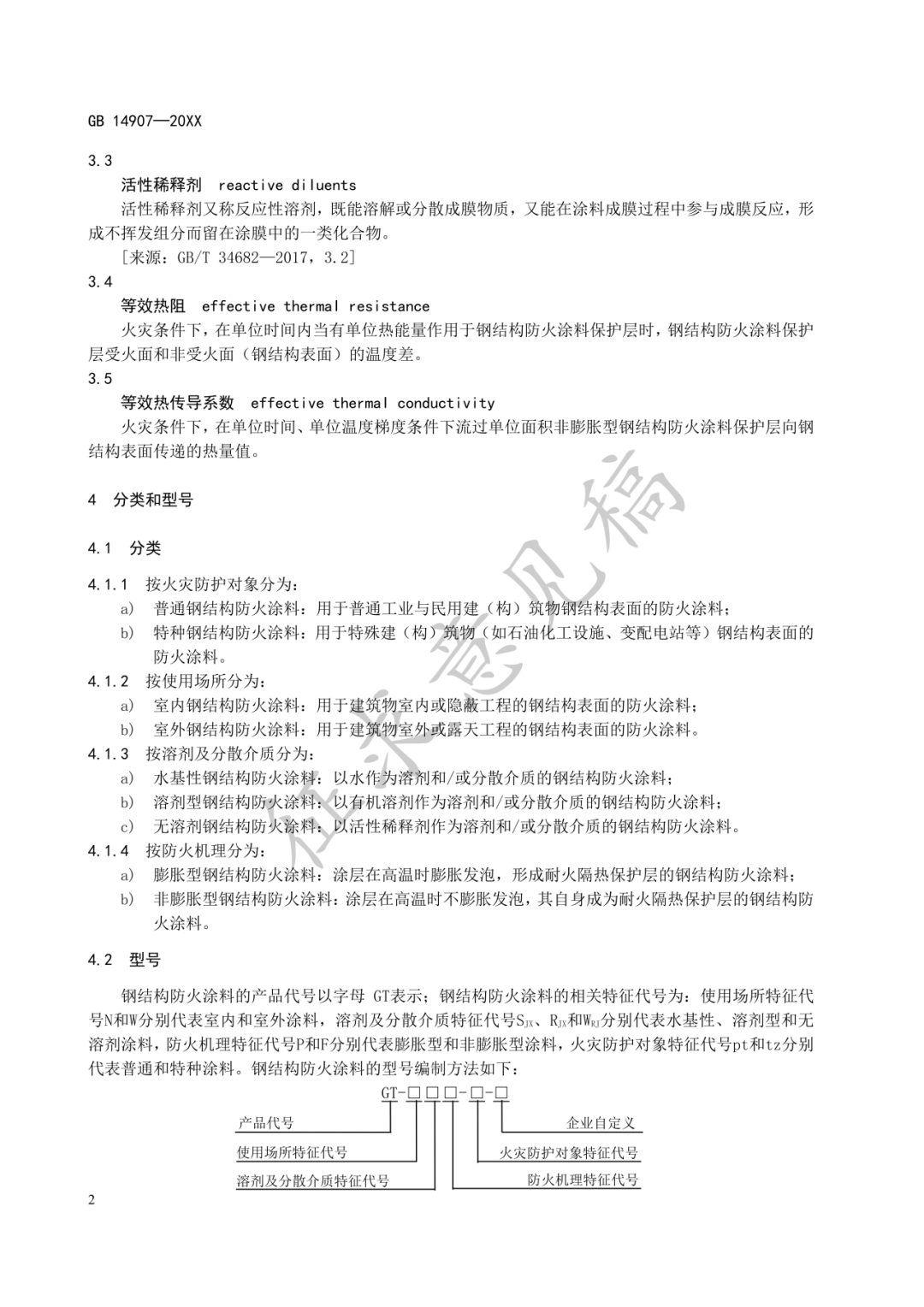
More detailed classification: coatings are divided into general and special by the fire scenario protected against, and into water-based, solvent-based and solvent-free by solvent; the type designation code is more detailed, emphasising the place of use, solvent type and so on.
-
The "general requirements" in the technical requirements (clause 5.1 of the 2018 edition) are deleted to simplify the structure and avoid redundancy.
-
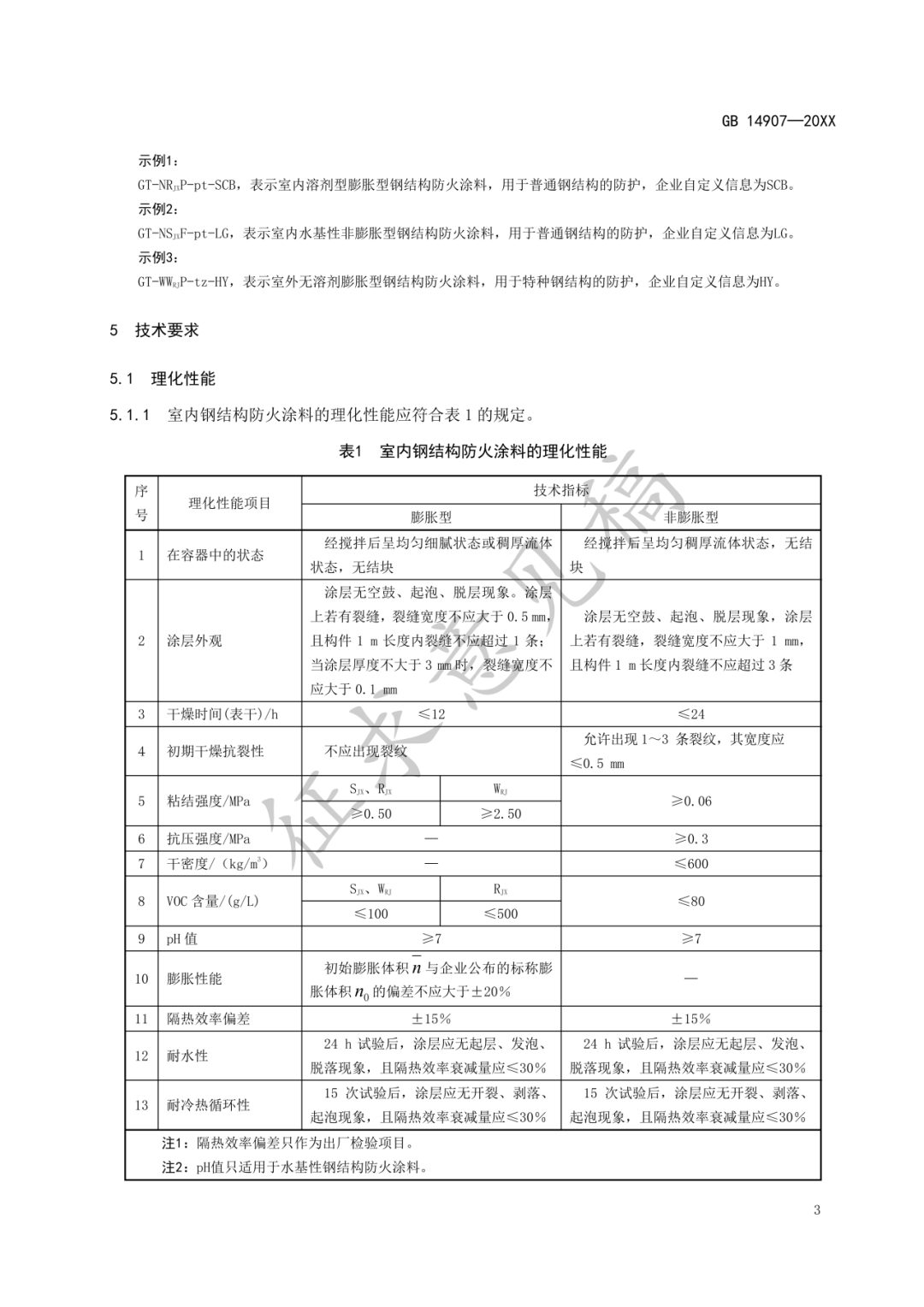
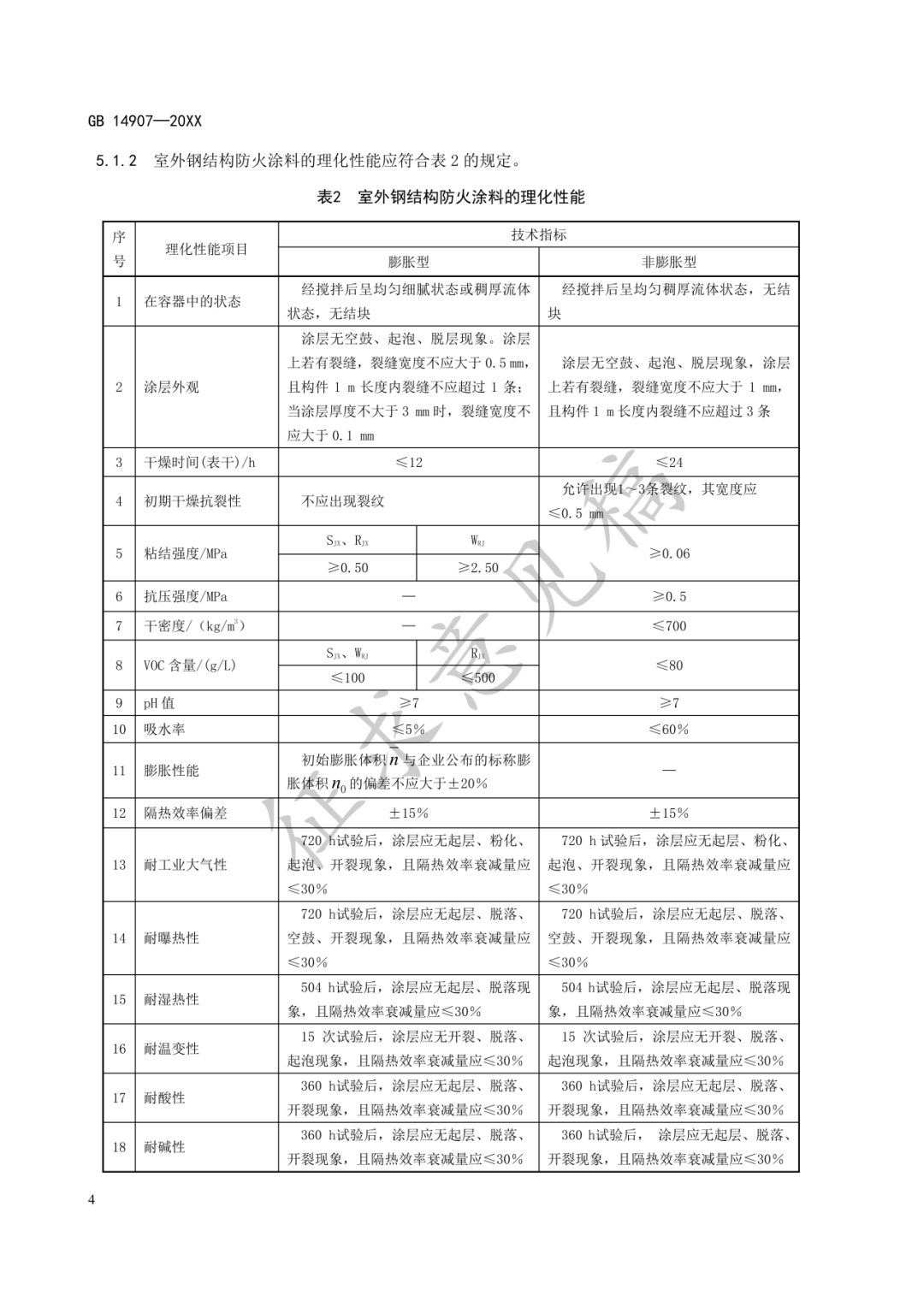
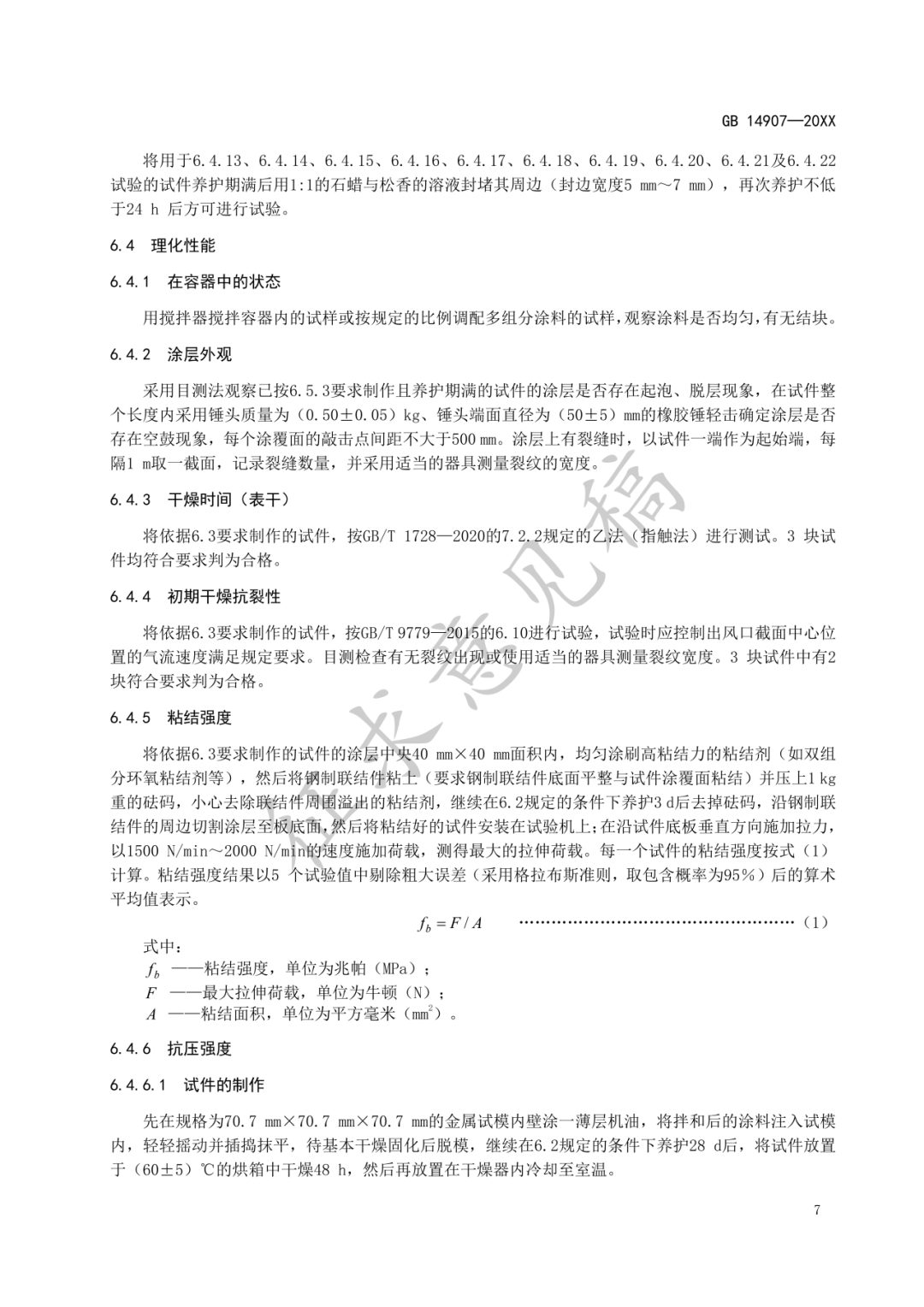
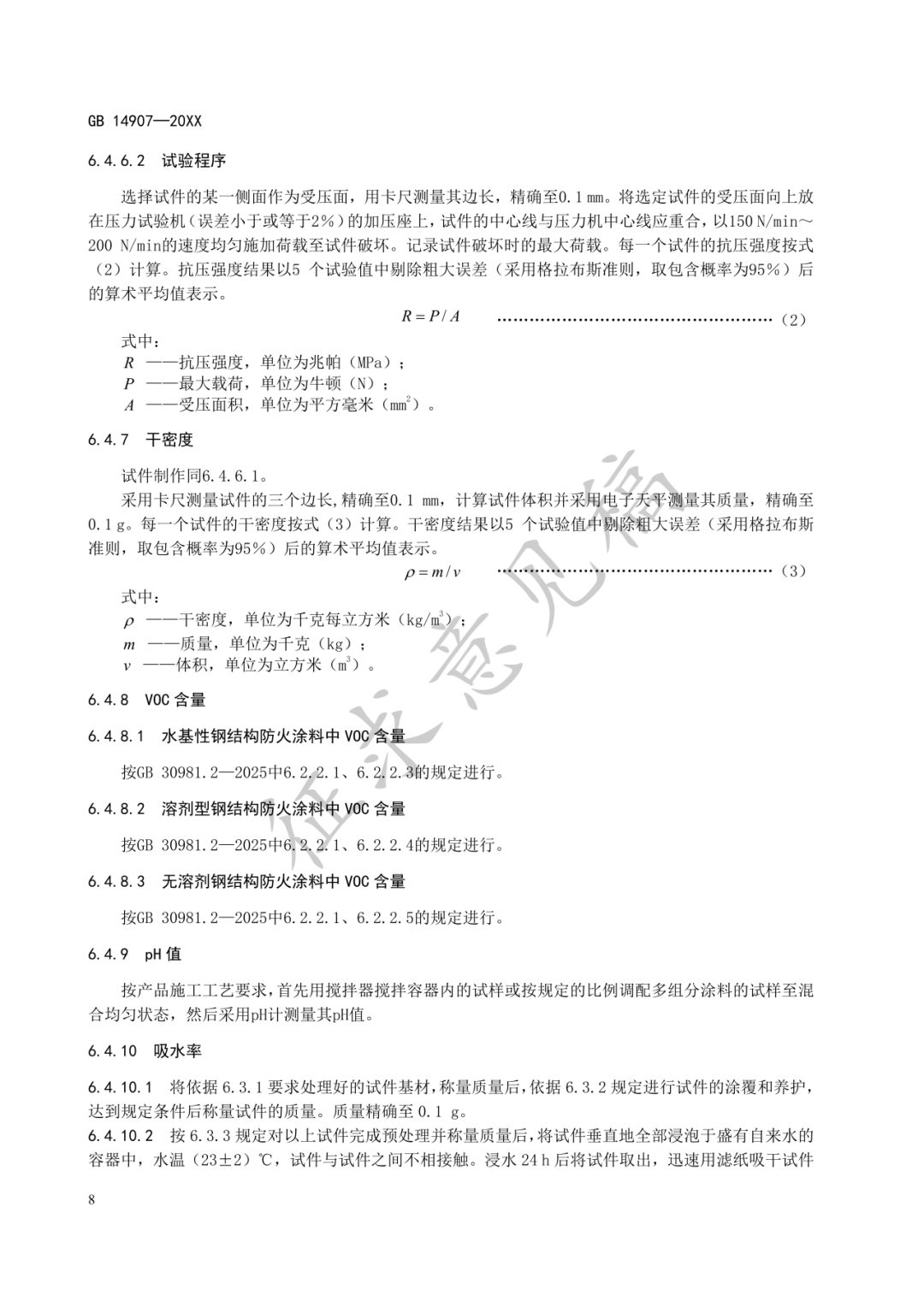
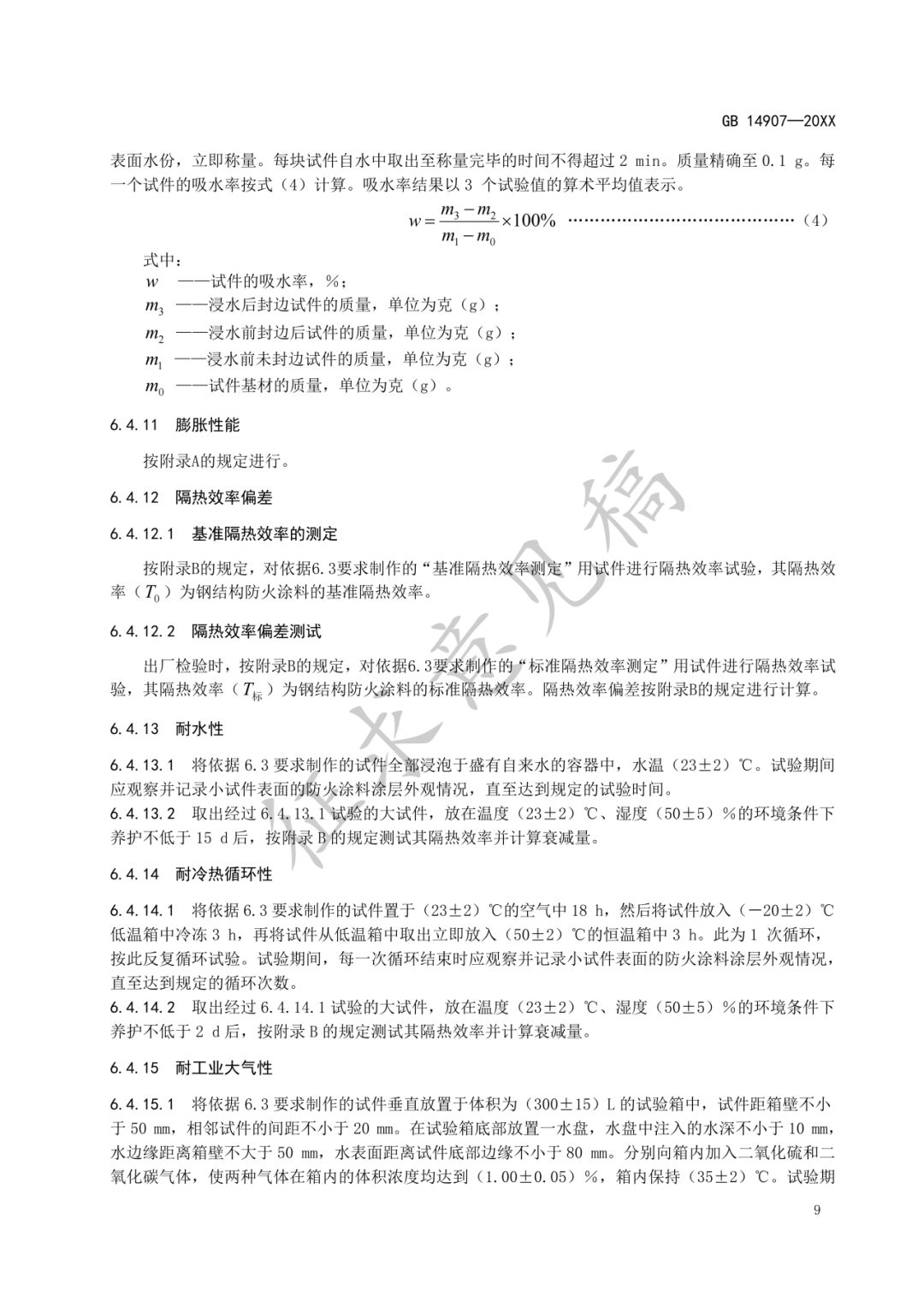
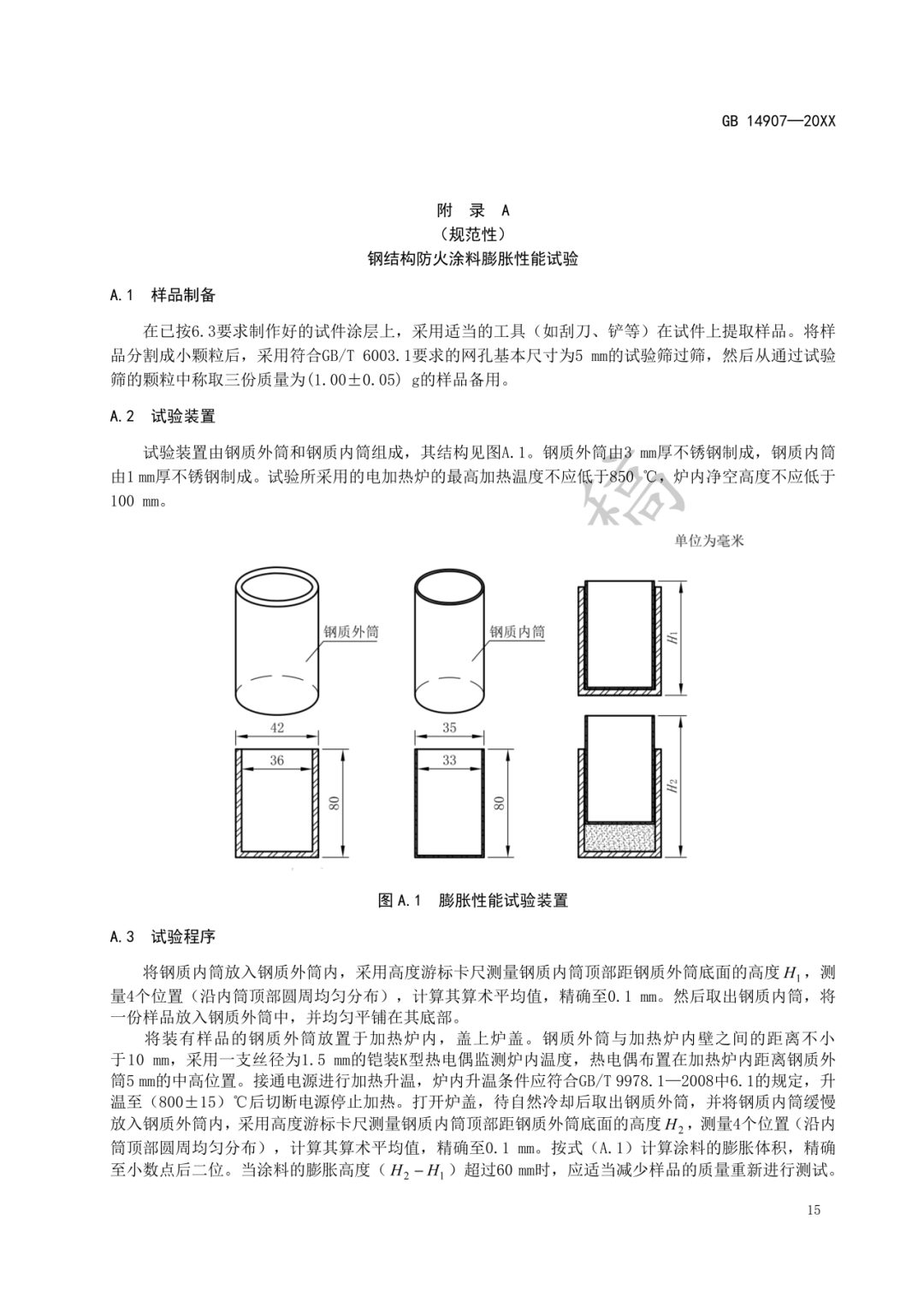
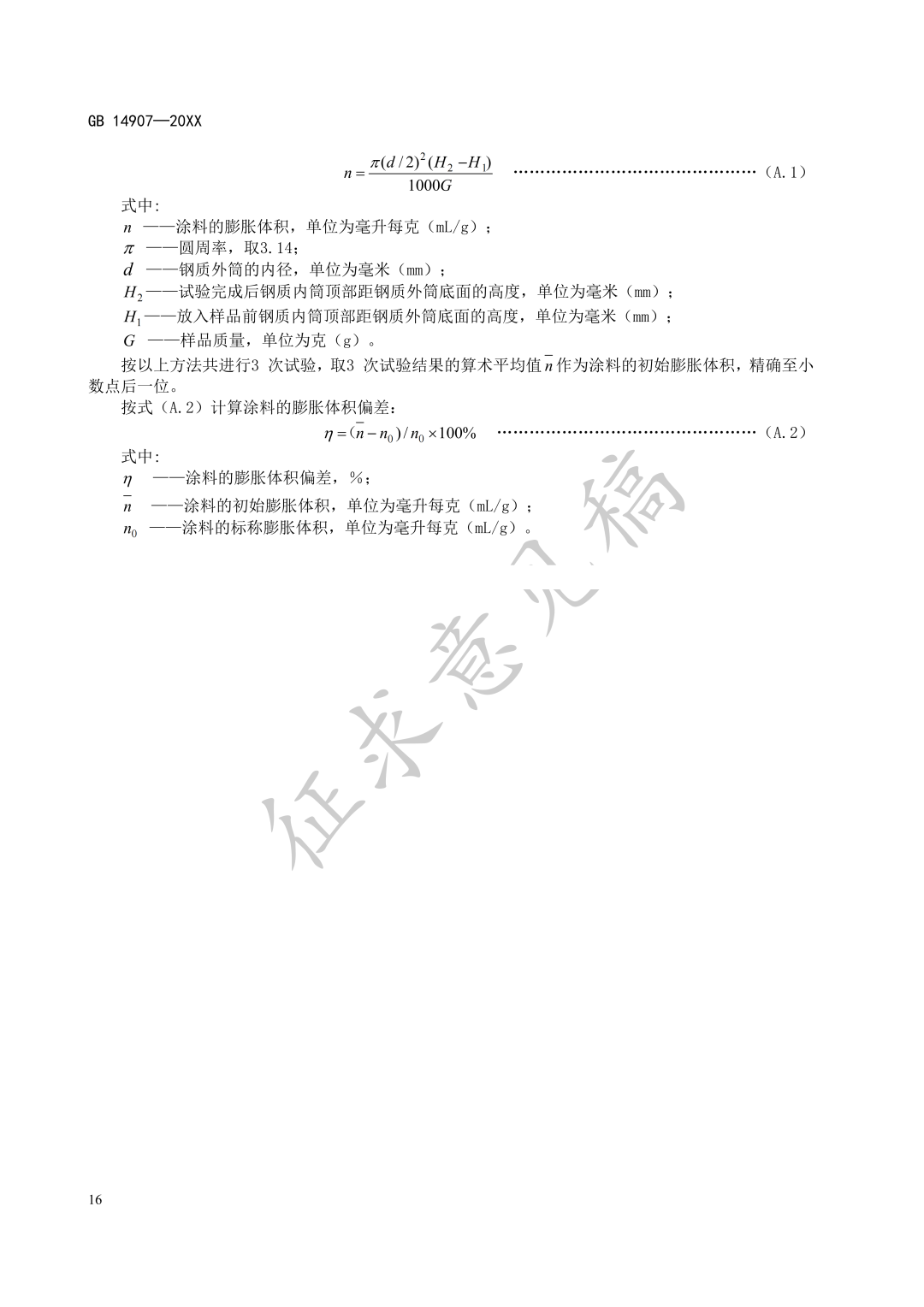
Technical requirements and test methods are added for coating appearance, VOC content, intumescent performance, water absorption and resistance to industrial atmosphere.
-
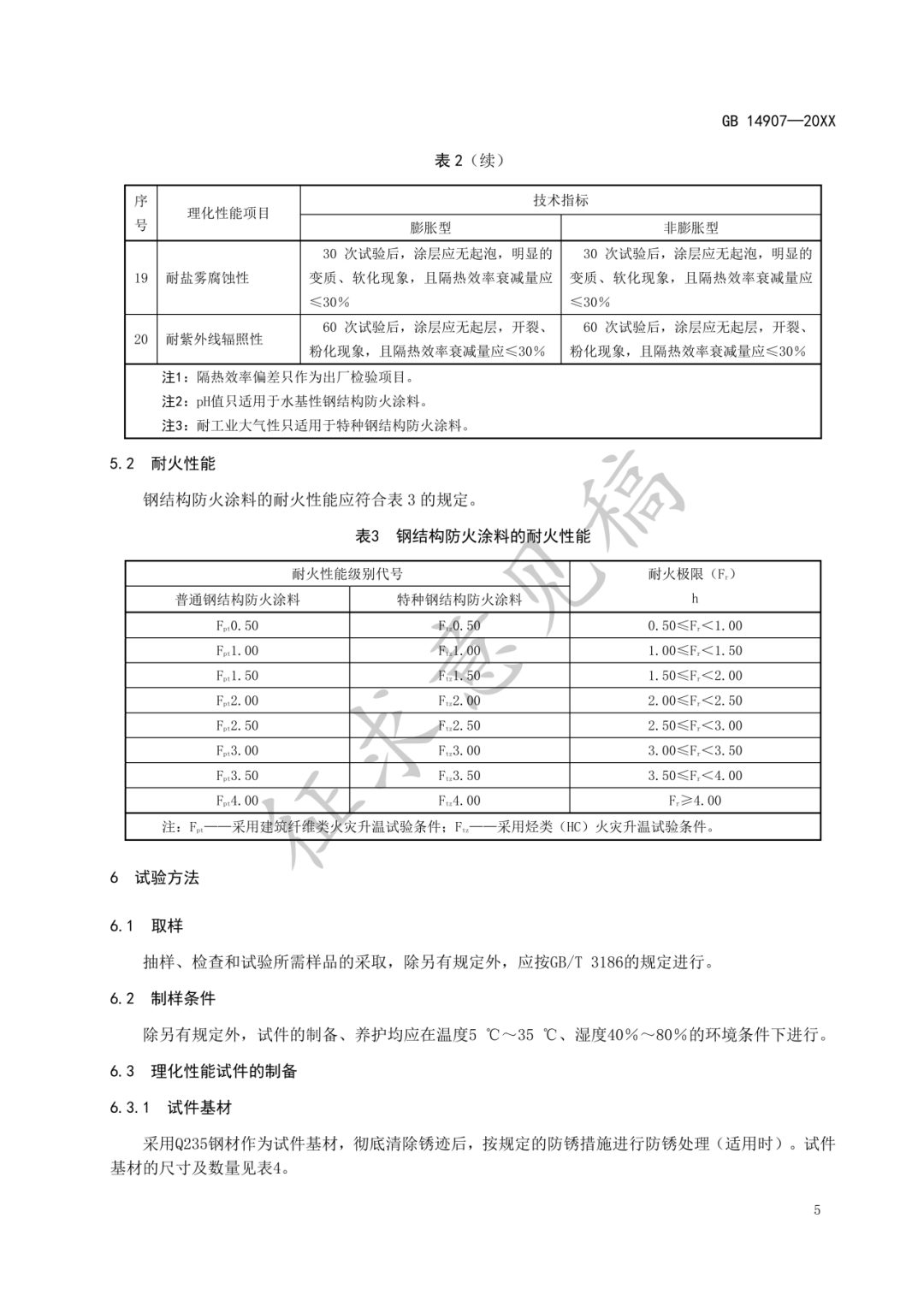
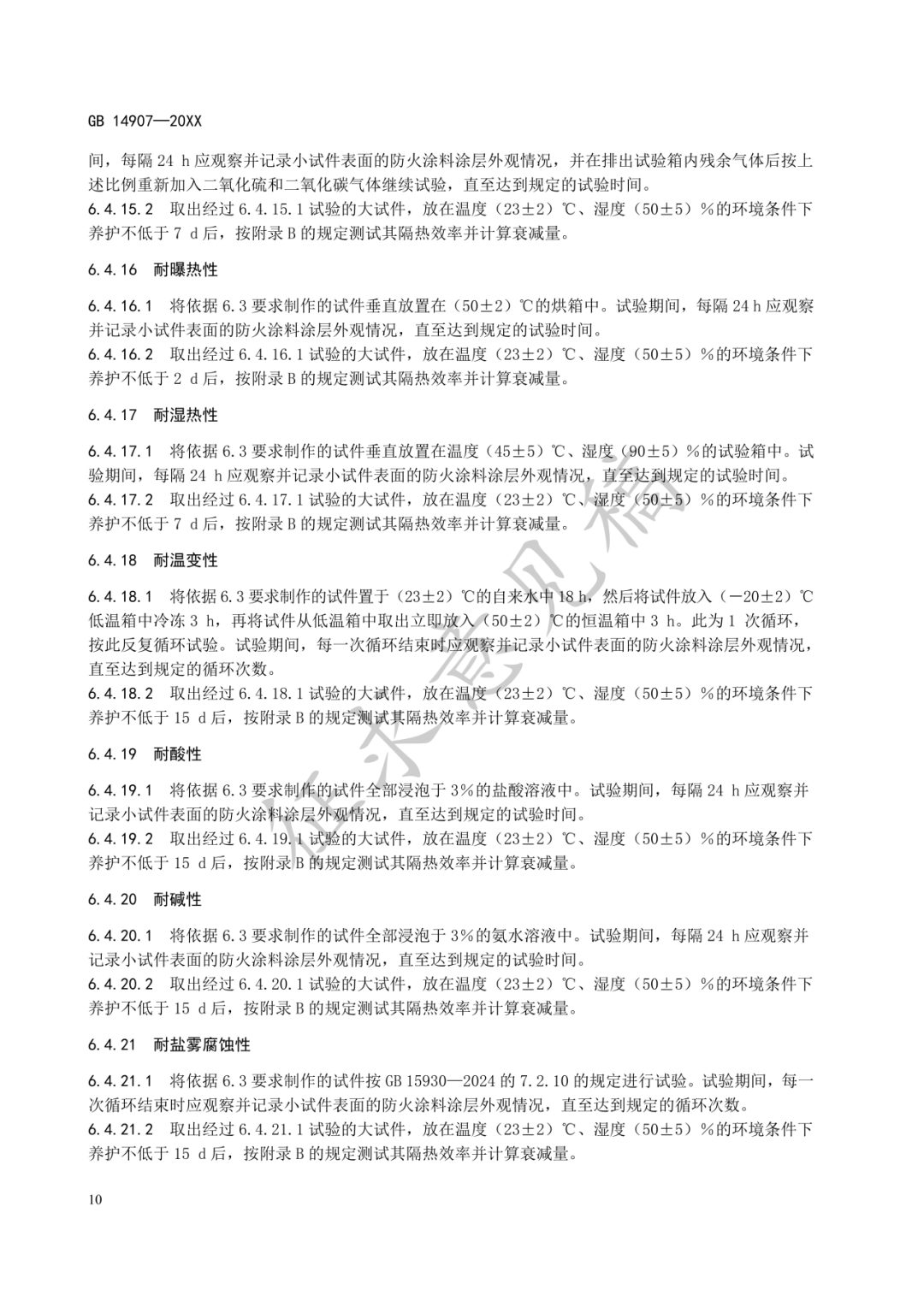
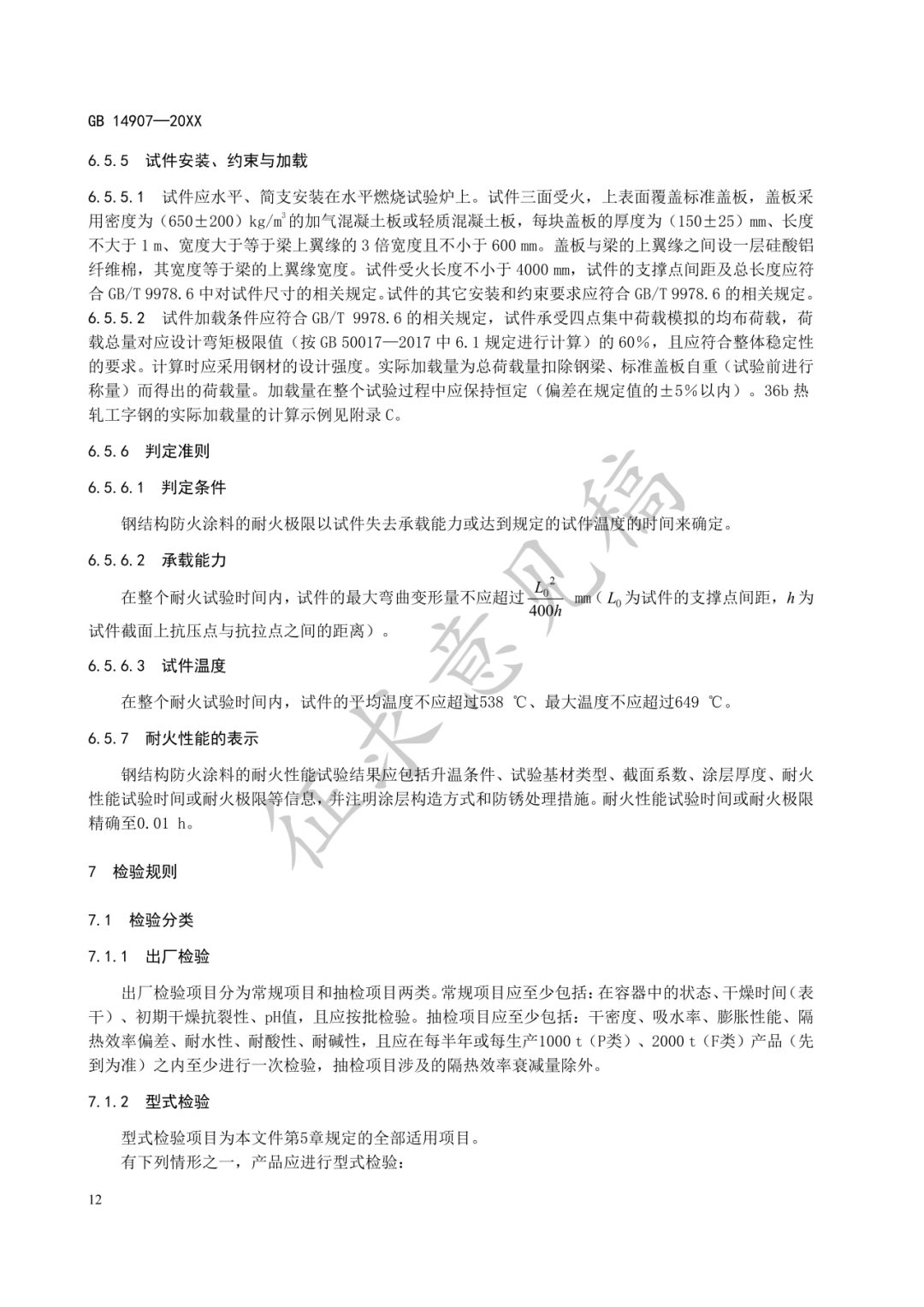
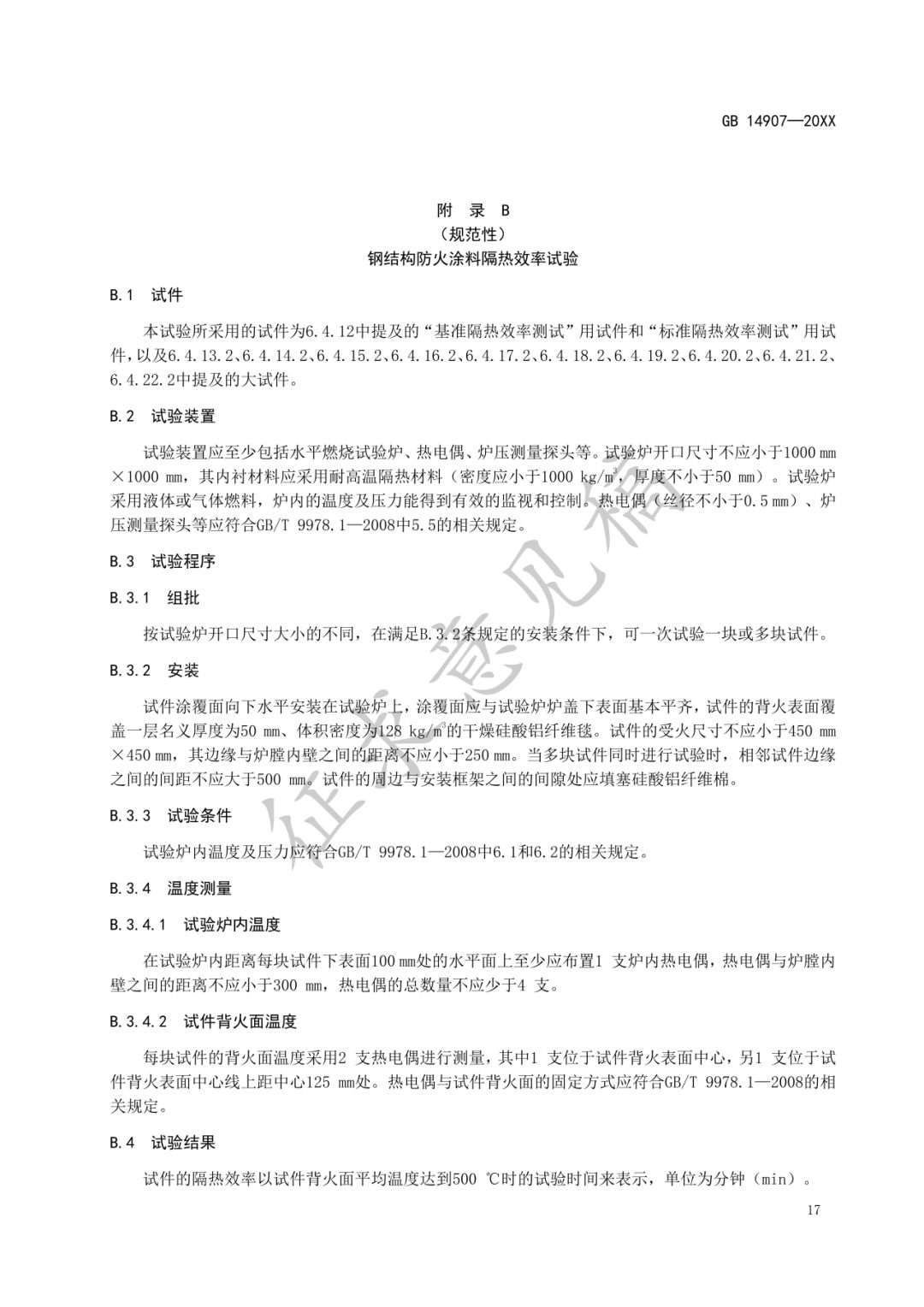
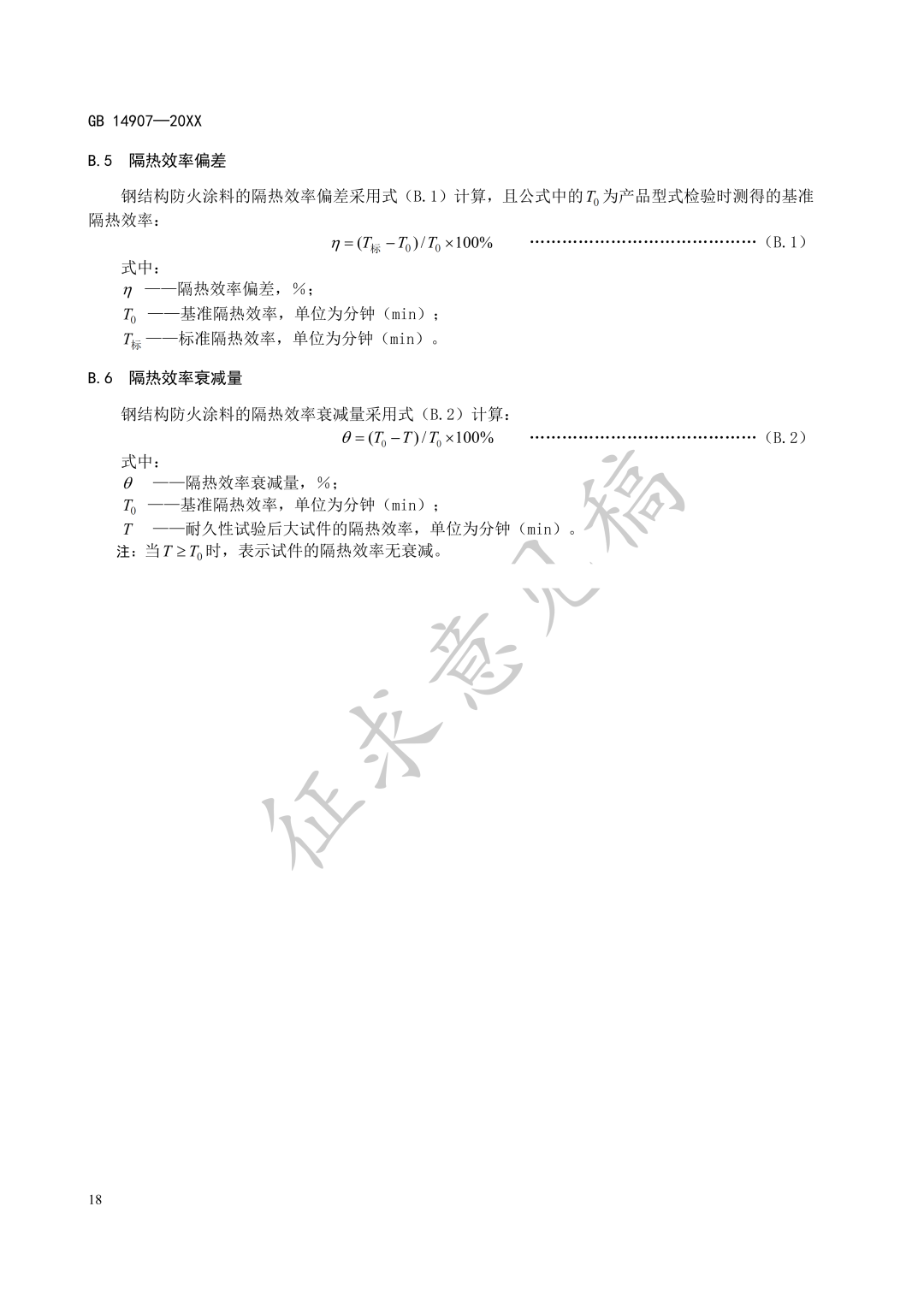
Core performance requirements are raised to match current technology: bond strength (intumescent: water-based/solvent-based ≥ 0.5 MPa, solvent-free ≥ 2.5 MPa; non-intumescent ≥ 0.06 MPa); dry density (indoor non-intumescent ≤ 600 kg/m³, outdoor ≤ 700 kg/m³); fire resistance (the upper limit is removed and the range extended to 4.00 h, with new Fpt4.00/Ftz4.00 ratings); and loss of insulation efficiency in durability tests (≤ 30% after each durability test, such as water resistance and resistance to hot–cold cycling).
-
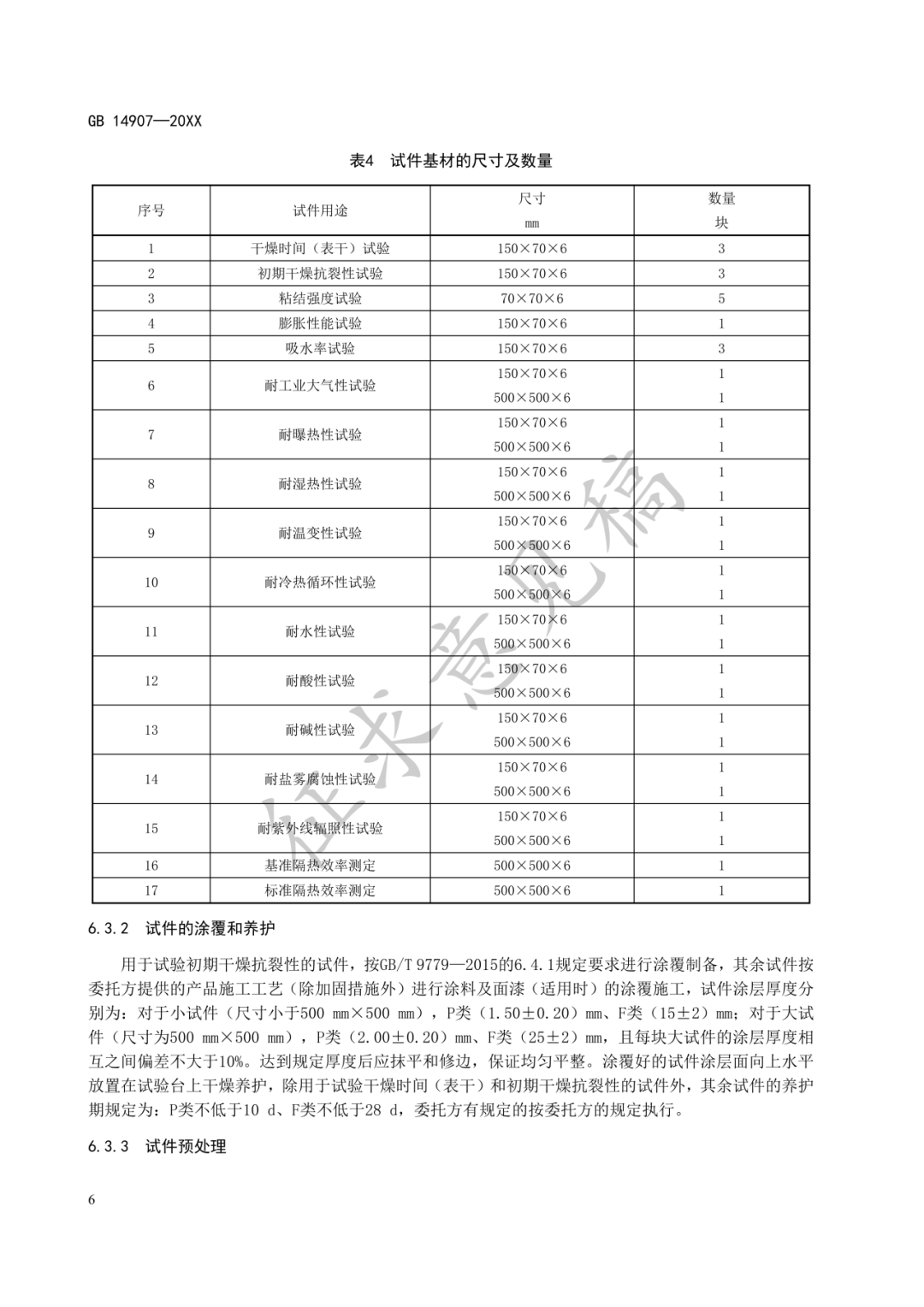
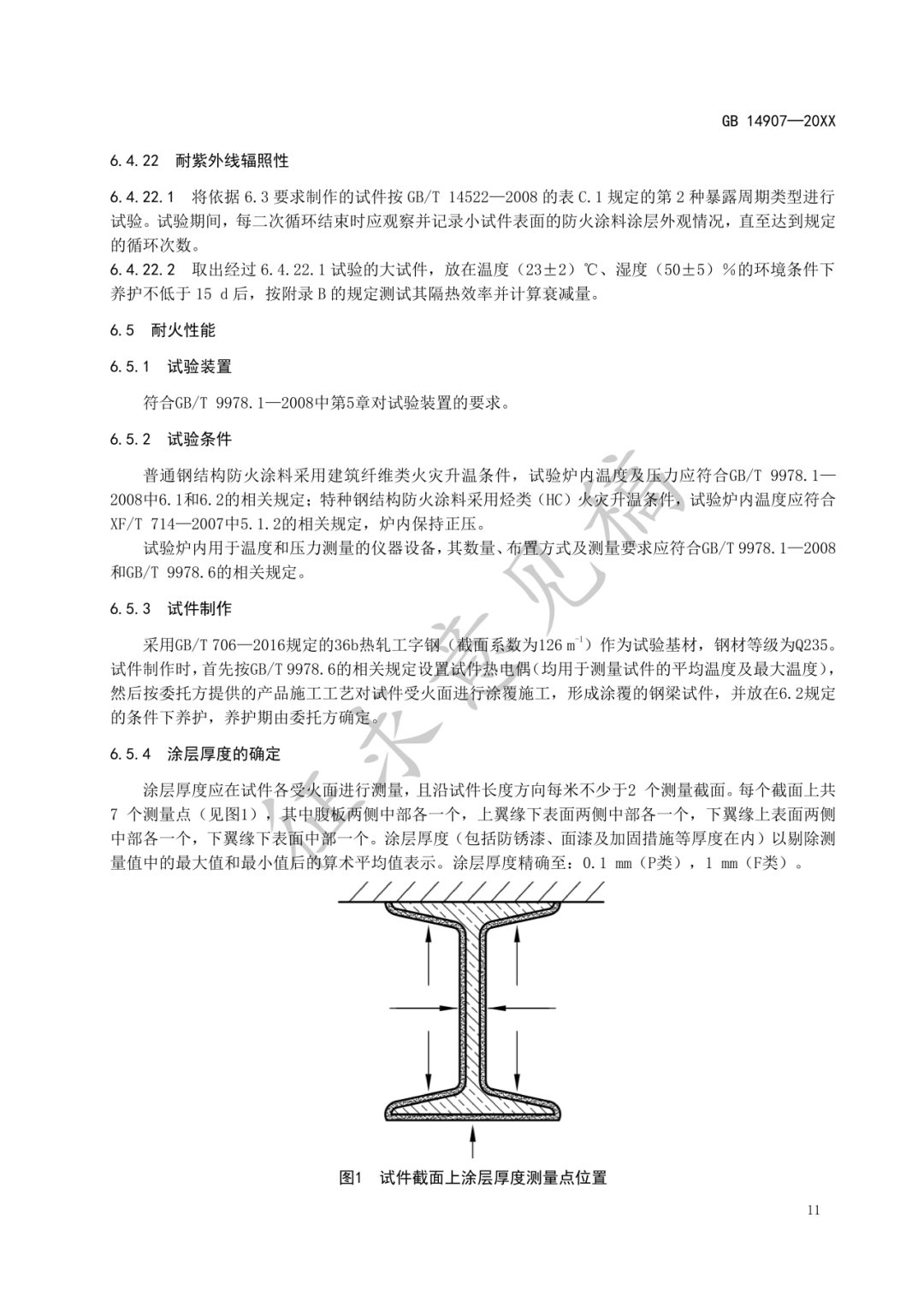
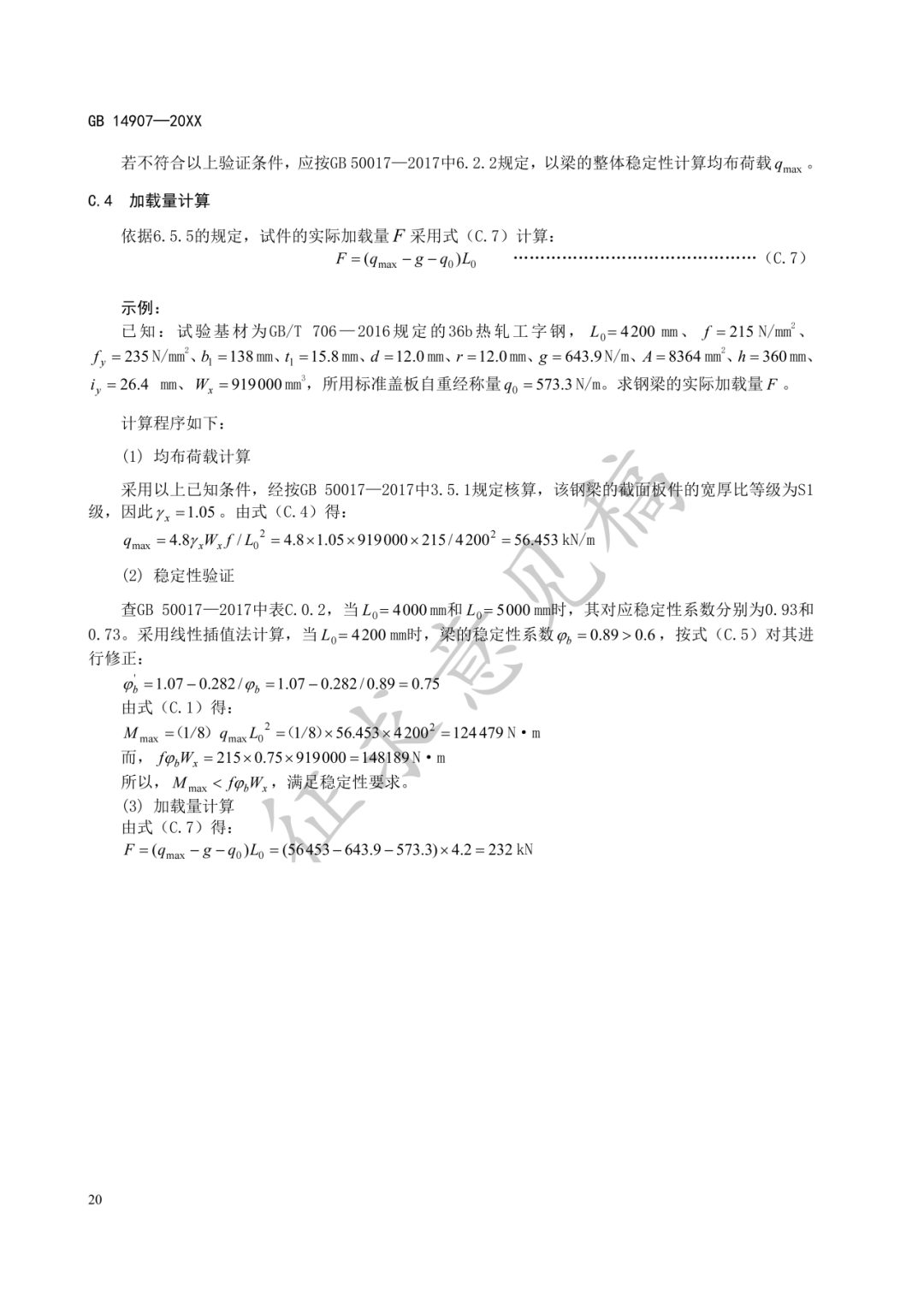
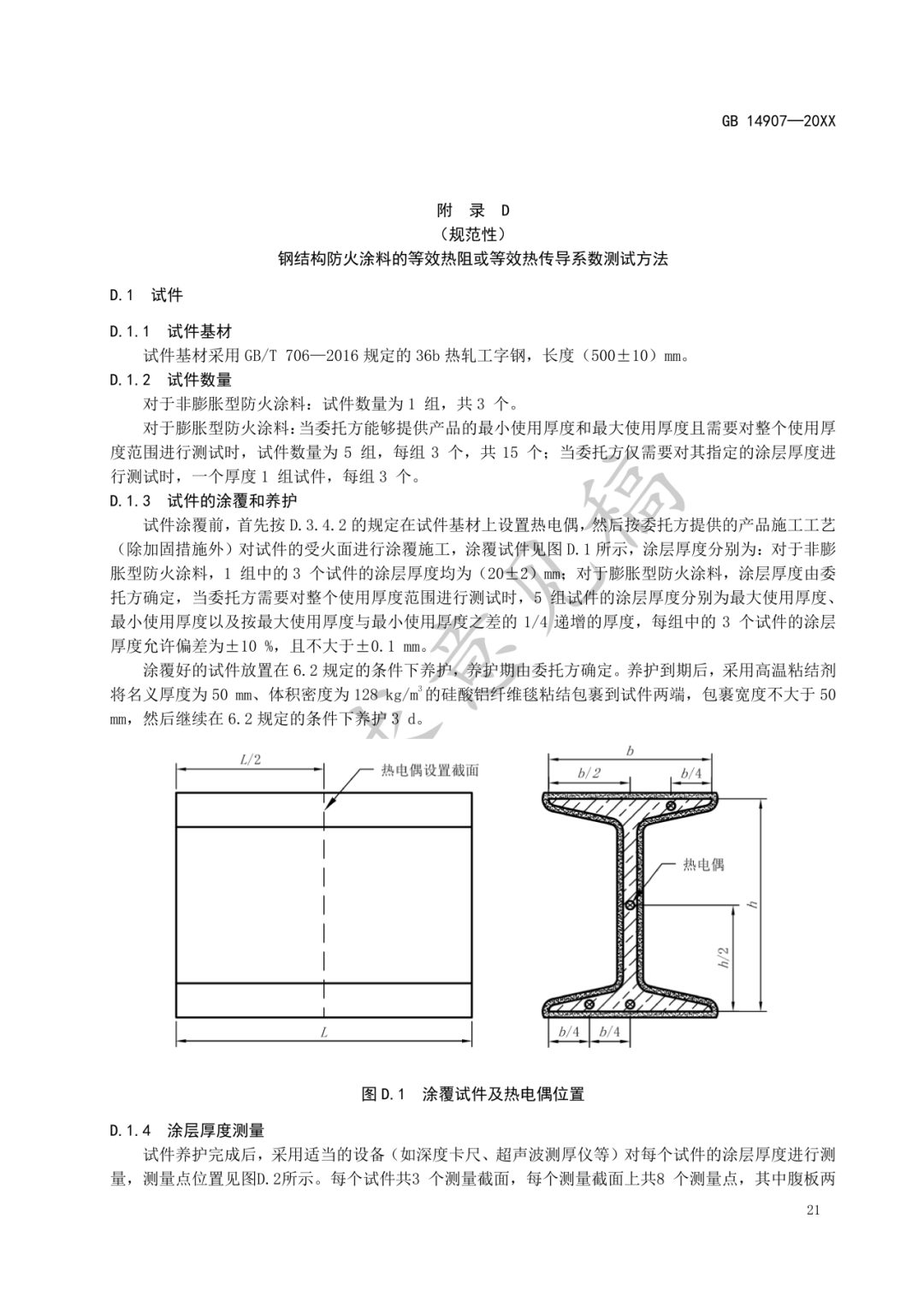
Three key test methods are improved: a single substrate for fire resistance tests, which now all use a 36b I-section steel beam, removing the scatter in results caused by different substrates in the old edition; the load calculation is updated to GB 50017-2017; and a new specimen temperature limit of "maximum temperature ≤ 649 °C" is added to avoid misjudgements caused by local failure.
-
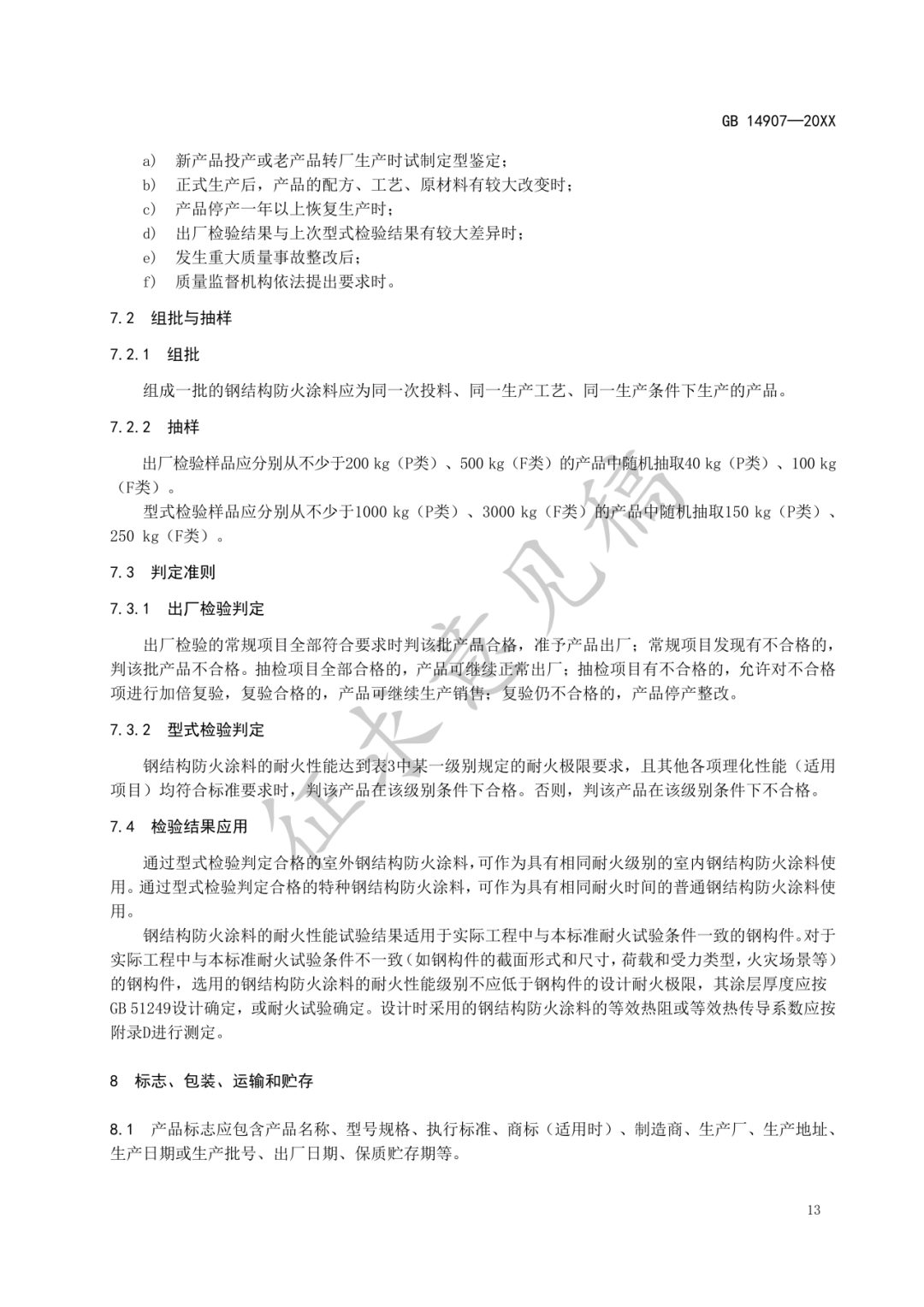
Changes to inspection rules: for factory inspection, the sampling interval is extended to six months and the sample quantity halved, while water absorption, intumescent performance and other items are added to the sampling tests, and routine items are clearly required to be "inspected by batch". Type test sampling is increased, and rules on the use of test results are added: a passed outdoor coating may substitute for an indoor coating of the same rating, and a special coating may substitute for a general coating with the same fire resistance period, but the design must take account of the section factor of the steel member, to avoid the risk of applying test results directly.
-
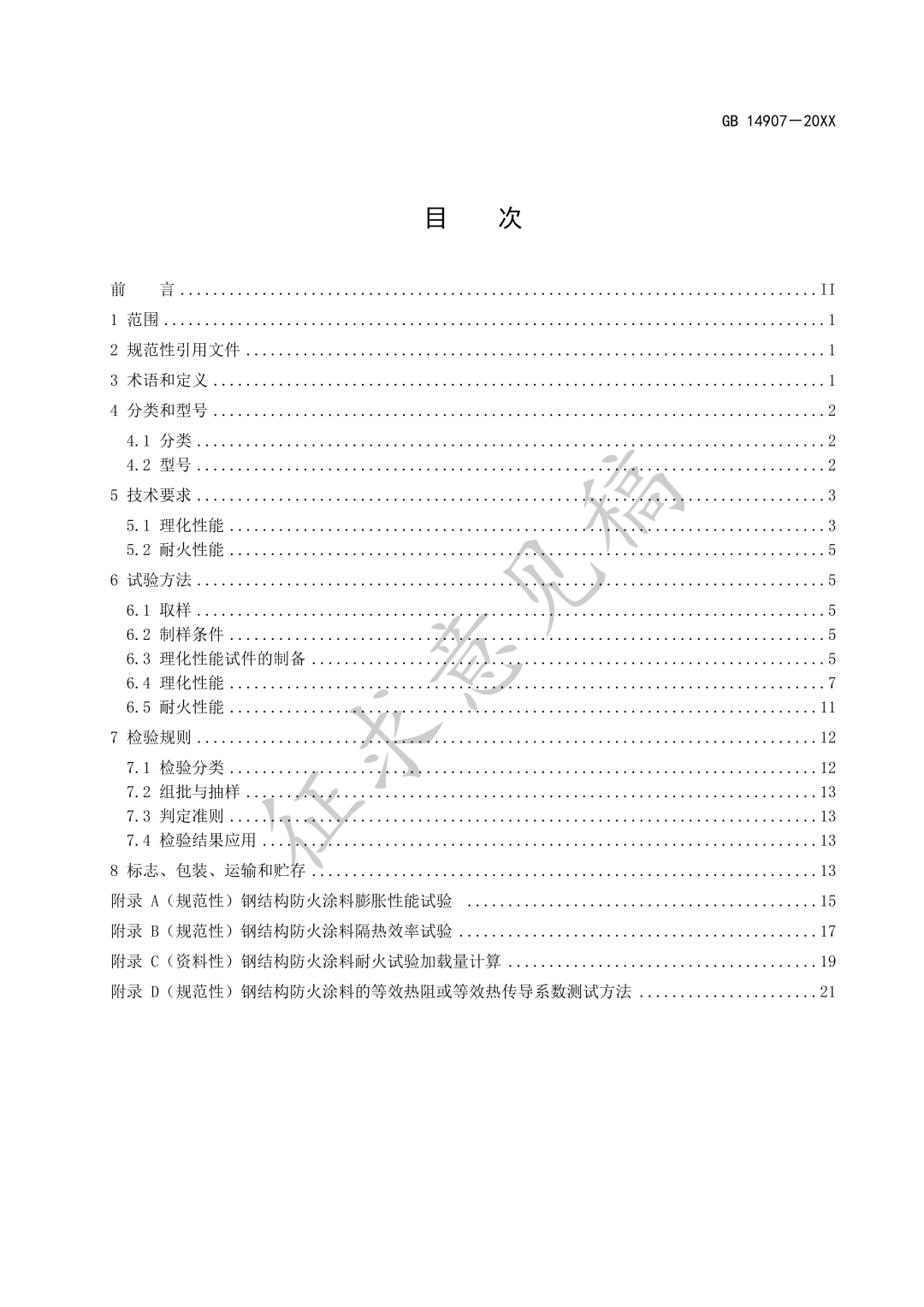
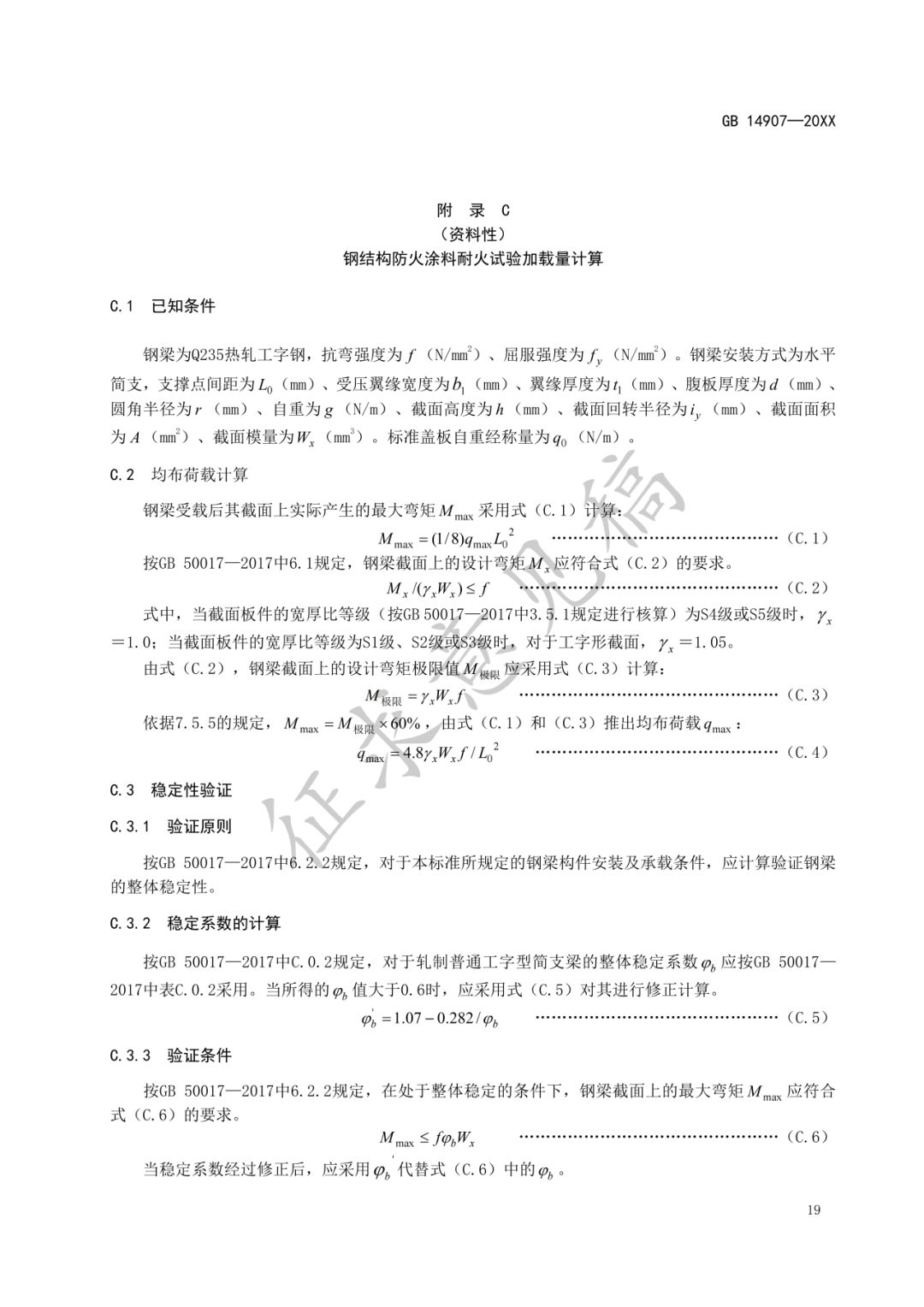
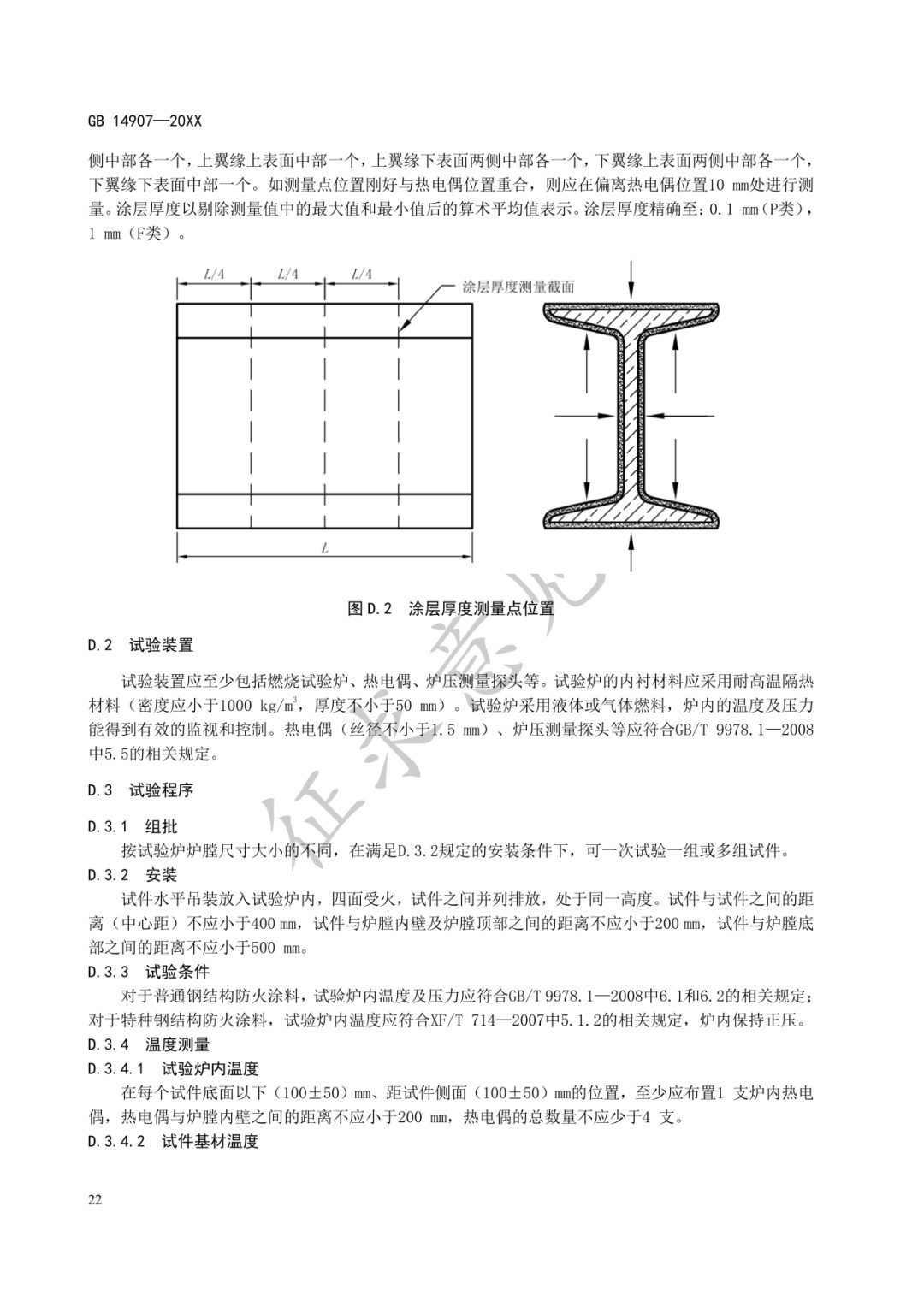
Annexes: a new Annex A, test for intumescent performance of fire-resistive coatings for steel structures; a revised Annex C, calculation of the load for fire resistance tests; and a new Annex D, test method for equivalent thermal resistance/thermal conductivity.
Overall significance of the changes
Better environmental performance and durability: new limits on VOCs, water absorption and resistance to industrial atmosphere put the emphasis on low-VOC and solvent-free coatings, in line with the trend towards green building.
More accurate testing: longer durability tests, tighter limits on performance loss and more standardised specimens and methods ensure the coatings perform in demanding environments.
Wider applicability: more detailed classification supports special scenarios (such as petrochemical plants), and the new equivalent thermal resistance test makes it easier to calculate coating thickness in engineering design.
A focus on safety: the load in the fire resistance test is increased to 60% and the temperature limits are stricter, simulating real fires more accurately.

First published on our WeChat channel: read the original