

What is fire-resistant glass?
Fire-resistant glass is a fire protection material that overcomes the poor fire performance of ordinary glass. It is designed to the fire resistance periods that building codes require for different parts of a building: a special glass that keeps its integrity, or both its integrity and its insulation (absorbing the heat of the flames), for a set period of fire exposure.
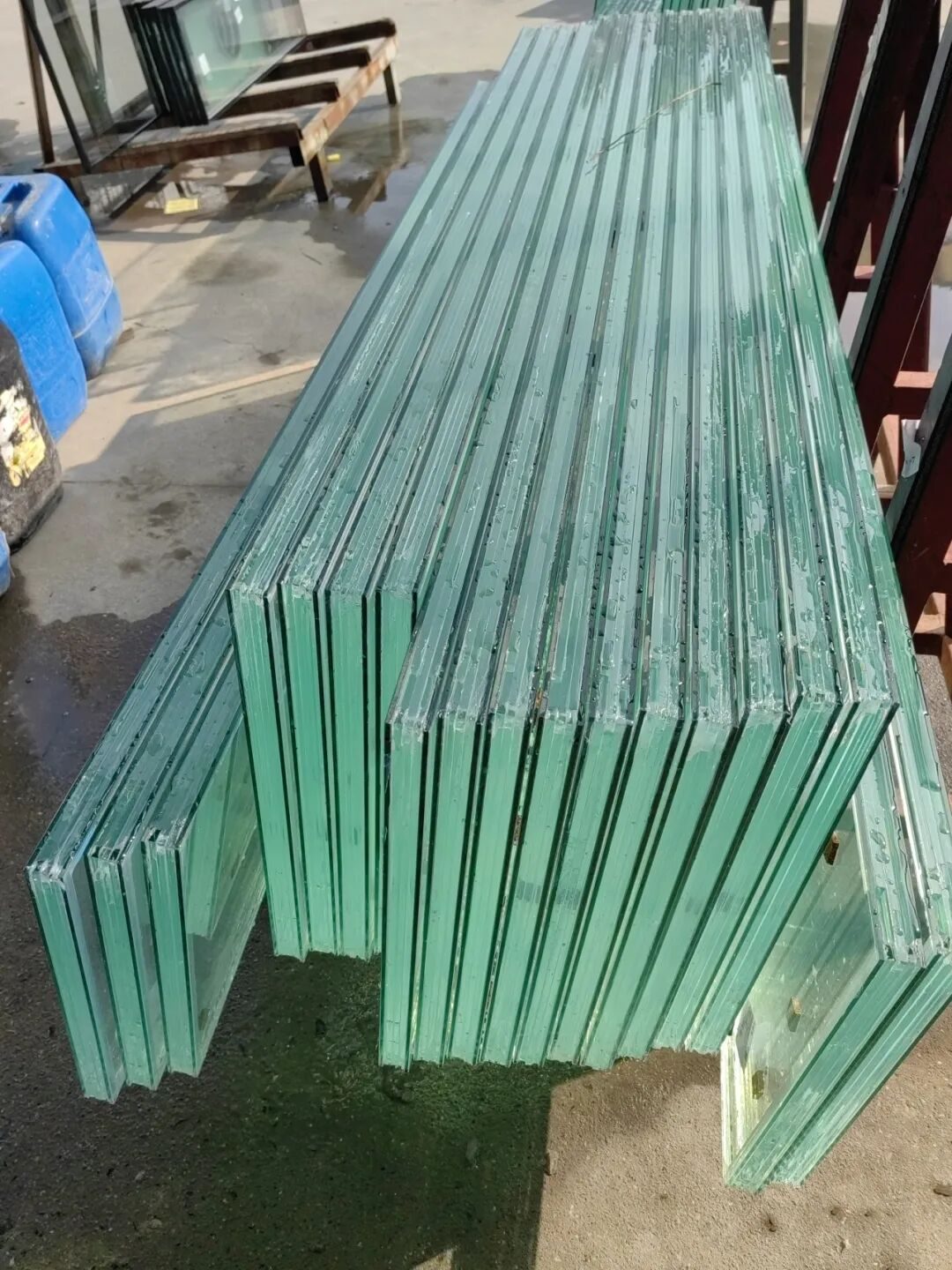
Definition
Fire-resistant glass is special glass that maintains its integrity and insulation in a specified fire resistance test (as defined in GB 15763-1995).
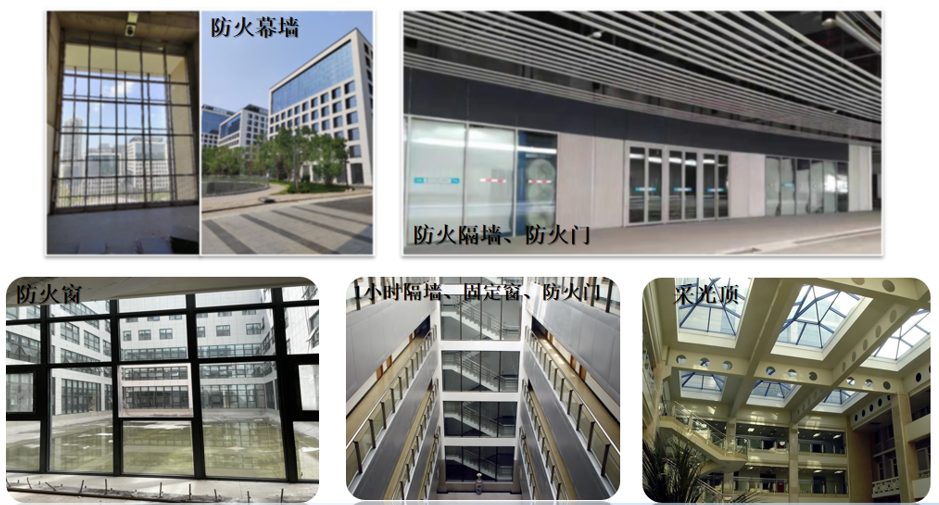
In other words, fire-resistant glass is a non-combustible building material with a degree of fire resistance. Building elements made from it can be used for horizontal and vertical fire separation inside buildings and for dividing large spaces, to prevent fires and limit their spread.
It is an important means of passive fire protection in buildings (fire-resistant windows, fire doors, fire-separating partitions and so on).
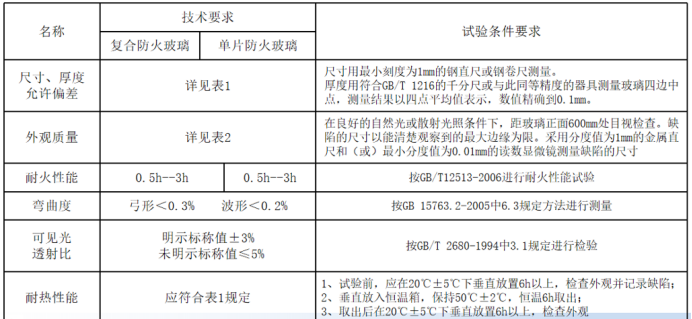
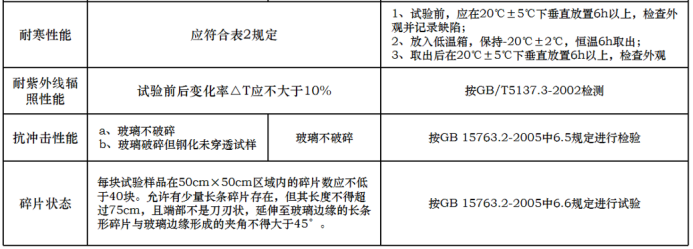
Technical requirements
The technical requirements and test methods for fire-resistant glass for buildings under GB 15763.1-2009, Part 1: Fire-resistant glass, are summarised below:
Classification
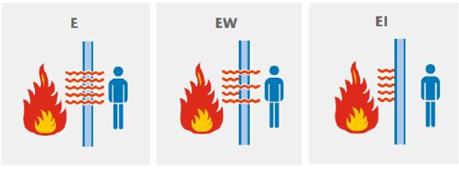
By fire performance, fire-resistant glass is divided into insulating fire-resistant glass (class A), non-insulating fire-resistant glass (class C) and partially insulating fire-resistant glass (class B).
Insulating fire-resistant glass: mostly used inside buildings
Class A fire-resistant glass meets both the integrity and the insulation requirements (EI class under the European standards).
Non-insulating fire-resistant glass: mostly used on building façades
Class C fire-resistant glass meets the integrity requirement only (E class under the European standards).
Partially insulating fire-resistant glass
Class B fire-resistant glass meets both the integrity and the heat flux (radiation) requirements (EW class under the European standards; in the Chinese standards it is used in fire doors, fire-resistant windows and similar).
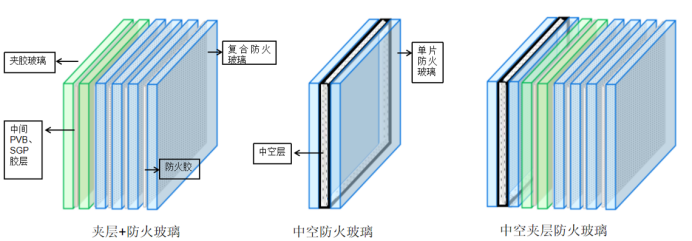
By construction, fire-resistant glass is divided into composite, monolithic, laminated and insulating-glass-unit (IGU) fire-resistant glass.
Composite fire-resistant glass (FFB): mostly used inside buildings
Made of two or more panes of glass with fire-resistant interlayers between them, meeting the relevant fire performance requirements.
Monolithic fire-resistant glass (DFB): mostly used on building façades
Made of a single pane of glass, meeting the relevant fire performance requirements.
Laminated fire-resistant glass (JFB):
A laminated glass product with at least one layer of monolithic or composite fire-resistant glass in its construction, meeting the relevant fire performance requirements.
Insulating-glass-unit fire-resistant glass (ZFB):
An insulating glass unit with at least one layer of monolithic or composite fire-resistant glass in its construction, meeting the relevant fire performance requirements.
Fire resistance
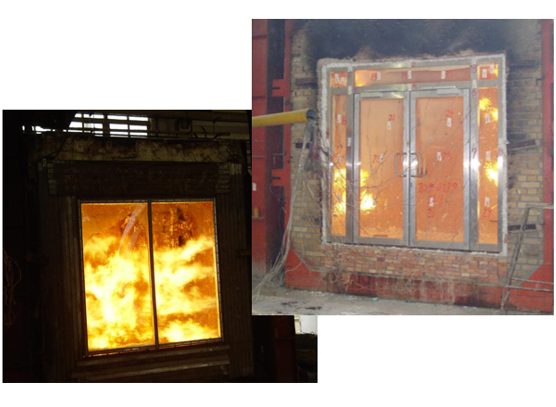
The fire resistance of fire-resistant glass is the time, under standard fire test conditions (such as GB/T 9978, China's fire resistance test method for elements of building construction), from the start of fire exposure until the glazed element loses integrity or insulation or its radiant heat exceeds the limit. It is the core measure of the fire performance of fire-resistant glass, directly determining its ability to block flames and limit heat transfer in a fire, and a key basis for fire safety design.
Comparison of the main international test standards

Key factors affecting fire resistance
Interlayer performance:
The quality of the fire-resistant interlayer generally has a large effect on the quality of insulating fire-resistant glass. For conventional class A silicate fire-resistant glass, the thicker the interlayer, the better the fire performance. In typical glass design, a total interlayer thickness of 10 mm achieves 60 minutes' insulation, 15 mm achieves 90 minutes, 20 mm achieves 120 minutes and 30 mm achieves 180 minutes.
Thickness and number of layers:
Monolithic glass: each additional 2 mm of thickness raises fire resistance by about 0.5 h (for example, 6 mm glass achieves 0.5 h and 12 mm up to 1.5 h);
Composite glass: the more layers (for example, 3 panes of glass with 2 interlayers), the better the insulation, but light transmission falls linearly.
Boundary conditions
Installation clearance: leave a 1–3 mm expansion gap to prevent the glass cracking through thermal expansion and contraction (with no gap, fire resistance falls by 40%);
Direction of exposure: for fire exposure from outside, the effect of wind pressure must be considered (positive pressure speeds flame penetration); for exposure from inside, the focus is on insulation.
Summary
There are of course other factors, such as coating technology and framing conditions, that manufacturers need to watch, or problems can easily arise in testing. A specialist laboratory can offer a pre-assessment before testing (such as advice on material optimisation and the installation construction) to help companies find design flaws early. For fire-resistant glass manufacturers, fire resistance testing is far from a simple compliance exercise. With strict enforcement of GB 50016 (China's code for fire protection design of buildings), testing of fire-resistant glass is moving from "factory sample checks" to "third-party testing of every batch". Preparing for testing in advance is essential for companies to keep up with tighter regulation.

First published on our WeChat channel: read the original