
CE certification
CE certification is a precondition for batteries entering the EU market. It shows that the product meets EU legislation on health, safety and environmental protection, and that the battery complies with the relevant EU directives and regulations, such as the Low Voltage Directive (LVD), the Electromagnetic Compatibility Directive (EMC), the Machinery Directive and the relevant provisions of the new Battery Regulation (EU) 2023/1542.
CE certification requires review by a third-party body recognised by the EU, and the product must go through a conformity assessment procedure to ensure that its design and manufacture meet the EU's essential requirements.
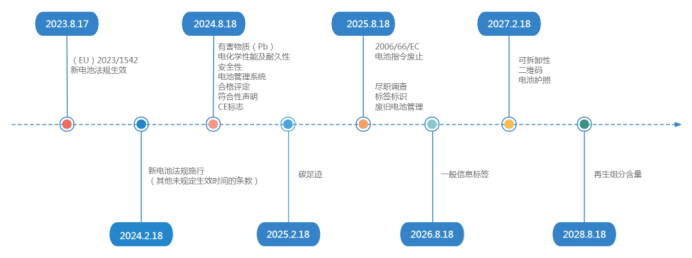
The manufacturer must provide technical documentation, including the design description, risk analysis and test reports. A certificate is issued once the product passes. From 18 August 2024, manufacturers must draw up an EU Declaration of Conformity (DoC) as the Regulation requires and affix the CE mark to the product.
UN38.3 certification
We have covered UN38.3 in detail in an earlier article. UN38.3 refers to section 38.3 of the UN Manual of Tests and Criteria, drawn up by the United Nations specifically for the transport of dangerous goods. Before lithium batteries can be transported, they must pass altitude simulation, thermal cycling, vibration, shock, external short circuit at 55 °C, impact, overcharge and forced discharge tests, to make sure they are safe in transport. Only batteries that have passed UN38.3 can be shipped into the EU market by air, sea, road or rail.

RoHS (Restriction of Hazardous Substances Directive)
RoHS is the EU directive restricting hazardous substances in electrical and electronic equipment. All electrical and electronic equipment and battery products must comply with it. RoHS (Restriction of Hazardous Substances) sets maximum limits for six hazardous substances in electronic equipment: lead, mercury, cadmium, hexavalent chromium, polybrominated biphenyls and polybrominated diphenyl ethers.
RoHS 3 (Directive (EU) 2015/863) added restrictions on four phthalates (DEHP, BBP, DBP and DIBP).
The content of restricted substances in battery products must be below the limits. Manufacturers must also provide test reports showing that the product complies with the RoHS Directive and is environmentally sound.
The EU Battery Regulation
As an earlier article on the EU Battery Regulation (EU) 2023/1542 explained, the Regulation applies to all types of battery placed on the EU market (portable batteries, industrial batteries, electric vehicle batteries and so on). Manufacturers must make sure their products meet the requirements of the new Regulation (EU) 2023/1542. The key points are:
· Submit a carbon footprint declaration.
· Provide evidence of recycled content (such as nickel, lithium and cobalt).
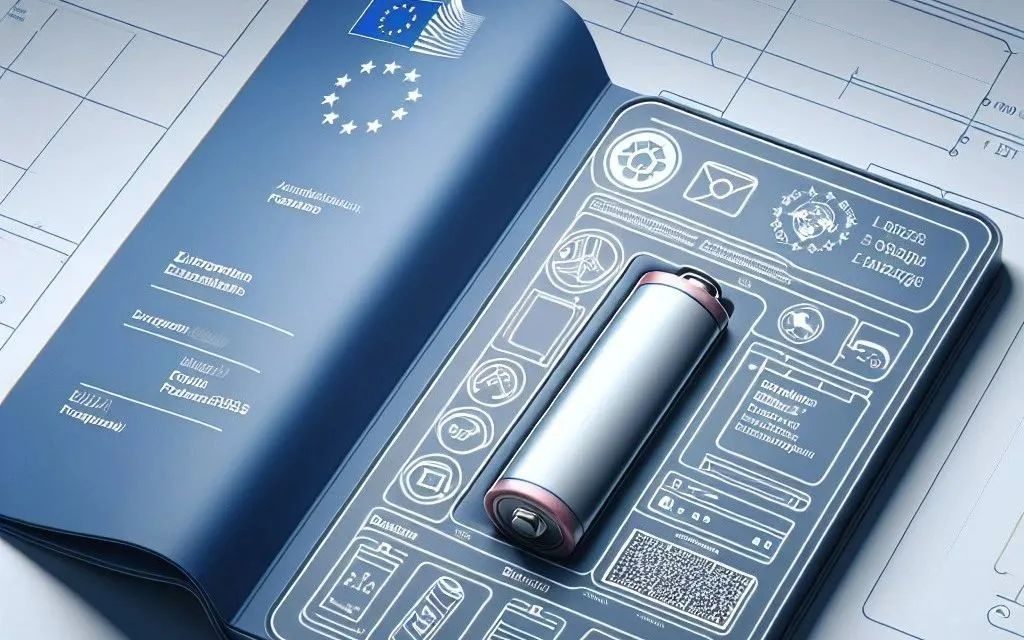
· Meet the traceability requirements, including a "battery passport" for digital tracking.
· Design the product to meet requirements such as replaceability and recyclability.
REACH
REACH (Registration, Evaluation, Authorisation and Restriction of Chemicals) is the EU regulation governing chemicals.
For the chemical constituents of a battery, the manufacturer must establish whether the product contains any substances of very high concern (SVHC) and notify the European Chemicals Agency (ECHA).
Engage a qualified assessment body to provide a complete chemical safety assessment report, ensuring that the product poses no threat to health or the environment during use and recycling.
WEEE (Waste Electrical and Electronic Equipment Directive)
WEEE is the EU directive on the collection and treatment of waste electrical and electronic equipment. As part of electronic equipment, batteries must meet its requirements.
The WEEE Directive (2012/19/EU) makes manufacturers responsible for collecting and treating batteries at end of life: batteries must be capable of being collected and treated, to reduce pollution of the environment. Manufacturers must register in EU countries, take part in take-back schemes and mark the recyclable parts of the product.
Energy labelling and performance standards
Under the EU energy labelling rules, certain types of battery, such as electric vehicle batteries or home energy storage batteries, must carry an energy label giving consumers key information such as battery efficiency and energy density. Batteries must meet energy performance standards, such as international standards like IEC 61960.
CB certification
CB certification (the IEC certification scheme covering battery safety) is voluntary, but it is recognised in many countries and markets.
CB certification is based on IEC standards (such as IEC 62133 and IEC 61960) and is a globally accepted basis for assessing battery safety.
The EU market does not require CB certification, but holding it can increase trust in the product and its competitiveness on the market.
To export batteries to the EU smoothly, companies need to complete conformity assessment for the certifications above and provide full technical documentation and product test reports. We suggest the following steps:
-
Determine the type of battery product and the scope of the legislation that applies to it.
-
Contact recognised testing and certification bodies for the necessary certification and testing.
-
Prepare a complete technical file, including the CE Declaration of Conformity, RoHS test reports and carbon footprint declaration.
-
Make sure the product design meets the legal requirements for recyclability, dismantlability and traceability.
-
Register the battery passport and set up a product tracking system.
Summary
Battery certification is a complex and detailed process, covering everything from basic performance to safety and from environmental adaptability to electrochemical properties, and it involves complex testing. Every company in the battery supply chain must follow the legislation closely and understand its requirements in depth in order to keep its access to the market.

First published on our WeChat channel: read the original